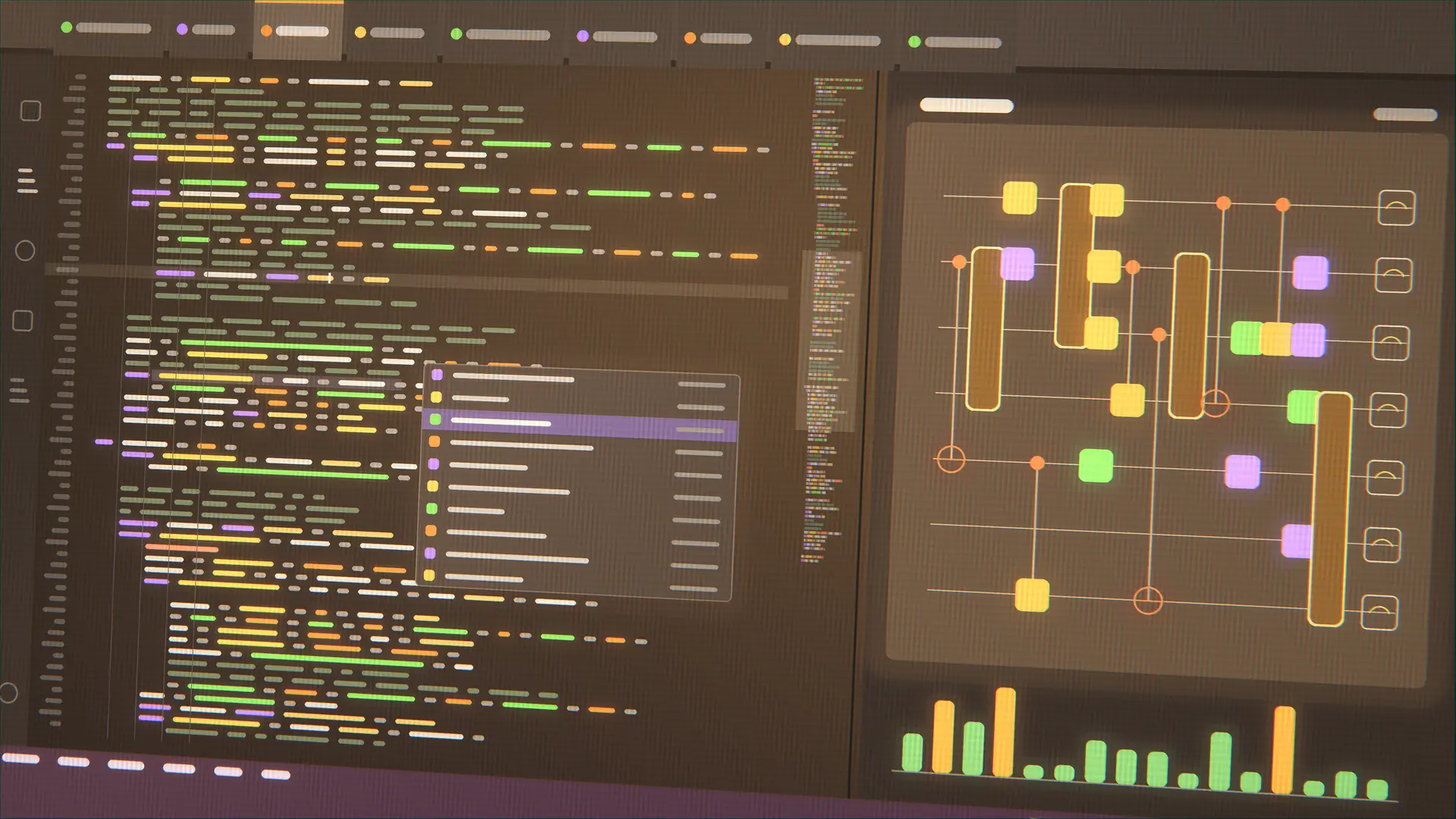
Fujitsu has released its Open Quantum Application Research Package, or OpenQARP, as open-source software, offering over 100 pre-built components and algorithms to accelerate quantum application development, the company says. Since February 2026, the company has beta-tested the toolkit with more than 80 organizations, gathering feedback and validating its utility in real-world research. Fujitsu states its aim is to broaden access to quantum tools and foster innovation across industries. This versatile software is compatible with both Fujitsu’s own quantum simulator and the NVIDIA CUDA-Q platform, positioning it as a bridge between different quantum-classical computing approaches.
OpenQARP Toolkit Streamlines Quantum Application Development
These range from foundational elements like state preparation and ansatz layers to more complex functions such as the Quantum Fourier Transform, immediately providing a substantial head start for those building quantum algorithms. This component-based approach contrasts with bespoke development, allowing researchers to rapidly prototype and test solutions without recreating core functionalities.
Fujitsu has actively collaborated with a broad network of organizations to refine OpenQARP prior to its public release, with over 80 entities participating in beta testing since February 2026 through joint research initiatives and the Quantum Simulator Challenge. This pre-release engagement suggests a focus on practical validation and real-world applicability, moving beyond purely theoretical development.
The resulting feedback has already yielded numerous research and development results in diverse quantum applications, indicating a level of maturity beyond a simple framework. “Providing the open tools and resources to accelerate quantum application development is one of the most important ways to accelerate the journey to useful quantum computing,” said Sam Stanwyck, Director of Quantum Product at NVIDIA. This dual support is deliberate, aiming to bridge different approaches to quantum computation rather than locking users into a single ecosystem.
Fujitsu’s broader commitment to both superconducting and neutral-atom qubit technologies, alongside its development of a diamond-spin quantum computer prototype, demonstrates a diversified strategy for exploring the potential of quantum hardware, according to the company. Recent collaborations with Monash University and CSIRO, announced August 4, 2026, will focus on applying these technologies to challenges in cyber security, healthcare, and climate science, further solidifying Fujitsu’s position as a key player in the expanding quantum landscape. The company’s investment in open-source tools like OpenQARP underscores its intention to foster wider innovation and accelerate the practical realization of quantum computing’s potential.
Fujitsu Algorithms Reduce Complexity in Quantum Computation
Implementing the ADAPT-VQE algorithm, a process previously requiring approximately 130 lines of Python code, was streamlined to under 40 lines through OpenQARP’s component-based approach, allowing researchers to concentrate on validation rather than implementation. This efficiency gain stems from pre-built components encapsulating sophisticated quantum algorithms, a strategy that contrasts sharply with the traditional need for bespoke code development for each problem. The software’s design prioritizes minimizing quantum circuit depth, a critical factor in mitigating the effects of noise in current quantum hardware.
Fujitsu’s Unitary pair Coupled Cluster Doubles algorithm, included within OpenQARP, uses classical pre-computation to significantly reduce the number of quantum gate layers required for initial state preparation in quantum chemical calculations. Similarly, the Density of States Quantum Phase Estimation algorithm eases the burden of preparing complex input states, enabling more efficient extraction of energy spectra information.
These algorithmic advancements are not merely theoretical; they are directly integrated into the open-source toolkit, facilitating immediate application and experimentation by the wider quantum computing community. The package’s over 100 software components allow researchers to rapidly prototype and test new quantum algorithms without the need to build everything from scratch. “To accelerate the practical adoption of quantum technology, it is crucial that cutting-edge algorithms are widely reusable rather than being custom-built for specific problems,” Fujitsu states, highlighting the intent behind this component-based design.
OpenQARP Beta Testing & HPC Integration
Fujitsu has integrated OpenQARP with its 40-qubit state-vector quantum simulator, a system built upon 1,024 FUJITSU Supercomputer PRIMEHPC FX700 units, each featuring the company’s A64FX processor, demonstrating a commitment to scaling software alongside hardware development. This simulator environment was accessed by organizations participating in the Quantum Simulator Challenge, providing a real-world testing ground for the pre-release version of OpenQARP and generating initial results in diverse quantum applications.
The scale of this pre-release access suggests a deliberate strategy to validate the toolkit beyond internal testing and gather feedback from a broad user base. The software’s versatility extends beyond Fujitsu’s own infrastructure; OpenQARP is also compatible with the NVIDIA CUDA-Q platform through a source build, enabling execution of quantum circuits in GPU-accelerated environments.
Fujitsu intends to sequentially support simulation environments based on its internally researched STAR architecture, signaling a long-term vision for expanding the software’s capabilities and accommodating future quantum computing paradigms, the firm reports. The open-source release on GitHub aims to broaden access to these versatile quantum algorithms, encouraging their integration into quantum algorithm development across various industries.




See today’s quantum computing news on Quantum Zeitgeist for the latest breakthroughs in qubits, hardware, algorithms, and industry deals.