D-Wave Quantum will present both its quantum annealing and gate-model systems at the Quantum World Congress in College Park, Maryland, September 23-25, as a platinum sponsor. The company intends to demonstrate that diverse quantum computing technologies are needed to tackle varied computational challenges, showcasing current optimization results from its annealing systems alongside updates on its gate-model architecture, D-Wave says.
“In our view, quantum computing is not a single-architecture race,” says D-Wave chief science officer Dr. Robert Schoelkopf, “and it will not be won by qubit counts alone.” Schoelkopf will deliver a plenary address on September 25 outlining the company’s dual-platform strategy, designed to deliver both near-term utility and a path toward fault tolerance.
D-Wave plans to demonstrate the practical benefits of its annealing systems by presenting results from commercial and public-sector optimization problems at the Quantum World Congress, beginning September 23 in College Park, Maryland. The company, uniquely positioned with both annealing and gate-model quantum computing platforms, intends to illustrate how diverse technologies address distinct computational challenges, moving beyond a singular focus on qubit count. This strategy acknowledges that immediate utility and long-term fault tolerance require complementary approaches, a point D-Wave emphasizes as it seeks to expand its market presence.
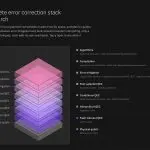
The company’s dual-rail gate-model architecture is specifically designed to lessen the complexity of quantum error correction, a significant obstacle to realizing the full potential of gate-model quantum computing for applications like quantum chemistry and materials simulation, according to D-Wave. This approach aims to reduce the resources needed for error mitigation, potentially accelerating the timeline for practical applications in these fields.
D-Wave secured a $1.5 million NSF grant on June 30 to further advance fault-tolerant quantum computing using this dual-rail technology for the ERASE project, demonstrating external validation of the architecture’s promise. A $550 million acquisition of Quantum Circuits Inc. in January 2026 added gate-model quantum computing capability, and the company anticipates shipping its first dual-rail gate-model machine from a new research center in New Haven, Connecticut, later this year.
D-Wave chief science officer Dr. Schoelkopf explained, “D-Wave is bringing two kinds of evidence to Quantum World Congress: production results from annealing systems solving complex optimization problems now, and gate-model results showing how hardware-level erasure detection can reduce the burden of quantum error correction.” Beyond technical demonstrations, D-Wave’s senior vice president of global government relations and public affairs, Allison Schwartz, will participate in panels addressing quantum policy and real-world applications.
Schwartz will advocate for a U.S. strategy that balances long-term research with accelerated application development, procurement, and deployment, reflecting D-Wave’s commitment to both near-term impact and future innovation, the firm reports. The company recently received up to $100 million from the U.S. Department of Commerce through the CHIPS R&D program, separate from the previously mentioned funding, further solidifying its position within the quantum landscape and funding work on both annealing and gate-model processes. Attendees at Quantum World Congress can explore D-Wave’s technologies at booths 51 and 53, including live demonstrations of quantum-powered applications.
In our view, quantum computing is not a single-architecture race, and it will not be won by qubit counts alone.
Dr. Robert Schoelkopf, Chief Science Officer at D-Wave


See today’s quantum computing news on Quantum Zeitgeist for the latest breakthroughs in qubits, hardware, algorithms, and industry deals.