Error handling ran through much of this week’s news. Pasqal won French backing to lead a fault-tolerance programme, D-Wave opened a simulator for testing error-aware code, and Classiq released a tool that estimates the physical-qubit cost of fault-tolerant programs. IBM and Harvard showed they could learn SYK Hamiltonians with polynomial scaling, while Quantinuum found that adiabatic evolution beat the FFT for larger materials simulations.
This pragmatic turn is visible in infrastructure investments, including the opening of New Mexico’s Roadrunner Quantum Lab, which houses Diraq, IonQ, and Sandia, and the deployment of a quantum-secured IP network in the Greater Bay Area by Huawei and CTM. These sites support theoretical research and the intended deployment of early applications, backed by financial commitments such as the €122 million NFQC-1k project in Germany, which aims for a 1,000-qubit machine. Microsoft’s Quantum Pioneers Program, which focuses on topological qubits and error correction, increasingly emphasises collaboration with industry partners.
Accounting for real-world limitations extends beyond hardware. Anthropic’s AI quickly found flaws in the HAWK crypto scheme, showing the need for crypto-agility, while evolutionQ’s Michele Mosca urges organisations to prioritise defences against quantum decryption threats. Successfully transitioning to quantum-safe systems requires proactive security measures that exceed academic proofs-of-concept, and growing awareness of this gap will create a market for AI-assisted cryptanalysis in the years ahead.
1. Microsoft Quantum Pioneers Program Awards Funding to Ten Research Teams

Microsoft announced the winners and finalists of its June 2026 Quantum Pioneers Program, a collaboration with academic institutions focused on overcoming challenges to building fault-tolerant quantum computers. Ten research teams, five in hardware and five in software, were selected from universities across the United States, TU Delft, and The Hebrew University of Jerusalem to receive funding and collaborative support. These projects focus on improving the stability of topological qubits, storing information in a way that resists disruption, and developing better quantum error-correction methods that encode data across multiple physical qubits to protect against errors. Microsoft intends to work closely with these researchers, testing their ideas and sharing results to expedite the development of reliable quantum systems and bridge the gap between theory and real-world application.
2. Pasqal Secures French Funding to Advance Fault-Tolerant Quantum Computing
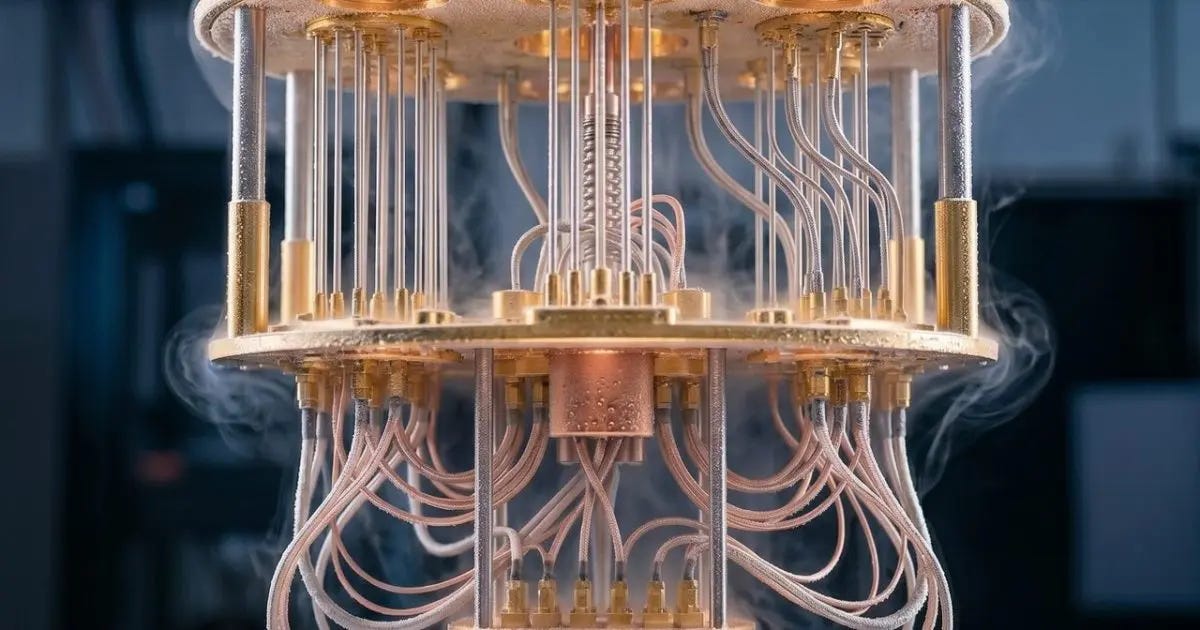
Nasdaq-listed Pasqal is refocusing on commercial quantum computing applications after terminating its participation in the French defence program LSQUARE, having successfully met all technological goals. The French Secrétariat général pour l’investissement (SGPI) and the Direction générale des entreprises (DGE) have invited Pasqal to lead a research and development program on fault-tolerant quantum computing using neutral atoms. Pasqal operates the second-largest fleet of complex quantum computers worldwide and utilizes neutral atoms as qubits. Organisations like Saudi Aramco and Crédit Agricole CIB use the company’s technology. Pasqal’s revenue rose 14%, with quantum services up 34%, indicating growing demand.
3. D-Wave Launches Simulator for Error-Aware Quantum Code Testing
D-Wave Quantum initiated a beta program granting early access to its gate-model quantum computing simulator to partners including BBVA, FirstQFM, Florida Atlantic University, and the Jülich Supercomputing Centre. This simulator utilises D-Wave’s dual-rail superconducting technology, aiming to improve quantum computation quality by focusing on error detection rather than requiring vast numbers of qubits for traditional error correction. BBVA is exploring potential financial applications like portfolio optimisation, while FAU researchers will use the tool for workforce development and improving quantum machine learning robustness. The simulator’s architecture seeks to lower hardware demands and could enable more efficient fault tolerance, letting organisations test error-aware code on existing cloud infrastructure.
4. Roadrunner Quantum Lab Opens in Albuquerque with Twelve Tenants
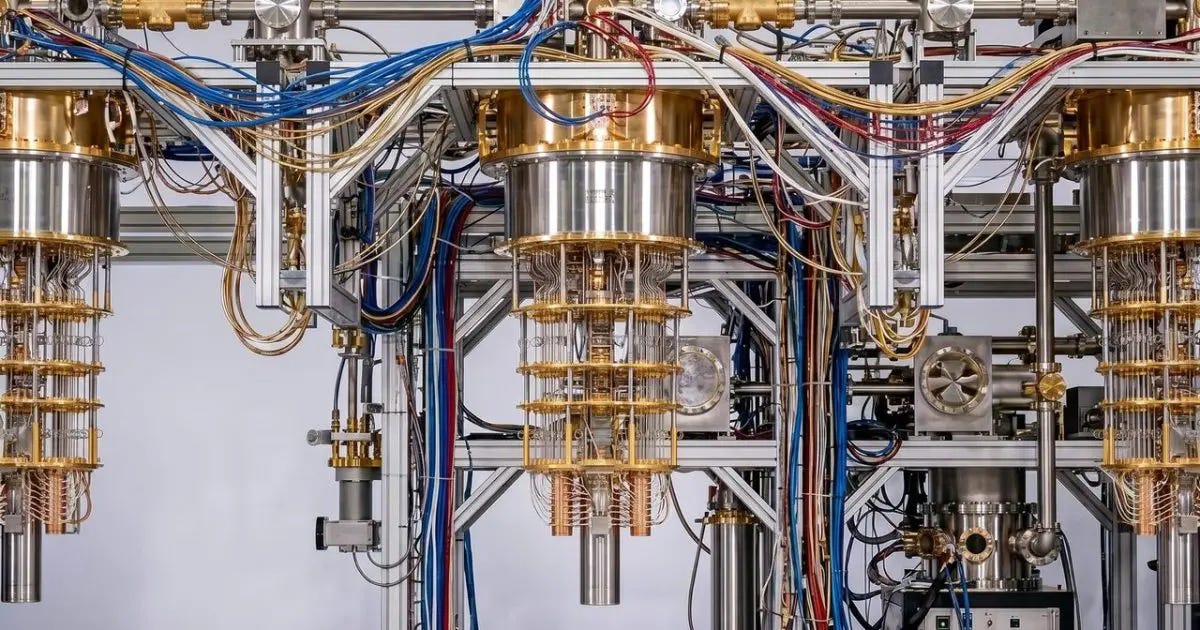
New Mexico’s Roadrunner Quantum Lab has opened in Albuquerque with twelve companies and national labs as initial tenants. Backed by a $450 million state commitment, the 35,000-square-foot facility will house organisations like Diraq, IonQ, Sandia, and Los Alamos, fostering collaboration in quantum hardware development. Diraq will expand test and measurement capabilities in Albuquerque, participating in DARPA’s Quantum Benchmarking Initiative, while IonQ is expanding its presence by utilizing the Roadrunner Quantum Lab and a Quantum Demonstration Facility for joint projects. IonQ’s Superion system demonstrated a 20x performance increase, advancing drug discovery and materials science. Sandia and Los Alamos National Laboratories will jointly operate the Quantum Demonstration Facility, offering resident companies access to their quantum expertise. Located within Albuquerque’s Innovation District, the lab intends to support collaboration between industry, labs, universities and the state government, accelerating the transition of quantum research into tangible capabilities and solidifying New Mexico’s role as a national hub for quantum innovation.
5. IQM Quantum and UAM Scale Fermion Encoding for Error Correction

IQM Quantum Computers, collaborating with the Universidad Autónoma de Madrid, achieved arbitrary code distance in methods for representing fermionic quantum systems using qubits. Their “Ladder Encoding” embeds simpler encodings into the surface code by creating topological defects, avoiding a previous limitation in which increasing code distance also increased computational load. This scaling relates code distance directly to operator weights within a Fermi-Hubbard model, and the approach extends to two dimensions and other topological codes like the 6.6.6 color code. The team’s work, published September 30, 2026, offers a pathway toward building quantum computers capable of handling more complex simulations by refining how fundamental particles are represented within quantum calculations.
6. UC Berkeley Achieves Constant Overhead in Quantum Error Correction

Researchers at UC Berkeley, collaborating with the Simons Institutes, have developed a new method for injecting quantum states into error-correcting codes. This scheme allows qubits to be reliably encoded and decoded without increasing the demands on computing resources or time, a departure from previous methods with scaling overhead. The team utilized hypergraph product construction, building complex error correction structures from simpler ones, alongside classical LDPC codes to achieve fault tolerance during both encoding and decoding. While the advance necessitates significant classical computation alongside the quantum processes, it removes a key obstacle to building larger, more stable quantum computers by maintaining constant overhead. Word counts per sentence: 16, 14, 21, 15.
7. Alice & Bob Stabilizes Cat Qubits with Microvolt Voltage Bias

Alice & Bob stabilised cat qubits with a 1.1 microvolt direct current voltage bias applied to a superconducting circuit, controlling photon exchange between one, two, or four photons and resolving a prior difficulty in four-component encoding. Direct observation of paired-photon dissipation via Wigner tomography confirmed stabilisation and suppressed frequency shifts. This technique provides an alternative to microwave-driven stabilisation, expanding possibilities for quantum computers and contributing to error correction work within collaborations like QuBriC and Europe’s quantum error correction network. Published as a preprint in August 2026, the findings detail how Cooper pair tunnelling, driven by the DC bias, enables energetically favourable photon exchange between memory and buffer resonators, changing the landscape of quantum computation.
8. Mosca’s Theorem Guides Quantum-Safe Crypto for University of Waterloo

The University of Waterloo and evolutionQ CEO Michele Mosca developed Mosca’s Theorem to assess when to migrate to quantum-safe cryptography, comparing the time to protect data and upgrade systems against the projected arrival of a quantum computer capable of breaking current encryption. Vulnerability exists when combined effort falls short of this threat. On September 18, 2026, Mosca presented his work at a joint event hosted by the Quantum Computing Society of the Philippines and the Quantum Ecosystems & Technology Council of India, demonstrating growing international focus on proactive quantum security. Mosca’s decades of work bridge communication gaps between quantum computing and cryptography experts, urging organisations to move beyond inventories and proofs of concept toward proactive security measures. He emphasises defensive preparedness, noting entanglement-based protocols offer a potentially more straightforward path to validation against physical security assumptions.
9. Quantinuum’s Adiabatic Evolution Beats FFT for Larger Quantum Simulations

Scientists at Quantinuum discovered that for preparing quantum states representing materials, a slower method called adiabatic evolution outperforms the faster Fermionic Fourier Transform (FFT) beyond twenty qubits. Both approaches require similar computational effort, but adiabatic evolution spreads errors more slowly, yielding lower-energy ground states on Quantinuum’s System Model H2 trapped ion computer. This result challenges the typical focus on minimizing computational steps, showing that prioritizing resistance to noise can be more effective with current hardware. The team found that trading fine precision for durability is key, an advantage that could matter for modelling materials and simulating complex chemistry. This work suggests algorithm design must increasingly account for the realities of noisy intermediate-scale quantum computers. (107 words)
10. Quantum Internet Alliance Secures €47.5M to Prototype Full-Stack Network
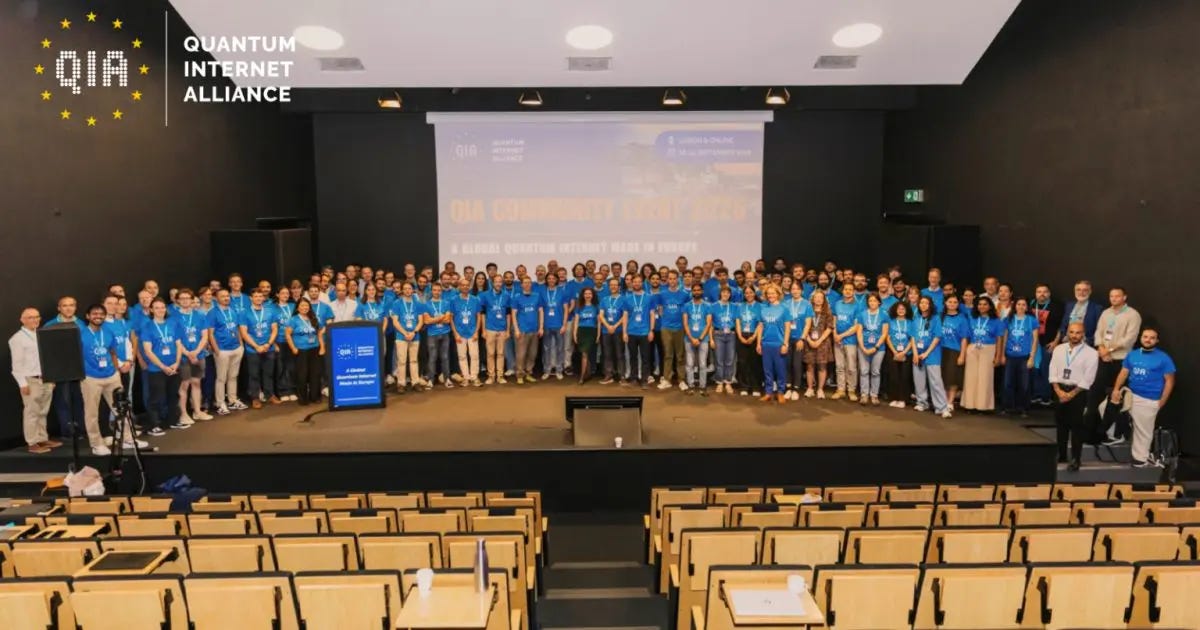
The Quantum Internet Alliance received €47.5 million from the European Commission to continue building a prototype quantum internet. This follows initial work completed between October 2022 and March 2026, and will extend the project for another 42 months, focusing on linking existing metropolitan quantum networks with quantum repeaters. The funding shifts the focus from basic research to creating a fully functional, programmable network capable of supporting applications, and will also foster the development of a competitive European quantum ecosystem through startup support and commercialisation efforts. By prioritising interoperability and building on existing technologies, QIA aims to establish Europe as a leader in quantum internet technology and create a sustainable quantum innovation landscape.
11. Huawei and CTM Launch First Quantum-Secured IP Network in Greater Bay Area

CTM and Huawei have deployed the world’s first integrated quantum key distribution (QKD) communication target IP network across the Greater Bay Area. This network directly integrates QKD, a method of generating encryption keys using quantum mechanics, into existing IP infrastructure, unlike previous systems that added it as an extra layer. By combining quantum and conventional communication, the companies aim to cut operating costs by over 60 per cent using Huawei’s new router with built-in QKD capabilities. The network is designed to protect critical infrastructure and data from future decryption by quantum computers. CTM and Huawei aim to extend the deployment with specialised quantum-secured private lines and accelerate their implementation on live networks, establishing the Greater Bay Area as a hub for quantum security development.
12. IBM and Indian Institutes Advance AI and Quantum Research

IBM is deepening research collaborations with the Indian Institute of Technology Bombay and the Indian Institute of Science, focusing on advances in artificial intelligence and quantum computing. The partnership with IIT Bombay focuses on adapting AI models for Indian languages, improving accessibility and accuracy beyond simple translation by optimising models to capture linguistic nuances. Simultaneously, work with IISc targets autonomous AI agents for complex task management, with researchers also enhancing intelligent knowledge retrieval and optimising AI runtimes to speed up large language models. These combined efforts aim to build trustworthy, inclusive AI systems with applications spanning software education, intelligent operations, and benefiting enterprises and broader society.
13. Anthropic AI Rapidly Finds Flaws in HAWK Crypto Scheme

Anthropic’s Claude Mythos Preview AI identified a flaw in the HAWK digital signature scheme after two years of human review. In approximately 60 hours, it also improved attacks on a reduced-round version of AES by a factor of 200-800, using around $100,000 in compute resources. This demonstrates a shift toward AI-assisted cryptanalysis and pressures organisations to map cryptographic dependencies with a “Cryptographic Bill of Materials,” as many cyphers protecting live systems may contain undiscovered vulnerabilities. Crypto-agility, the ability to replace cryptographic algorithms without rebuilding architecture, is increasingly important; systems lacking it require code rewrites, while those with abstracted algorithm selection can be updated via policy changes. NIST withdrew HAWK from standardisation consideration following the AI’s discovery.
14. IBM and Harvard Learn SYK Hamiltonians with Polynomial Scaling

A collaboration between IBM and Harvard University has successfully learned the Hamiltonians governing complex Sachdev-Ye-Kitaev (SYK) models, overcoming limitations of previous methods. The team devised an algorithm that determines these ‘rules’ using a number of samples that grows moderately with system size, achieving polynomial scaling where earlier approaches failed because interactions grew with the cube of system size. This advancement exploits the random mean-field structure inherent in the SYK model, enabling accurate reconstruction of the Hamiltonian regardless of temperature. While currently focused on theoretical models, this work could improve the modeling of strongly correlated materials and inspire advances in machine learning algorithms. Word counts: 31, 23, 26, 22.
15. Diraq Expands US Presence with New Mexico Quantum Lab
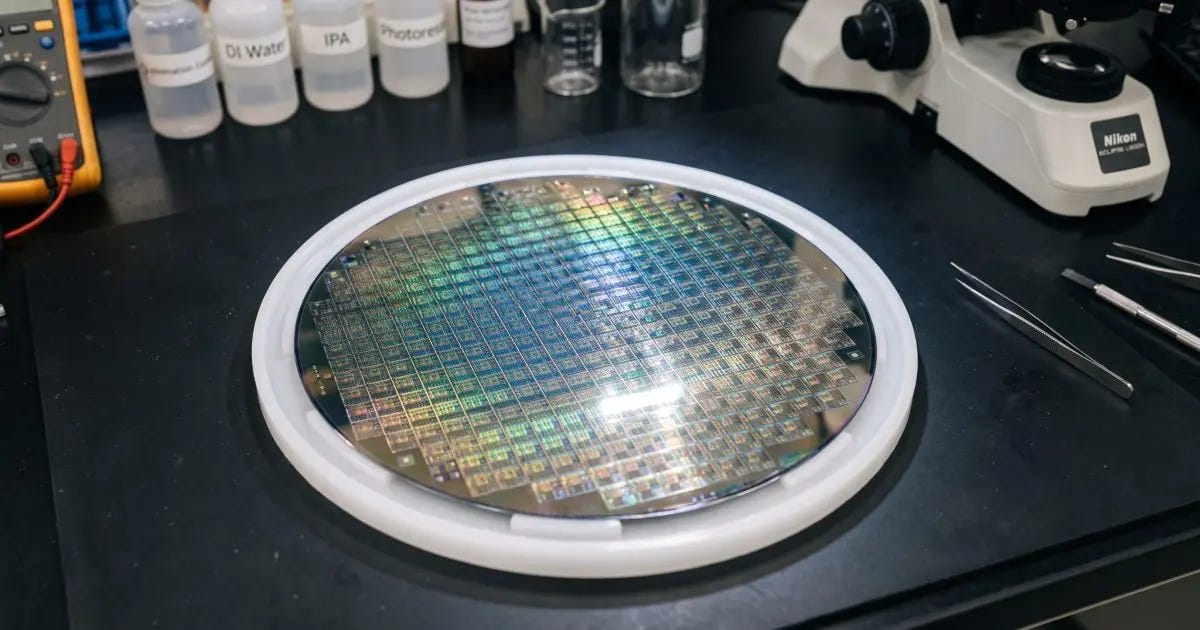
Diraq, a spin-out from UNSW Sydney, is establishing a research and development laboratory in Albuquerque, New Mexico. This new lab, named Roadrunner Quantum Lab, will focus on characterising advanced silicon-based quantum processors, building on Diraq’s work fabricating spin qubits directly on standard CMOS lines. Supported by matching funds from the state and the DARPA Quantum Benchmarking Initiative, this expansion aims to advance the company’s goal of building utility-scale quantum computers capable of millions of qubits. The lab’s creation signals a long-term commitment to New Mexico’s growing quantum ecosystem and adds specialised U.S.-based capabilities in quantum device testing.
16. QUDORA and Partners Secure €122M for 1,000-Qubit Quantum Computer
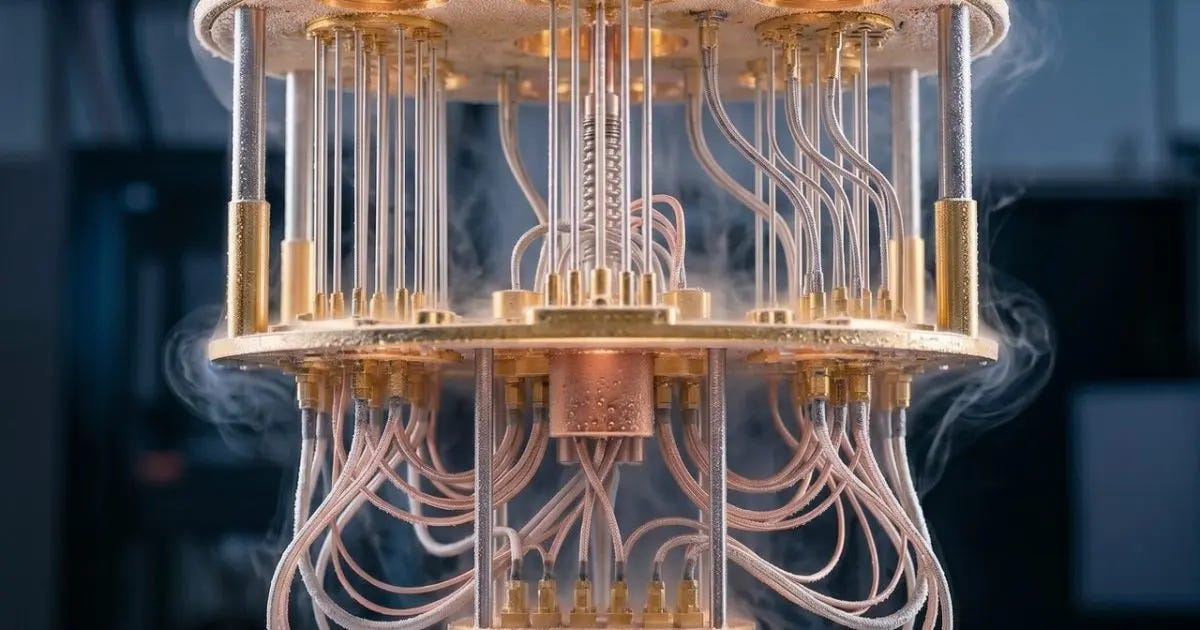
QUDORA Technologies leads a €122 million project, NFQC-1k, uniting seven German research institutions and industry partners to develop a 1,000-qubit fault-tolerant quantum computer. The system uses trapped-ion technology and aims for at least 1,000 physical qubits and 50 logical qubits. Performance will be verified by a Quantum Fourier Transform. Beyond qubit count, the project focuses on an architecture that allows scalable and reliable operation of many qubits, an advancement for practical quantum computation. Funded by Germany’s Federal Ministry, NFQC-1k establishes a European pilot line for high-performance quantum processing units, solidifying regional leadership in this evolving field.
17. Xanadu and Bluefors Develop Modular Cryo-Units for Quantum Data Centers
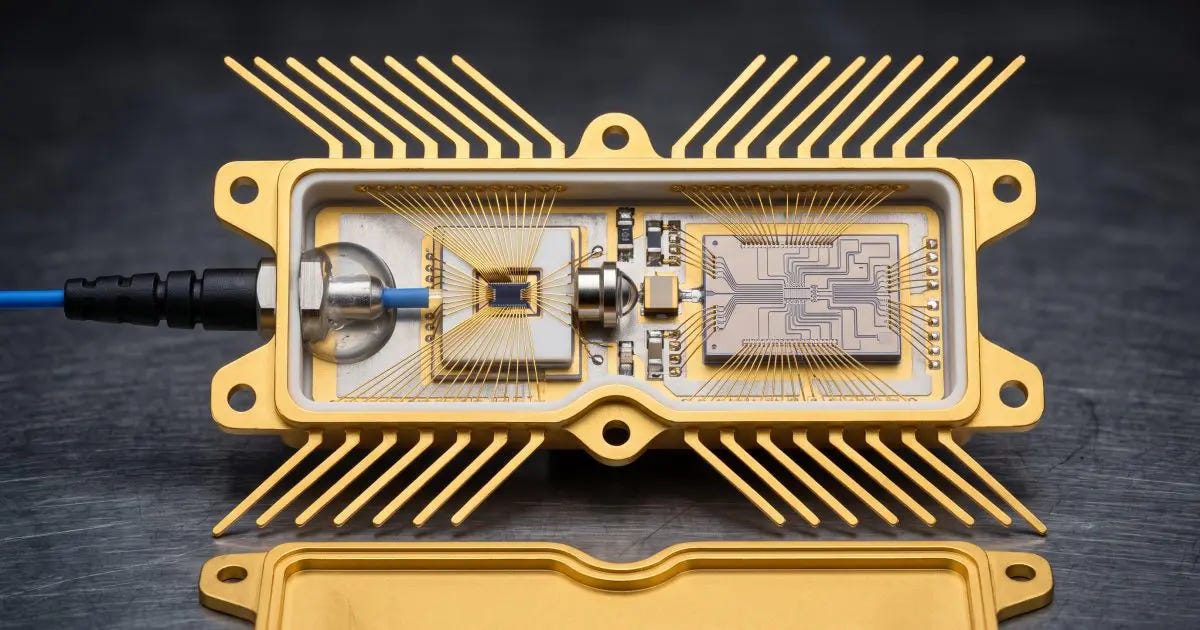
Xanadu Quantum Technologies and Bluefors are collaborating to build a new cryogenic prototype with a multi-million-dollar investment. This partnership focuses on creating compact, modular cooling units that bypass the need for large industrial-scale cryoplants previously considered essential for utility-scale quantum computing. Bluefors’ recently launched Modular Cryogenic Platform, capable of handling 800 kg payloads, forms the basis of this work and aims to reduce infrastructure costs and accelerate the development of fault-tolerant quantum computers. This design prioritises scalability and economic viability, with the companies envisioning the prototype as a blueprint for wider adoption and optimised time-to-value for quantum computing investments.
18. memQ Unveils Open-Source Compiler for Mixed-Vendor Quantum Networks
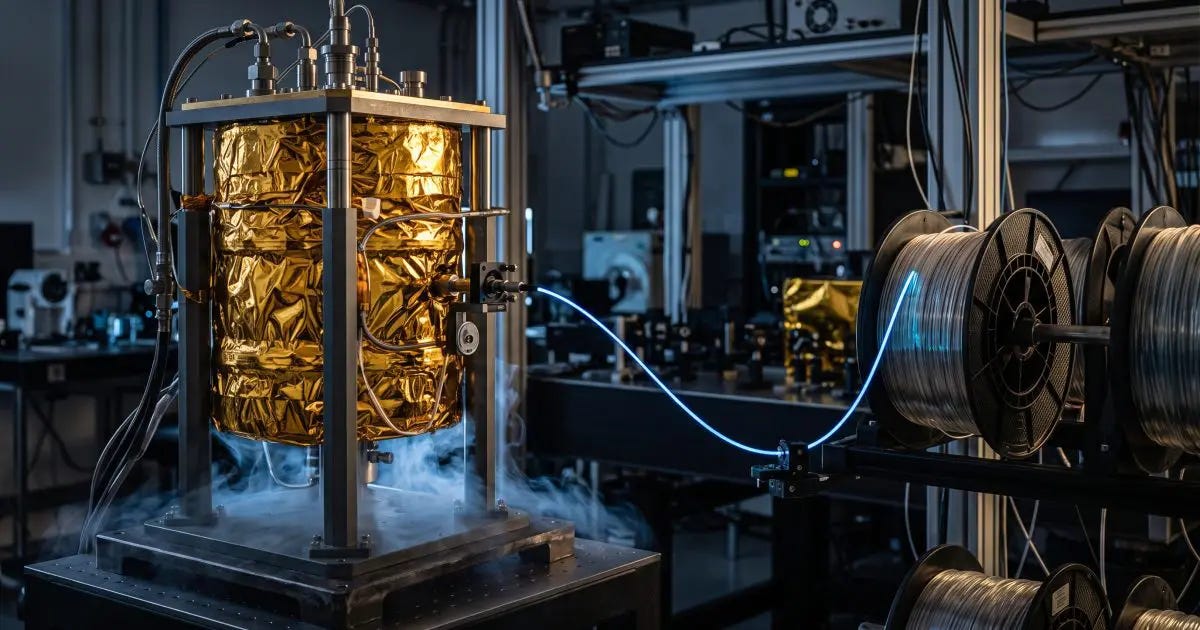
Founded by researchers from the University of Chicago in 2022, memQ released its Distributed Quantum Compiler (DQC) as an open-source Python framework on GitHub, aligning with U.S. federal directives issued in June 2026. The toolchain translates quantum circuits into optimized execution graphs for networks of diverse quantum processors linked by optical connections, eliminating manual network programming. Evaluations showed that changing intra-QPU connectivity to nearest-neighbour increased EPR-pair usage on an 18-qubit quantum Fourier transform circuit, and contention-aware link scheduling reduced execution makespans by approximately 18 per cent. A $12.5 million funding round and a DARPA contract awarded in April 2026 support work aiming to cut resource demands by up to 1,000 times and enable more efficient scaling of quantum systems.
19. ETH Zurich and MIT Develop Quantum Computation Verification System

Researchers at ETH Zurich and MIT have built a new system that uses standard computers to verify computations performed by quantum processors. The system operates within the BQP complexity class, meaning it can confirm calculations from a single quantum processor, and its resource requirements scale linearly with circuit size, a better result than earlier methods that became impractical with larger calculations. This verification relies on ‘computational self-testing’ and the ‘Learning With Errors’ assumption, providing control over the quantum register and constant verification error regardless of qubit count. While replicating prior multi-prover results in a single-prover setup, this development enables secure quantum cloud computing by allowing classical computers to check distant processors without full trust.
20. Classiq Unveils Fault Tolerance Engine for Quantum Resource Estimation
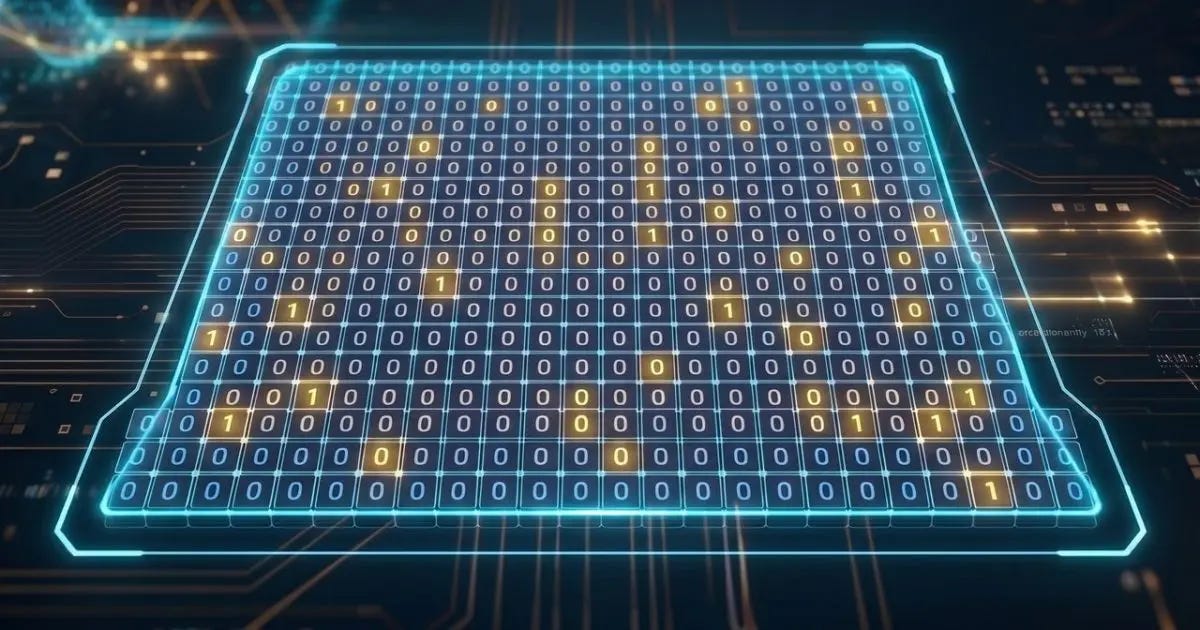
Classiq released a Fault Tolerance Engine to estimate the physical resources needed to run quantum applications on current hardware. This engine generates architecture-specific execution plans that factor in physical qubit needs, error-correction cycles, and costly T gates for fault-tolerant computing. It translates logical programs into physical plans, showing the true cost of quantum computations by accounting for qubit layout and error accumulation. This matters because efficient logical circuits don’t always translate into efficient fault-tolerant implementations. The tool lets developers evaluate workloads, organisations plan quantum programs, and hardware teams refine roadmaps together.




See today’s quantum computing news on Quantum Zeitgeist for the latest breakthroughs in qubits, hardware, algorithms, and industry deals.