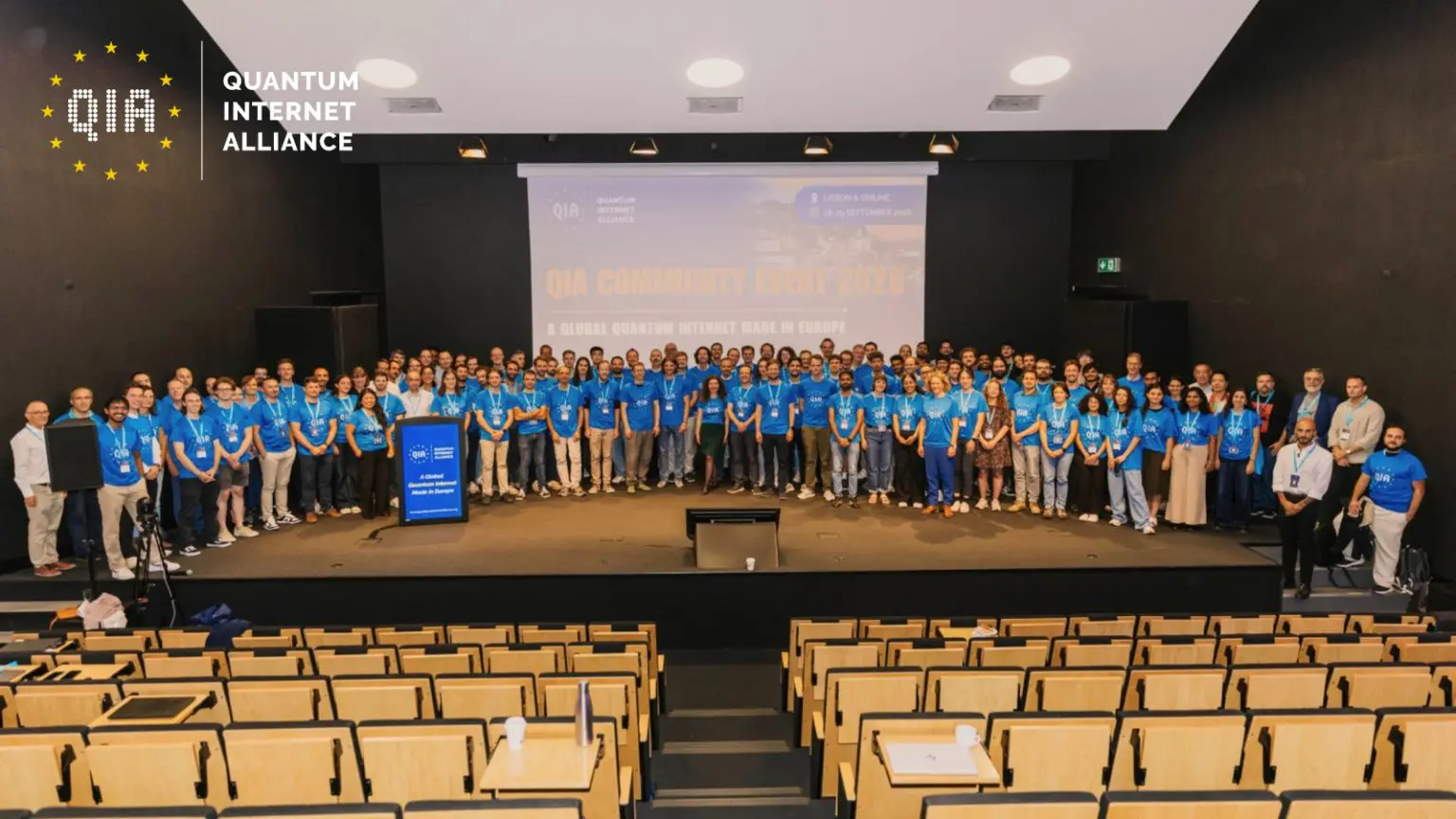
The Quantum Internet Alliance will build a full-stack quantum internet prototype with a new €47.5 million grant from the European Commission. This funding extends research and development for the next 42 months, following an initial phase running from October 2022 to March 2026, and will focus on interconnecting metropolitan-scale quantum networks using quantum repeaters.
“Over the past years, we have developed the core building blocks of a quantum internet,” says QIA Director Stephanie Wehner. “Our mission in this next phase is to integrate these components into a full stack quantum internet prototype.” The program aims to transition technologies from experiments toward real-world applications and encourage a competitive European quantum ecosystem.
QIA’s SGA2: €47.5M Funds Full-Stack Quantum Network Prototype
The Quantum Internet Alliance will demonstrate the interconnection of two metropolitan-scale quantum networks using long-distance fibre links and quantum repeaters with its newly secured €47.5 million. The focus now shifts from foundational research to building a complete, programmable quantum network prototype capable of supporting real-world applications. A key objective is to move beyond isolated quantum networks and establish interoperability, an important step toward a truly large-scale quantum communication infrastructure.
The program’s scope extends beyond technological development to include the initial steps toward a Quantum Internet Initiative, preparing for pilot facilities and open-access infrastructure. Technologies originating from the first phase of the project are already transitioning into commercial products, with new startups emerging from the QIA ecosystem to translate research breakthroughs into practical services.
This emphasis on commercialization and ecosystem building reflects a broader strategy to maintain European leadership in the rapidly evolving field of quantum technologies. “Right now, Europe is still a leader in quantum internet efforts worldwide,” said QIA Director Stephanie Wehner, highlighting the continent’s current position. QIA’s full-stack approach also prioritizes the advancement of quantum network use cases, providing a collaborative platform for quantum internet initiatives across Europe.
The consortium aims to create technology that does not yet exist elsewhere, but Wehner stresses the importance of sustained investment to maintain that advantage. “With this second phase, we are creating technology that does not yet exist anywhere on earth,” she stated. Beyond research, the alliance intends to empower its startup ecosystem by providing access to facilities and strengthening Europe’s technological capabilities to encourage global competitiveness. The ultimate goal, according to Wehner, is to establish the conditions for a vibrant quantum ecosystem capable of sustained innovation and economic growth.
Over the past years, we have developed the core building blocks of a quantum internet. Our mission in this next phase is to integrate these components into a full stack quantum internet prototype. Europe is at the very forefront of quantum internet technologies world-wide, and this prototype may become the first of its kind in the world.
Stephanie Wehner, QIA Director




See today’s quantum computing news on Quantum Zeitgeist for the latest breakthroughs in qubits, hardware, algorithms, and industry deals.