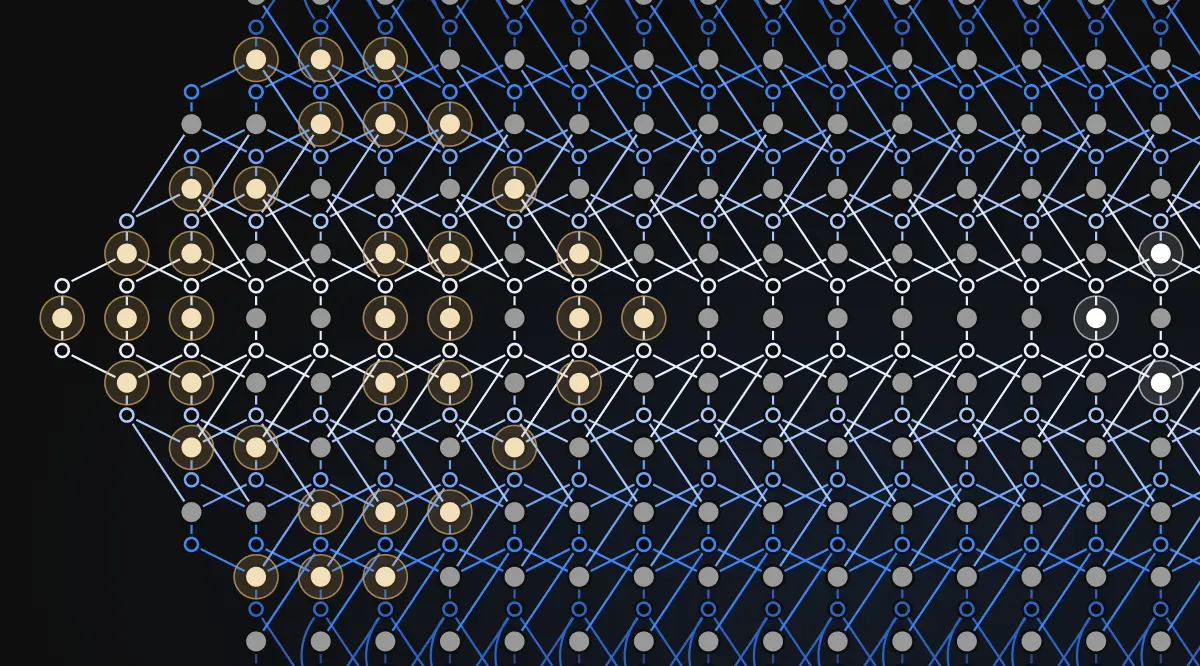
The team has demonstrated the first decoding of LDPC-cat codes on GPUs using NVIDIA NVQLink, connecting Quantum Machines’ OPX1000 to GPU infrastructure, the company says. This proof of concept addresses a critical challenge for scaling quantum error correction: ensuring decoding capacity increases alongside the quantum processing unit. The team successfully tested the process with synthetic data.
LDPC-Cat Codes Decoded on GPUs via NVIDIA NVQLink
This achievement moves error correction processing closer to the quantum hardware, a critical step for scaling quantum computing systems. LDPC-cat codes combine cat qubits, designed to suppress specific hardware errors, with two-dimensional low-density parity-check codes, aiming to minimize the overhead required for reliable fault tolerance. The team detailed the architecture and theoretical underpinnings of these codes last year, and this work represents a functional demonstration of the concept, according to Quantum Machines.
NVIDIA NVQLink proved essential, facilitating the high-bandwidth data transfer necessary to move decoding tasks from control electronics to the GPU. For realistic superconducting architectures, controller-decoder closed-loop latencies must remain in the tens-of-microseconds range. The observed sublinear growth in latency with batch size suggests a pathway to meet these demanding performance requirements.
Quantum Machine Control with Open Acceleration Stack
The Quantum Machines Open Acceleration Stack maintains a 2-4 microsecond round trip between classical accelerators and quantum processing units, a performance benchmark critical for scaling error correction. This capability interconnects the OPX1000 controller with GPUs, CPUs and FPGAs, supporting NVIDIA CUDA-Q, CUDA, C++ and Python programming environments. The architecture is designed to prioritize the decoder itself, rather than consume resources with communication overhead.
This approach allows for the offloading of computationally intensive decoding tasks to classical hardware, a strategy increasingly vital as quantum systems grow in complexity. A single logical qubit presents a manageable decoding workload, but as the number of physical qubits increases, so too does the volume of syndrome data requiring processing.
Quantum Machines envisions the Open Acceleration Stack as a key enabler for handling this expanding demand, facilitating a hierarchy of timescales and compute resources within quantum workflows, the firm reports. The company states they anticipate real-time decoding of LDPC-cat codes as a next milestone, Quantum Machines reports. According to Quantum Machines, this opens avenues for researchers building error correction on any modality to explore the potential of the Open Acceleration Stack, and the company is offering demonstrations to interested parties. The stack is NVQLink-compliant and supports a range of programming languages.
GPU Batching Reduces Decoding Latency for Scalability
GPU batching demonstrably improves decoding efficiency, with recent work revealing sublinear latency growth as the number of syndromes processed simultaneously increases. The team’s experiments showed that decoding multiple syndromes together reduces the time required per syndrome, maximizing the throughput of the decoding process, the company’s account states.
The team reports that this is promising, noting that larger quantum machines generate more syndromes, and the GPU’s efficiency increases with the workload. The next phase of development will focus on live testing with real data, requiring further optimization of the controller-to-GPU pathway to align with the machine’s operational cycle time.
Source: https://www.quantum-machines.co/resources/blog/alice-bob-ldpc-cat-codes-gpu-decoding-nvqlink/
See today’s quantum computing news on Quantum Zeitgeist for the latest breakthroughs in qubits, hardware, algorithms, and industry deals.