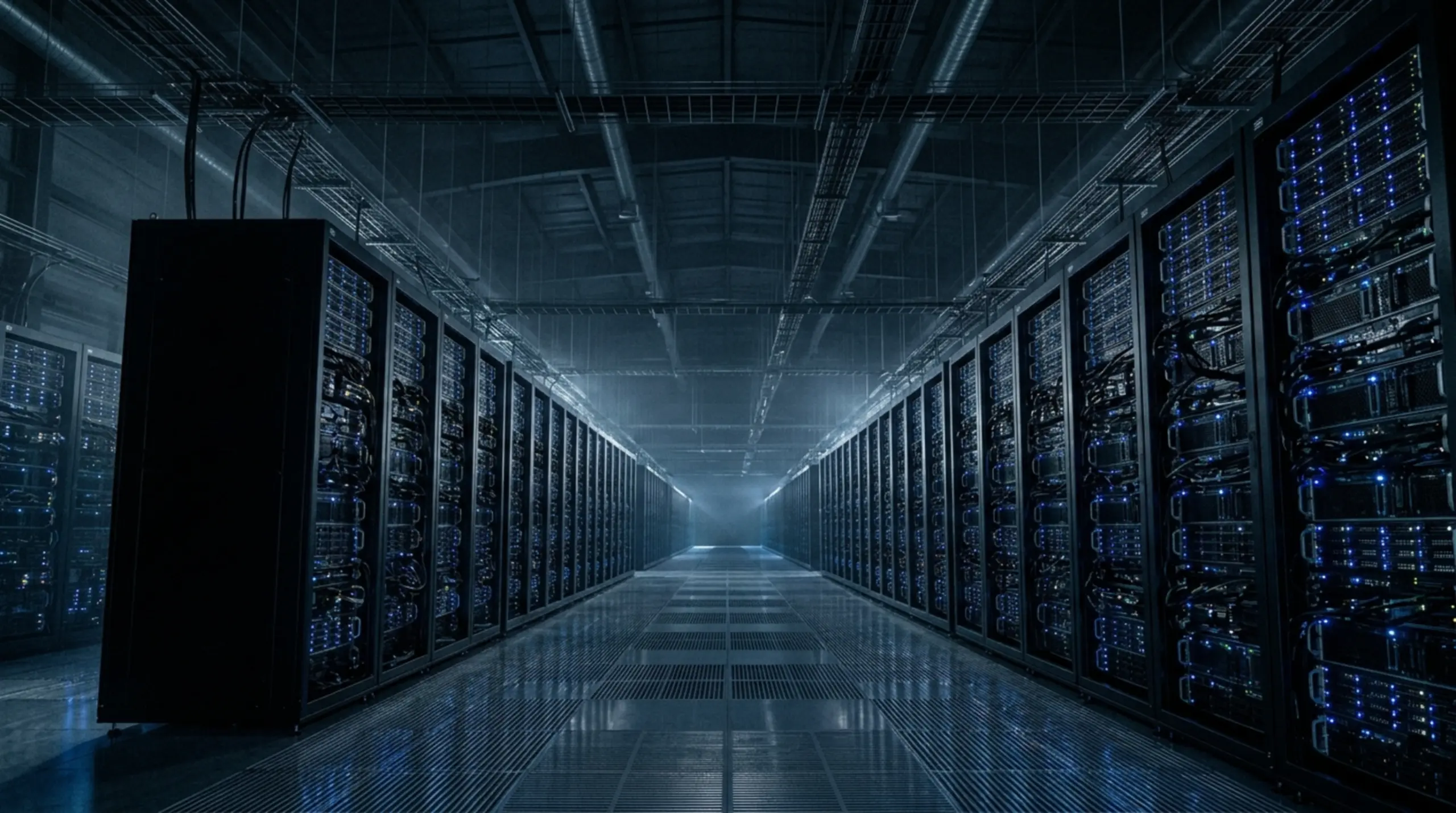
Alice & Bob has, for the first time, decoded LDPC-cat codes on graphics processing units using NVIDIA’s NVQLink architecture. Alice & Bob assessed the feasibility of GPU decoding for LDPC-cat codes using an NVQLink connection with Quantum Machines‘ OPX1000 and Open Acceleration Stack, a modular framework that couples the controller directly to GPUs and other classical processors with microsecond-scale roundtrip latency.
“Alice & Bob’s work shows how NVQLink can accelerate the real-time decoding needed to turn cat qubits into fault tolerant quantum-GPU supercomputers,” says Sam Stanwyck, Director, Quantum Product, NVIDIA. NVIDIA’s NVQLink is an open system designed to tightly couple GPU supercomputing with quantum processors for tasks like error correction.
NVQLink Enables GPU Decoding of LDPC-cat Codes
This speed was demonstrated while assessing the feasibility of decoding LDPC-cat codes, a specific error-correction method developed by Alice & Bob for its cat-qubit architecture and detailed in their January 2025 publication, “LDPC-cat codes for low-overhead quantum computing in 2D.” The successful transfer of data via NVQLink represents the first instance of LDPC-cat codes being decoded on GPUs using this low-latency connection.
Sam Stanwyck, Director, Quantum Product, NVIDIA, emphasized that a major challenge with present day quantum computing is that errors build up faster than they can be corrected, and traditionally it has been a challenge to bring compute to this problem for faster qubit modalities like cat qubits. This collaboration with Alice & Bob builds upon earlier work, including a runtime of 1 hour 57 minutes achieved in March 2026 for decoding simulated syndrome data using the NVIDIA CUDA-Q platform.
The current proof-of-concept implementation, using synthetic data, demonstrates the potential for scaling decoding efficiency by processing multiple syndromes in parallel, the company says. Juliette Peyronnet, US GM Alice & Bob, explained that error correction is what will turn quantum computers into useful machines, and decoding is one of its most demanding classical tasks. Showing that their LDPC-cat codes can be decoded on NVIDIA GPUs with existing tools is encouraging for scaling, because it means decoding capacity can grow with the machine.
The team is now focused on optimizing the data pipeline, the sequence of steps transferring measurement data through NVQLink to the GPU, to achieve the performance necessary for real-time decoding, according to NVIDIA. “The next step is making it fast enough to keep pace with the quantum computer, and we’re working with NVIDIA to get there,” Peyronnet added. This advancement positions NVIDIA as a platform provider for accelerating quantum computing, enabling the development of accelerated quantum supercomputers.
Error correction is what will turn quantum computers into useful machines, and decoding is one of its most demanding classical tasks.
Juliette Peyronnet, US GM Alice & Bob




See today’s quantum computing news on Quantum Zeitgeist for the latest breakthroughs in qubits, hardware, algorithms, and industry deals.