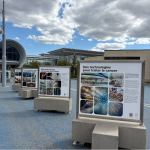
The University of Tennessee’s Peninsula Innovation District has earned the 2026 Emerging Community of Innovation award from the Association Research Parks, a distinction given to innovation ecosystems less than 10 years old demonstrating rapid progress toward commercializing technology. AURP’s committee specifically noted the district’s impact on surrounding communities in a short timeframe, recognizing its momentum and potential for continued growth.
“Being named AURP’s 2026 Emerging Community of Innovation is a powerful affirmation of what happens when researchers, health care professionals, agricultural leaders, entrepreneurs, and industry partners work together to build something bigger than any single organization could achieve,” said Deb Crawford, UT’s vice chancellor for research, innovation and economic development.
Peninsula District Receives 2026 AURP Innovation Award
This distinction highlights a rapid progression from foundational research to tangible outputs, a timeframe uncommon among emerging innovation ecosystems. This broad coalition extends beyond typical university-industry partnerships, encompassing healthcare and agricultural sectors to support a more comprehensive innovation pipeline. The district’s design prioritizes accessibility and interaction; planners envision a walkable environment with future amenities including food options and visitor accommodations to further connect people with ongoing research. The award also acknowledges the Peninsula Innovation District’s focus on accelerating the commercialization of technologies, even those still in early stages of development.
According to district leaders, “Some of these technologies are still early in the market. You’re still doing research, but you’re also trying to get products into the commercial market as soon as possible.” This dual emphasis on fundamental discovery and applied translation emphasises the district’s commitment to driving economic growth and improving community well-being, as reinforced by Crawford: “The recognition reflects the shared vision and momentum behind the Peninsula Innovation District, and reinforces UT’s and UT Medical’s commitment to moving research toward impact in our communities.”
The committee noted the Peninsula Innovation District’s impressive impact among its surrounding communities in a short span of time.
Vickie Palmer, CEO of AURP
$750 Million Investment Fuels District’s Expansion
The Peninsula Innovation District is poised for substantial growth with over $750 million earmarked for investment and development, building upon its initial 60-acre footprint to a planned 300-plus-acre expanse. This capital infusion will fund critical infrastructure improvements alongside the construction of new research and clinical facilities, directly supporting the district’s aim to accelerate the translation of discoveries into tangible healthcare solutions.
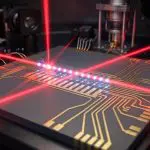
Keith D. Gray, president and CEO of UT Medical, emphasized the district will “create a dynamic environment where researchers, clinicians, and private industry leaders collaborate in close proximity to accelerate discoveries, advance patient care and develop the next generation of treatment innovations.” A key focus of the expansion is the development of a new research building dedicated to applied quantum technologies, designed to encourage collaboration between university researchers, emerging quantum startups, and established industry partners.
The district’s success is also rooted in a broader sense of community contribution, with stakeholders prioritizing collective advancement. “The peninsula community is increasingly characterized by a shared willingness to contribute to something larger than any one institution or project,” according to those involved, and “It really does feel like everyone is giving their all to build something bigger than just themselves.” For UT Medical, the district’s expansion represents an opportunity to strengthen its academic, clinical and research mission, while forging stronger ties with the University of Tennessee and other national partners to improve health outcomes and drive innovation, as stated in a recent announcement.
The Peninsula Innovation District will create a dynamic environment where researchers, clinicians, and private industry leaders collaborate in close proximity to accelerate discoveries, advance patient care and develop the next generation of treatment innovations.
Keith D. Gray, president and CEO of UT Medical
Interdisciplinary Collaboration Advances Research & Healthcare
The planned research building focusing on applied quantum technologies exemplifies the Peninsula Innovation District’s approach to supporting collaboration, bringing together university researchers, quantum technology startups and industry partners in a single space. This intentional mixing of expertise extends beyond simply co-locating organizations; district planners actively involve community members in the design phase of new facilities. “When we plan a building, we bring all those community members together,” said district leader Malone.
“That’s the fun part—and that’s really the secret, I think, to a good experience at a research park.” Such integrated planning supports a broader goal of dissolving traditional boundaries between disciplines, allowing ideas and technologies to move more freely. This approach is already yielding results, with connections forming between historically separate fields like veterinary and human surgery. According to district representatives, “It was a rare example of a veterinary surgeon and a surgeon who operates on people working together.”
Being named AURP’s 2026 Emerging Community of Innovation is a powerful affirmation of what happens when researchers, health care professionals, agricultural leaders, entrepreneurs, and industry partners work together to build something bigger than any single organization could achieve.
Deb Crawford, UT’s vice chancellor for research, innovation, and economic development
Quantum Foundry to Unite Researchers and Startups
Beyond the Quantum Foundry, the district’s development includes a Biosciences and Engineering building, slated for completion in 2030, alongside a UT Medical facility concentrating on cancer research and medical education. These facilities, alongside the College of Veterinary Medicine, Herbert College of Agriculture, Quantum Sciences and UT Research Park at Cherokee Farm, aim to strengthen innovation throughout Tennessee, not simply expand research capacity.
It was a rare example of a veterinary surgeon and a surgeon who operates on people working together.
Keith Carver, senior vice chancellor and senior vice president of the UT Institute of Agriculture
Source: https://research.utk.edu/2026/10/01/uts-peninsula-innovation-district-earns-national-recognition/


See today’s quantum computing news on Quantum Zeitgeist for the latest breakthroughs in qubits, hardware, algorithms, and industry deals.