IBM and AMD are investing heavily in quantum computing, but with different approaches. IBM’s Nighthawk r2 processor achieved 100,000 samples per second, focusing on developer access and error correction testing. AMD is investing $100 million with PsiQuantum to build utility-scale photonic systems and optimize error correction decoding using its Versal and EPYC hardware. This split reflects a debate over whether practical quantum advantage comes from better hardware or better software and integration with existing high-performance computing.
Atom Computing’s $100 million funding from the Department of Commerce, alongside D-Wave’s similar CHIPS Act windfall, suggests a national strategy focused on scaling multiple approaches, even as Google Quantum AI automates algorithm discovery with AI and formal proof, aiming to reduce the qubit demands of complex calculations. IonQ’s participation in DARPA’s Quantum Benchmarking Initiative further complicates the picture, shifting the focus from pure capability to demonstrable industrial value and a hard deadline for viability.
Extending qubit coherence is a foundational challenge, as demonstrated by Google and École Normale Supérieure exceeding 10 milliseconds. The focus is shifting from building stable qubits to using them to solve real-world problems before costs become prohibitive. The next five years will show if increased funding and multiple development approaches will create a sustainable quantum ecosystem.
1. AMD and IBM Research Achieve 7.58x Speedup in Quantum Error Correction

Advanced Micro Devices and IBM Research researchers have demonstrated near-linear scaling in quantum error correction simulations using multiple GPUs. The team achieved speedups of up to 7.58 times when decoding complex codes, specifically a two-gross [[288,12,18]] code, by utilizing up to eight AMD Instinct MI300X and MI355X GPUs. This improvement comes from a redesigned system that efficiently distributes processing across GPUs and uses shared memory for faster data delivery. By optimizing performance on existing high-performance computing infrastructure, this work enables more practical evaluation of larger quantum error correction circuits and supports the Genesis Mission’s goal of accelerating scientific discovery.
2. Atom Computing Secures $100 Million for Fault-Tolerant Quantum Computers

Atom Computing received $100 million from the U.S. Department of Commerce to advance the development of fault-tolerant quantum computers. The funding will support vertically integrated technology improvements and expansion of their engineering and testing infrastructure. Atom Computing’s neutral-atom architecture recently reached Stage C of the DARPA Quantum Benchmarking Initiative, and in 2025, the company sold its first commercial quantum computer to QuNorth. This investment aims to accelerate the path to economically viable quantum computing and strengthen U.S. leadership in the field, allowing for faster validation of innovations and manufacturing scale-up.
3. IBM’s Nighthawk r2 Processor Achieves 100,000 Samples Per Second
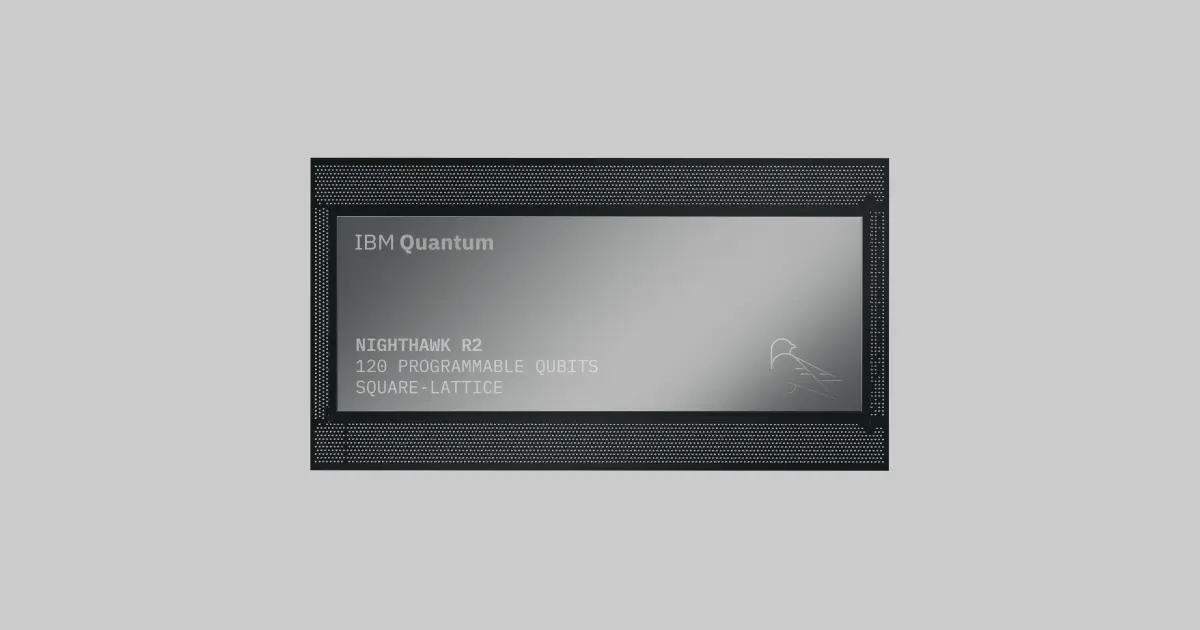
IBM Quantum unveiled the Nighthawk r2 processor at the Quantum Developer Conference 2026, focusing on tools for developers. The new 120-qubit processor can run up to 100,000 quantum circuit samples per second, an increase in speed for complex calculations. This performance is paired with pulse-level access, allowing developers to directly test error-correction techniques on real hardware and refine algorithms. IBM is also expanding access to its quantum resources and providing an open benchmarking suite, along with the Qiskit Paulice framework for building stabilizer-based error correction workflows. This shift prioritizes developer experience to achieve practical quantum advantage.
4. Google Quantum AI Automates Algorithm Discovery with AI and Formal Proof
Google Quantum AI has developed a system that uses large language models and the Lean theorem prover to automatically create and verify new quantum programs. This approach achieved speedups of up to 290x for quantum arithmetic and 11x for simulations used in fusion research, surpassing existing algorithm discovery methods by 1.4x. The system identifies optimizations, like coupling computational streams, and formally proves the correctness of its algorithms, reducing reliance on human experts. This innovation focuses on algorithmic efficiency, lowering the qubit and gate counts needed for complex calculations, and allows exploration of a wider range of possibilities for practical quantum computation.
5. D-Wave Secures $100 Million CHIPS Act Funding for Quantum Builds

D-Wave Quantum Inc. will receive up to $100 million through the U.S. CHIPS and Science Act to develop quantum computers, including a 100,000-qubit annealing system for optimization, AI, and materials science, and a 10,000-qubit gate-model computer aiming for 100 logical qubits capable of over one million operations. D-Wave demonstrated a 65.3% reduction in network signaling load using its annealing technology, integrated into DOCOMO’s operations as of September 30, 2026. Third quarter revenue increased 21% to $4.5 million, with remaining performance obligations reaching $38.3 million, a 1,221% year-over-year increase. D-Wave delivered a 4,400+ qubit Advantage2 system to Villa Saporiti in Como, Italy, and launched a beta program for its quantum computing simulator, securing multi-year agreements with SkyWater Technology, CG I and LG CNS. A proof-of-technology project showed up to 30% reduction in lot delays, and as of September 30, 2026, D-Wave had $503.4 million in consolidated cash and marketable investment securities. This work expands D-Wave’s technology roadmap and commercial reach.
6. Google Quantum AI and École Normale Supérieure Extend Qubit Lifetime Beyond 10 Milliseconds

Researchers from Laboratoire de Physique de l’Ecole Normale Supérieure and Google Quantum AI have demonstrated a qubit design achieving a dielectric loss limit exceeding 10 milliseconds. This was accomplished using a 13.6 MHz cos 2φ transmon qubit, a superconducting circuit that uses Cooper-pair parity symmetry to protect against dielectric loss, a common source of qubit instability. Measurements show a T1 relaxation time of 70 microseconds, but the team identified flux noise within the qubit’s interferometer loop as the current limiting factor. This work confirms the effectiveness of symmetry-based qubit protection and points toward further improvements through optimized circuit designs and flux noise reduction.
7. IBM Quantum and Partners Achieve 70-Qubit Hardware-Trained Quantum Eigensolver
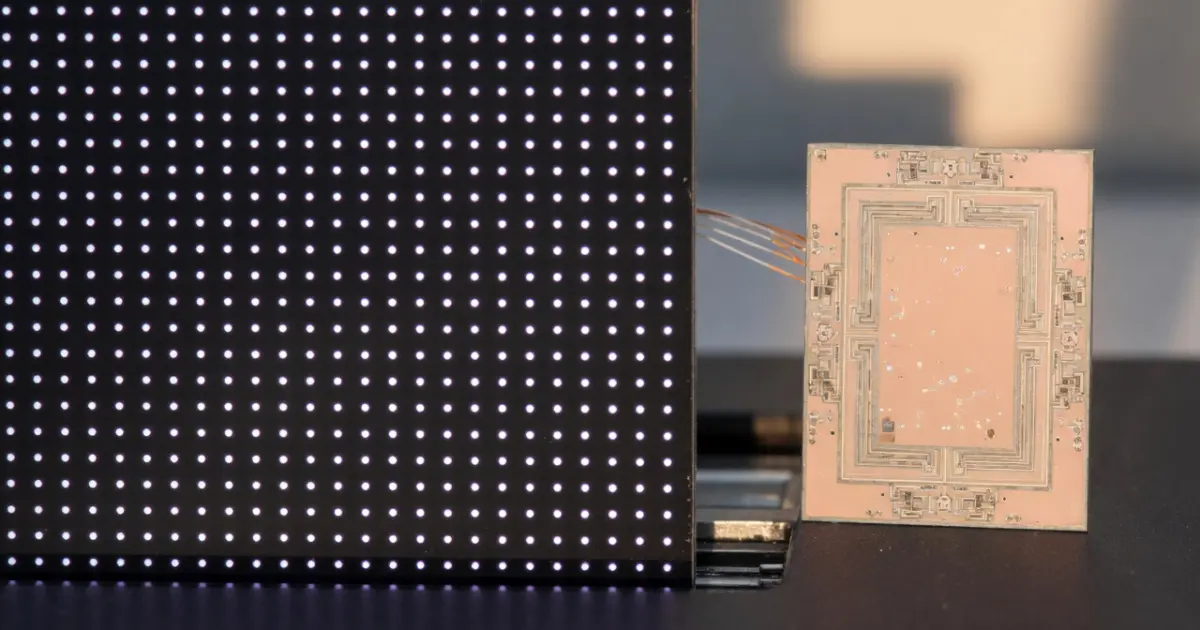
IBM Quantum, working with Mitsubishi Chemical Corporation and Keio University, demonstrated a generative quantum eigensolver trained using its 70-qubit hardware. The team trained policies to generate circuits for sample-based quantum diagonalization, initially with simulations and then on the IBM Heron processor. These circuits, tested on organotin hydroxides, materials used in advanced lithography, required 34 to 72 times fewer two-qubit gates than alternative methods at 56-70 qubits. In 27 of 28 runs at 46-70 qubits, the circuits achieved accuracy within 15 mHa of a density-matrix renormalization group reference. This hardware-informed training allows for more efficient quantum calculations and was demonstrated with transition-metal complexes without retraining.
8. PsiQuantum and AMD Advance Photonic Quantum Computing with Hardware Integration
PsiQuantum is collaborating with AMD, including an equity investment, to build infrastructure for utility-scale quantum computers. Researchers have demonstrated computational chemistry calculations, specifically simulating oncology drug candidates, using AMD’s Versal FPGA, EPYC CPUs, and Instinct GPUs. This work optimizes PRISM, a machine-learning decoder, for low-latency error correction on AMD’s programmable hardware, improving both speed and accuracy. The partnership aligns with U.S. Quantum Genesis priorities, focusing on biological modeling and accelerating the development of fault-tolerant quantum computing for applications like drug discovery. AMD’s existing expertise in high-performance computing is essential for scaling quantum systems.
9. Q-CTRL Secures $290 Million to Advance Quantum and AI Infrastructure

Q-CTRL has received $290 million in Series C funding led by Salesforce Ventures to accelerate development of software merging quantum technology with artificial intelligence. This investment establishes Q-CTRL as a well-funded private quantum firm, focusing on infrastructure software that improves the output of quantum machines. Their Ironstone Opal system is deployed on commercial aircraft and drones with Lockheed Martin, offering a navigation solution unaffected by jamming. This software-first approach allows Q-CTRL to work with various hardware platforms, and the company reports early customer traction in sectors like finance, energy, and aerospace, addressing a challenge in realizing practical quantum advantage.
10. IonQ System Undergoes DARPA Testing for Real-World Quantum Value
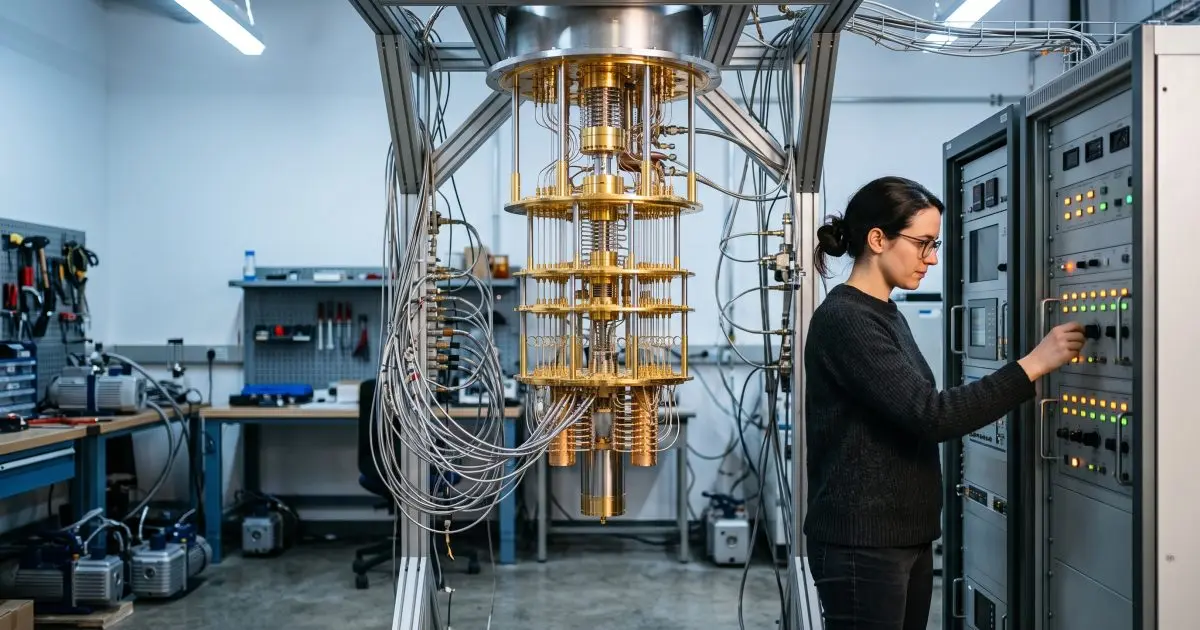
IonQ is undergoing rigorous testing as part of DARPA’s Quantum Benchmarking Initiative, moving beyond demonstrations of capability to assess practical return on investment. DARPA’s approach prioritizes quantifiable industrial benefit, establishing a timeline to determine if quantum technologies are worth their cost. Stage C of the initiative required IonQ to validate its “walking cat” architecture on real hardware, with “no-go” conditions set for 2033 to prove viability. This testing was particularly critical given the evolving threat to current encryption standards, and the urgency of quantum-resistant cryptography. The results informed investment decisions and provided policymakers with a clear assessment of near-term quantum deployment potential.


See today’s quantum computing news on Quantum Zeitgeist for the latest breakthroughs in qubits, hardware, algorithms, and industry deals.