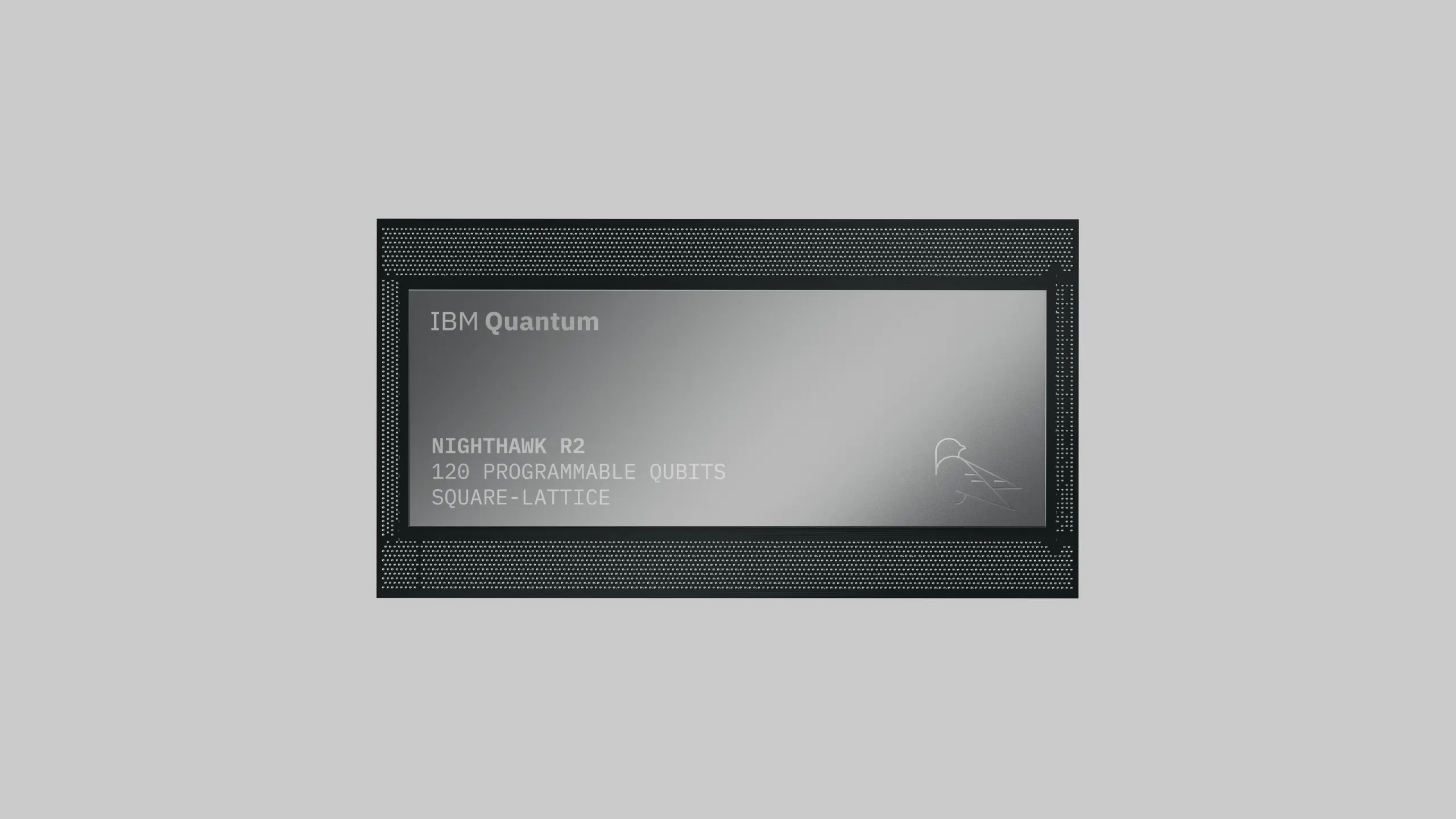
IBM Quantum Developer Conference 2026 signaled a shift toward developer experience as the key to realizing quantum advantage. A significant leap in processing speed now allows for faster iteration on complex quantum circuits; the new IBM Quantum Nighthawk r2 processor features 120 programmable qubits and can run up to 100,000 samples per second. Developers can directly use features like mid-circuit measurement and fast qubit reset through pulse-level access, testing error-correction techniques on real hardware. A 64-qubit experiment is available to run through the “onset of ergodicity” tutorial.
IBM Nighthawk r2: Speed and Access for Frontier Circuits
This speed, paired with 120 qubits, allows for faster iteration on designs pushing the boundaries of current quantum capabilities. IBM highlights that this hardware performance is coupled with features designed to facilitate error-correction research on actual quantum hardware. Developers gain direct access to pulse-level controls on the Nighthawk r2, enabling the use of mid-circuit measurement, fast qubit reset, dynamic circuits, and soft (IQ) readout. These capabilities are specifically intended to provide the means to test error-correction techniques in a real-world environment.
Beyond this introductory example, IBM is also providing tools for more advanced simulations. The company’s device benchmarks are public, allowing users to independently measure a processor’s maximum circuits per second (MCPS). This transparency extends to a fully open benchmarking suite, including MCPS, CLOPS, EPLG and more.
QDC 2026 Focus: Developer Experience for Quantum Advantage
This increased speed is coupled with access to 120 qubits, providing developers with a significantly expanded canvas for building and testing quantum algorithms. The platform’s architecture allows for direct use of pulse-level controls, enabling fine-grained manipulation of qubit behavior and optimization of circuit performance. This granular access is intended to move beyond theoretical error correction models and allow for real-world testing and refinement of these algorithms.
The team reports that this level of control is essential for building practical, fault-tolerant quantum computers. Error correction itself was a central theme at the conference, with IBM unveiling an expanded suite of tools designed to support developers working in this area.
These tools integrate with existing frameworks like Qiskit Paulice and modular error-mitigation tools, qiskit-mitigation and qiskit-noise-learning, creating a comprehensive stack for tackling the challenges of quantum decoherence. IBM is also expanding access to its quantum resources through several programs.
Developers on the IBM Quantum Open Plan who use at least 20 minutes of runtime within a 12-month period can request 180 minutes of additional access over the same period, encouraging more extensive experimentation. Quantum advantage is increasingly a developer experience, not just a research milestone. That transition was on full display at IBM Quantum Developer Conference 2026, which showcased the practical tools that help developers build, test, optimize, and scale quantum workloads today.
Qiskit Paulice Enables Stabilizer-Based Error Correction
Qiskit Paulice now provides developers with a framework for building stabilizer-based computations and quantum error-correction workflows, specifically designed for Clifford circuits using spacetime codes. This new tool allows researchers and developers to move beyond theoretical exploration and begin constructing with the fundamental building blocks of fault-tolerant quantum computing immediately. The framework’s core workflow centers around adding spacetime checks to a Clifford circuit, a process intended to improve the fidelity of measured distributions.
Installation is straightforward via pip: pip install qiskit-paulice. The process begins with defining a quantum circuit and selecting a device layout, then identifying target and ancilla qubit pairs based on the device’s connectivity. A depolarizing noise model is built from backend data to evaluate candidate checks, and the framework searches for effective, low-weight checks to integrate into the circuit.
According to the Qiskit documentation, the add_pauli_checks function is central to this process, taking the circuit, target qubit indices and noise model as inputs. The resulting checked circuit can then be run, with error-free samples post-selected and fidelities compared before and after the application of error correction. This allows developers to assess the impact of the corrections on circuit performance. Beyond the core functionality, Qiskit Paulice integrates with other tools designed to optimize quantum workloads.
Developers can use profiling tools to estimate quantum processing unit usage, inspect circuit timing and preview the benefits of error mitigation before committing to a full hardware run. These tools provide critical insights into circuit behavior, allowing for proactive adjustments to improve performance and reduce wasted resources.
For example, the draw_circuit_schedule_timing function visualizes a circuit’s schedule, revealing timing details and conditional operations. Complementary tools further enhance the error correction process. “Lets developers and researchers start building with the primitives of fault-tolerant quantum computing today,” states the Qiskit Paulice documentation, highlighting the framework’s immediate utility for those seeking to advance the field. The documentation and a spacetime-codes tutorial on the IBM Quantum Platform provide resources for developers to begin experimenting with the new capabilities.
Error Mitigation Tools Expand the Qiskit Error Correction Stack
Error correction capabilities within the Qiskit stack have expanded with the introduction of modular tools designed to provide developers with greater insight into, and control over, noise mitigation strategies. Rather than discovering issues during experimentation, these tools surface information allowing for upfront adjustments and optimization of circuit design. A key feature is the ability to visualize a scheduled circuit’s timing, revealing idle qubits or problematic conditional and feedforward operations within dynamic circuits.
The function draw_circuit_schedule_timing generates a visual representation of this schedule, allowing for detailed analysis of circuit behavior. For example, developers can use this visualization to identify and address timing discrepancies that might contribute to errors. This level of transparency moves error mitigation from a server-side process to one directly accessible and extensible by the developer.
Calibration in sessions and execution spans, accessible through functions like , provide further layers of control and validation. “Leverage the latest research software tools from our ecosystem to accelerate applied research iterations, now without procurement hurdles,” the team reports. The integration of these tools with existing Qiskit frameworks, such as Qiskit Paulice, streamlines the development process and allows developers to build upon established workflows. The IBM Quantum Functions catalog provides access to these functions, enabling developers to add them to existing instances with minimal configuration.
This focus on accessibility and ease of use reflects a broader shift toward prioritizing the developer experience as a key driver of progress in quantum computing. The ability to apply local testing that mirrors hardware-level error mitigation ensures that prototyping accurately reflects real-world performance, bridging the gap between simulation and execution.
Pulse-Level Control: Real-Time Hardware and Circuit Customization
This increased processing speed directly supports the creation of dynamic circuits where mid-circuit measurement and branching are integral to the computation, enabling researchers to explore syndrome extraction and feedback mechanisms with reduced overhead. The for_loop instruction, which repeats operations without circuit expansion, facilitates long-duration quantum error correction workloads, critical when logical error rates approach zero, and allows for end-to-end testing on current hardware. New client-side Sampler and Estimator primitives execute pre- and post-processing, including error mitigation, locally, offering both convenience and the ability to inspect and customize the underlying logic.
These tools are part of an integrated suite that spans the full stack. Alongside error-correction frameworks like Qiskit Paulice, you’ll find modular error-mitigation tools, qiskit-mitigation and qiskit-noise-learning, covered later in this post in the “running and scaling workloads” section.
Repetition Codes: Running Long-Duration QEC Workloads on IBM Quantum Platform
The IBM Quantum platform now supports running a 1,000,000-round repetition code experiment end to end, a capability unveiled at the Quantum Developer Conference 2026 and designed to accelerate research into quantum error correction. This extended runtime is enabled by new tools that provide developers with greater control over workload execution without sacrificing performance, alongside expanded platform resources for both quantum and classical computing.
This approach allows for targeted error mitigation, focusing on the most impactful corrections for a given quantum circuit and hardware configuration. The system identifies target and ancilla qubit pairs from device connectivity, building a depolarizing noise model to refine the process.
Beyond error correction, the platform offers enhanced control over timing and calibration, key for long-duration workloads. A new in-session calibration guide addresses drift during extended runs, while scheduling guides provide detailed information on managing execution order and resource allocation. These capabilities are directly integrated with the experimental qec_experimental calibration and the MidCircuitMeasure instruction, allowing developers to test and refine error-correction techniques on real hardware. The dc-hex-ising tutorial provides a hands-on example of custom dynamical decoupling and advanced scheduling, demonstrating the platform’s versatility.
IBM Quantum is also introducing Resource Units (RUs) as a unified capacity model across platform resources, with 1 RU equating to one minute of QPU compute time. This new system provides users with greater visibility into resource consumption before execution, enabling them to plan, optimize, and run workloads with confidence.
Users can view the entire execution lifecycle and the underlying quantum and classical resources used per workload directly within the platform’s workloads table. “Know how much capacity your workload is expected to consume before execution, so you can optimize resource usage and experiment with confidence,” the company states, highlighting the benefits of this new approach to resource management. Classical compute resources are now also payable with resource units, allowing users to scale workflows across powerful classical environments beyond their local machines.
This integration of quantum and classical computing is further strengthened by the Quantum Resource Management Interface (QRMI), which streamlines the deployment of complex workflows. The platform’s expansion supports a broader range of quantum and classical computing capabilities, enabling more sophisticated workflows and accelerating the pace of quantum research.




See today’s quantum computing news on Quantum Zeitgeist for the latest breakthroughs in qubits, hardware, algorithms, and industry deals.