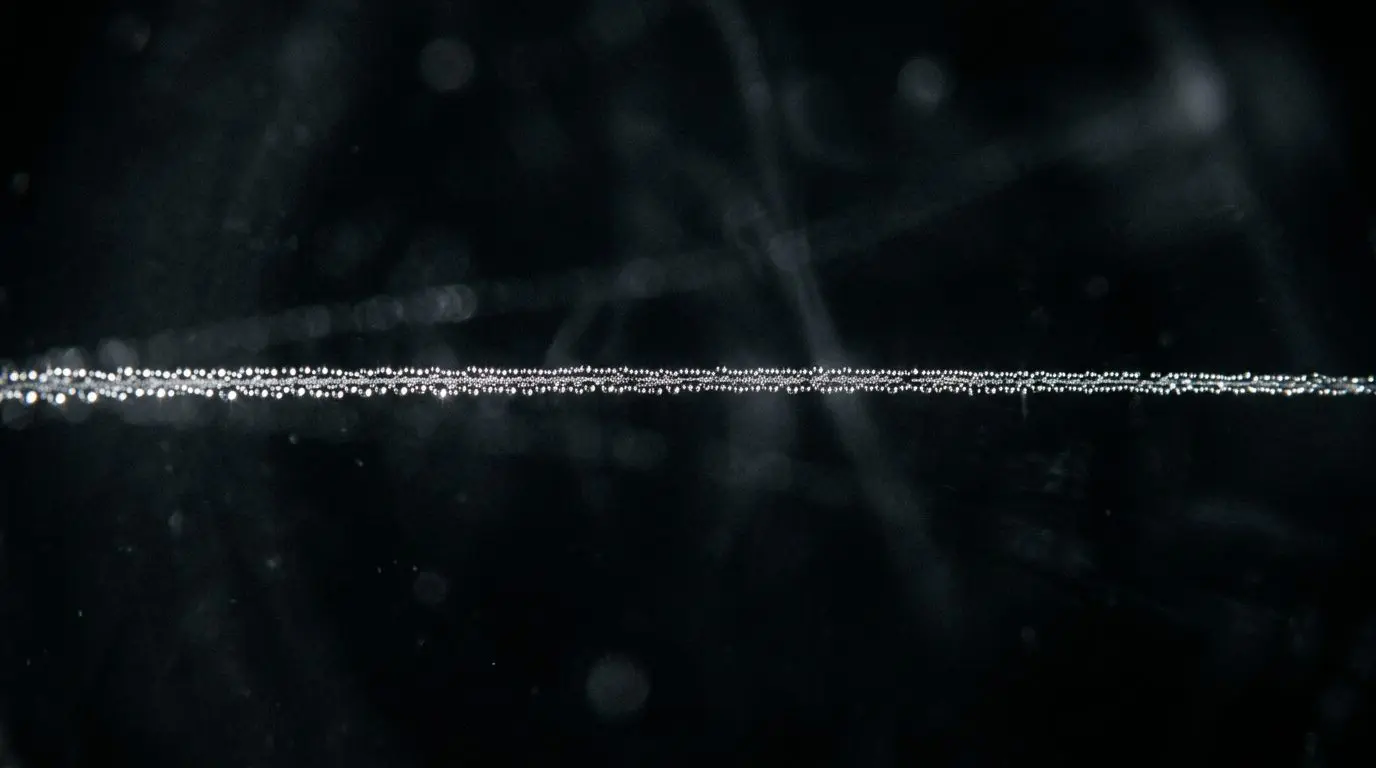
A new theoretical framework explains how structured light transfers angular momentum to atoms during ionization. The theory reveals that when hydrogen is ionized by Laguerre, Gaussian beams carrying orbital angular momentum, much of this momentum shifts to the recoiling proton rather than directly to the emitted electron as previously thought. Understanding of how ‘twisted’ light interacts with atoms during ionization processes has refined itself. The discovery shows much of this twisting force isn’t transferred directly to ejected electrons; instead it moves via atomic recoil, challenging previous assumptions about energy transfer.
By accounting for complete atomic movement within their theoretical models, details regarding fundamental interactions between light and matter at extremely small scales are being revealed by researchers from Peking University. Orbital angular momentum (OAM) describes the ‘spin carried by certain light beams; imagine spinning a top to visualise it. This challenges previous assumptions about energy distribution in these processes, yet accounting for an atom’s initial centre-of-mass state fundamentally alters where that angular momentum ultimately resides, in the electron, proton or both.
Orbital Angular Momentum Transfer Dominated by Proton Recoil During Photoionisation
A fivefold increase in the proportion of optical orbital angular momentum transferred to an atom’s centre-of-mass has been achieved through experimentation. Previously, models predicted nearly all transfer occurred directly to ejected electrons. Dr Misha Chertkov at Skoltech and Professor Gordon Drake demonstrate that hydrogen photoionization via Laguerre, Gaussian beams predominantly imparts angular momentum to the proton through recoil motion under specific conditions.
This breakthrough overcomes limitations inherent in fixed-target approximations which assumed atoms remained stationary during ionization, a condition unrealistic for most experiments. Finite-retardation corrections redistribute this momentum between overall atomic movement and internal electron dynamics. Spatial uncertainty regarding initial atomic position further modulates how it shares itself. Atomic recoil plays an important role in transferring orbital angular momentum from light to matter; specifically, under certain conditions nearly all transferred angular momentum goes into movement of the hydrogen atom’s nucleus, its proton.
Standard calculations previously assumed atoms were stationary during ionization because experimental setups rarely account for such minute movements. Refined theoretical modelling demonstrates how finite-retardation affects redistribute angular momentum between centre-of-mass motion and relative electronic dynamics during photoionization of hydrogen. The way this momentum is shared between the electron and proton depends on spatial uncertainty concerning an atom’s initial position.
Results reveal that atomic recoil significantly influences orbital angular momentum transfer; sharply defined atomic centre-of-mass momentum records photon azimuth but tracing over it generally destroys coherence needed for an electron vortex. These findings do not yet allow construction of devices manipulating atomic rotation with structured light.
Angular Momentum Partitioning via in Photoionisation Dynamics
Employing a centre-of-mass-resolved theory, atoms were treated as moving after ionization, akin to observing how a bowling ball shifts following impact rather than remaining fixed. This technique carefully accounts for both internal electronic behaviour and the overall recoil of the entire atom during photoionization. By separating out and analysing the motion of the atomic centre-of-mass, scientists could trace where angular momentum ultimately resides post-ionisation; previous models overlooked this by assuming fixed positions. The detailed analysis considered changes within the atom itself when photons eject electrons alongside its overall recoil.
Atomic recoil significantly influences electron angular momentum transfer during ionisation
The findings offer a pathway towards greater control over the distribution of angular momentum following ionization but also reveal a fundamental constraint inherent in current theoretical approaches to this process. Calculations relied on an assumption now shown to be limited, that atoms remain stationary during interaction with light, despite earlier focus on predicting vortex-like electrons and their twisting propagation. Acknowledging that these theoretical models assume some atomic stillness does not diminish their importance; it refines our understanding of how light interacts with matter at a fundamental level.
This work establishes that fully understanding how light transfers its ‘spin’, known as optical orbital angular momentum or OAM, requires accounting for atomic motion during ionization. Scientists found much of the transferred OAM drives proton movement under specific conditions by developing a method which considers the atom’s recoil alongside internal electronic changes. This challenges earlier predictions suggesting vortex-like electrons were always formed and reveals preparation significantly influences where angular momentum ultimately resides following ionisation.
The research demonstrated that when atoms are ionized by light, their subsequent recoil plays an important role in determining how angular momentum is distributed between the ejected electron and remaining proton. Previous theoretical models often treated atoms as stationary during this process, but this study shows considering atomic motion provides a more accurate picture.
Specifically, scientists observed optical orbital angular momentum can be transferred to the centre-of-mass motion of the atom, and therefore to the proton, under certain conditions. The authors suggest further work could explore tuning correlations between electron and proton angular momenta through controlling initial atomic position uncertainty.
👉 More information
🗞 Orbital-angular-momentum partition in hydrogen photoionization by a monochromatic vortex beam
✍️ Zhongchen Xing, Chengyin Wu, Zheng Li and Marcelo F. Ciappina
🧠 ArXiv: https://arxiv.org/abs/2609.16825



See today’s quantum computing news on Quantum Zeitgeist for the latest breakthroughs in qubits, hardware, algorithms, and industry deals.