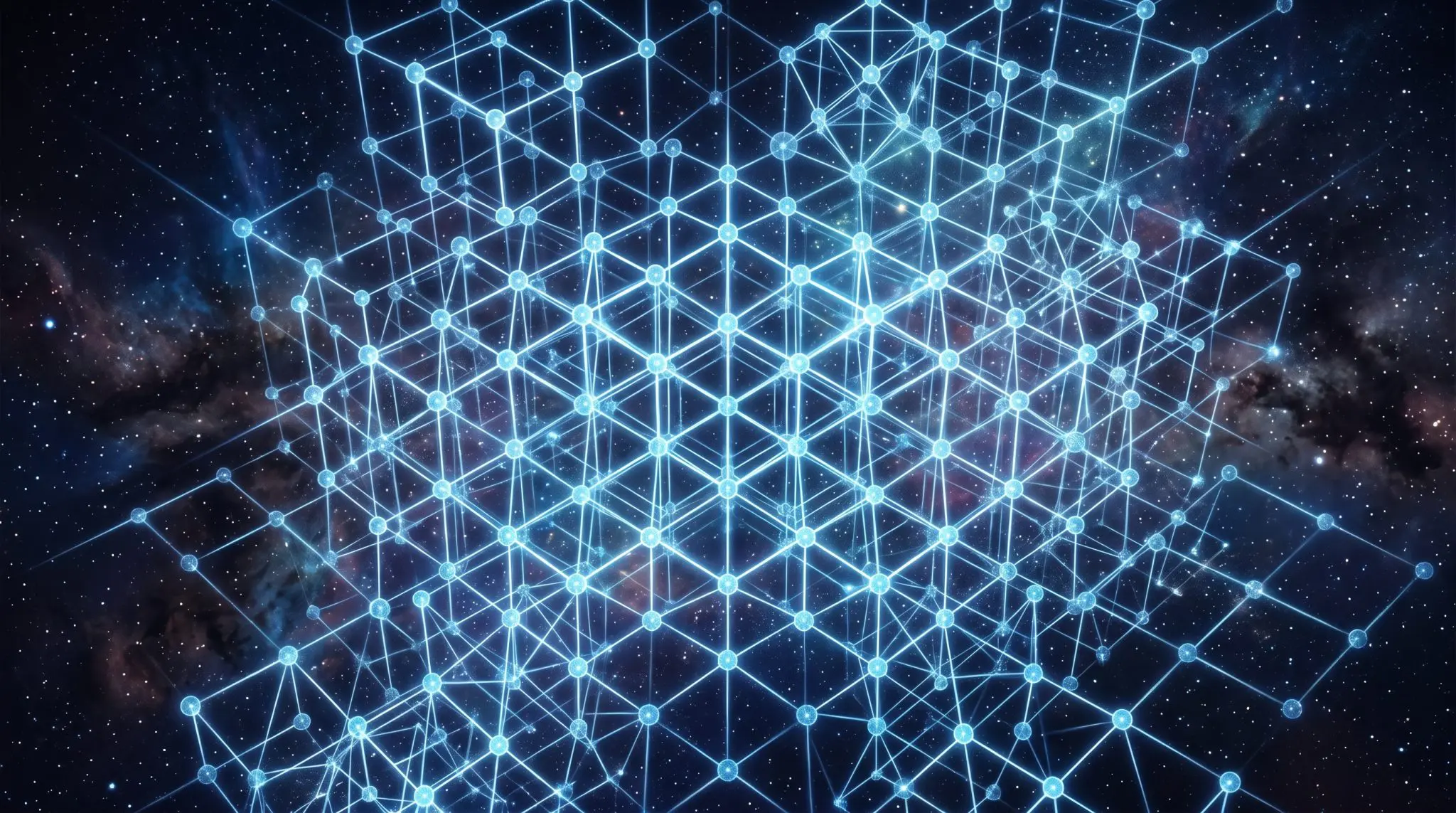
Entangling distant quantum sensors enables precision measurements impossible with individual devices, yet creates risks of information leakage across networks via malicious actors. Protecting local parameter privacy while sharing a global function has become increasingly important and recently led to new cryptographic approaches. Nicolas Laurent-Puig of Sorbonne University and colleagues now present a noise-resistant protocol for private quantum networked sensing realised using a high-fidelity Greenberger-Horne-Zeilinger (GHZ) state source.
A secure method for linking distant quantum sensors whilst safeguarding sensitive data from potential interception has been successfully developed. This new technique enables multiple sensors to work together and determine overall characteristics without revealing individual sensor readings; this represents progress towards real-world applications beyond controlled laboratory environments. The team demonstrated improved resilience against interference alongside enhanced security compared with earlier theoretical concepts in networked sensing using entangled states known as GHZ states.
Researchers at Sorbonne University and affiliated institutions have achieved a breakthrough in secure quantum sensing networks, allowing multiple distant sensors to collaborate on measurements without revealing individual data points. This builds upon distributed quantum sensing where interconnected devices act as distributed eyes and ears, improving accuracy beyond what single instruments can achieve.
A key challenge is protecting sensitive local parameters while still enabling shared analysis across potentially untrusted connections; imagine a highly coordinated team of qubits arranged in a Greenberger-Horne-Zeilinger (GHZ) state, where any change in one member instantly reflects across all others. The team’s new protocol demonstrates improved resilience against interference alongside enhanced security, reducing the amount of data needed for reliable results, known as sample complexity, and paving the way towards practical applications.
Certified low error rates unlock secure distributed quantum sensing with entangled qubits
Error rates in estimating global functions dropped from unquantifiable levels to a certified threshold enabling secure networked sensing protocols. Sorbonne University researchers and collaborators achieved this improvement using a high-fidelity four-qubit Greenberger-Horne-Zeilinger (GHZ) state source. GHZ states represent specific arrangements of entangled quantum bits that instantly affect each other within the system, facilitating rapid data correlation.
This advancement enables distributed estimation of these global functions while actively protecting individual parameter information from malicious parties attempting to intercept data across the network; it represents progress beyond previously limited theoretical concepts due to noise sensitivity and complex requirements. Comparative analysis against two Bell pairs and fully separable states revealed superior accuracy with GHZ states during simulated attacks on the networked system because their inherent entanglement allows more effective distribution of information whilst shielding local parameters.
It marks the first complete implementation combining estimation with certified privacy bounds, exceeding previous efforts hampered by environmental disturbances and demanding large numbers of entangled states for operation; future research will focus on optimising this approach for larger networks and exploring its durability in diverse operational environments.
Enhancing distributed quantum sensing through multipartite entanglement verification
Scientists are laying foundations for a future where spatially separated quantum sensors collaborate to deliver measurements beyond today’s technology. Establishing trust between potentially adversarial parties within the network is crucial for this advance in distributed sensing, presenting vital hurdles alongside accurate global estimations and data privacy. A protocol utilising Greenberger-Horne-Zeilinger configurations, complex arrangements of qubits, was demonstrated, but verifying their fidelity remains an open question regarding practical scalability.
Nevertheless, characterising these four-qubit entangled states with precision presents challenges when scaling up this technology; improvements in techniques will be key for building robust networks. The team showed that their protocol outperforms simpler alternatives like using only pairs of entangled qubits or completely separate measurements during distributed sensing tasks, maintaining both accuracy and privacy. This durability is paramount because real-world quantum networks inevitably experience noise, requiring reliable data even with imperfections to ensure practical application.
Entangled particles linked so that measuring one instantly influences all others underpinned a successful demonstration of strong private quantum networked sensing. The approach enables distributed estimation of global functions, characteristics determined from multiple sensors, while safeguarding local parameter information from potential malicious interference across the network; this configuration offers advantages over independent measurements by providing enhanced security and precision throughout collaborative tasks.
The research demonstrated a protocol for private quantum networked sensing using four-qubit Greenberger-Horne-Zeilinger states which maintains both accuracy and privacy during distributed estimations. This means spatially separated quantum sensors can collaborate to determine shared properties without revealing individual sensor data to potentially interfering parties within the network. Results showed that utilising these entangled states offered improved performance compared to systems based on pairs of qubits or separate measurements. The authors intend to optimise this approach for larger networks and assess its resilience in varied conditions, suggesting further work will focus on scalability and robustness.
👉 More information
🗞 Experimental Private Quantum Networked Sensing
✍️ Nicolas Laurent-Puig, Laura dos Santos Martins, Luis Bugalho, Santiago Scheiner, Majid Hassani, Sean William Moore, Damian Markham and Eleni Diamanti
🧠 ArXiv: https://arxiv.org/abs/


See today’s quantum computing news on Quantum Zeitgeist for the latest breakthroughs in qubits, hardware, algorithms, and industry deals.