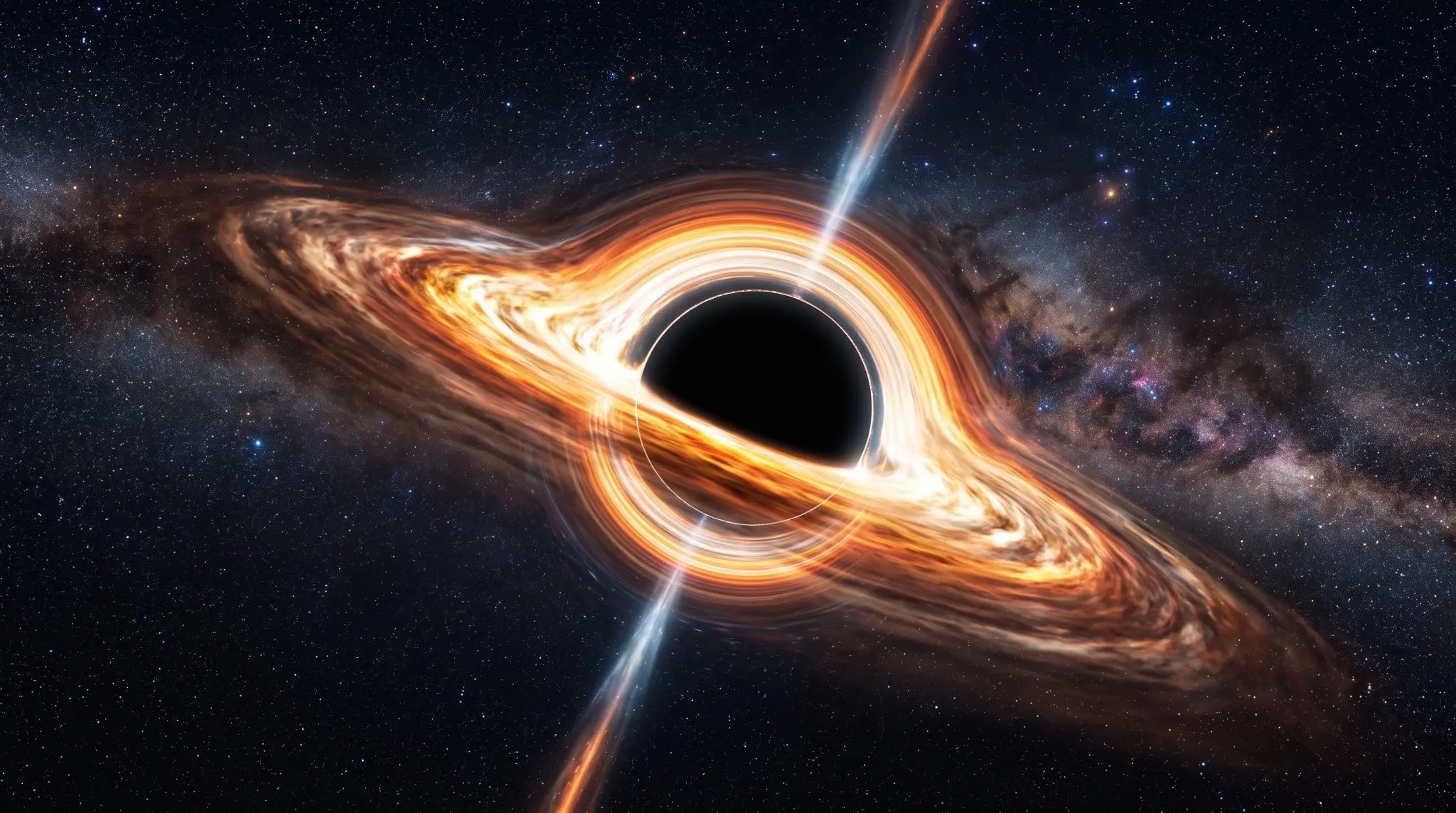
Simulations reveal black hole “seeds” forming with masses reaching 10⁶ solar masses, a size exceeding previous theoretical expectations by an order of magnitude. The work unifies these heavy seeds with previously mysterious little red dots, identifying the latter as a short-lived, obscured phase of black hole formation. Sustained, super-Eddington accretion then allows these seeds to rapidly grow to approximately 3 × 10⁷ solar masses by redshift z ≃ 8, offering a cosmological explanation for the unexpectedly abundant population of overmassive black holes detected by the James Webb Space Telescope.
Simulations Reveal 10⁶ Solar Mass Black Hole Seed Formation
These simulations reveal a pathway for these substantial seeds to emerge directly from collapsing gas clouds, bypassing the need for prolonged stellar evolution and accretion from smaller black holes. The process hinges on conditions within early universe halos, where rapid gas inflow and efficient cooling allow for the creation of massive, unstable stars. The work connects previously enigmatic observed sources by the James Webb Space Telescope to a transient phase in the development of these heavy seeds.
These compact, red sources, characterized by their distinct color and small size, appear as obscured, early stages of black hole growth. Researchers propose that these represent the brief period immediately following the initial collapse, before the black hole fully clears its surroundings and becomes a more luminous quasar. Sustained, super-Eddington accretion, where material falls onto the black hole at a rate exceeding the theoretical Eddington limit, then rapidly increases the seed’s mass.
The simulations incorporate a multi-scale initial condition approach, accurately modeling the complex interplay between gravity, hydrodynamics, and radiation. The simulations find that heavy seeds on the order 10⁶ M ⊙ naturally form, exceeding typical theoretical expectations by an order of magnitude. These seeds rapidly develop dense, optically thick disks whose strong electron scattering produces broad Hα emission comparable to that seen in little red dots.
JWST Observations Motivate Protocluster Black Hole Research
The simulations connect these massive seeds to the observed compact, red sources detected by JWST, proposing that the latter represent a short-lived, obscured phase in the black hole’s early development. Spectra from these little red dots indicate rapid black hole growth within dense, obscured environments during the initial stages of galaxy assembly, aligning with theoretical predictions detailed in recent publications.
The work builds on observations of several key objects. Recent JWST observations have revealed compact, red sources at z > 4-6, the so-called little red dots (LRDs), whose inferred black hole (BH) masses exceed local scaling relations.
AREPO Simulations Model Radiation-Hydrodynamic Black Hole Growth
The work self-consistently models the birth and early growth of these black holes, alongside their observable signatures, providing a direct link between theoretical predictions and observational data. Dense, optically thick disks rapidly develop around these seeds, producing broad Hα emission comparable to that detected in previously enigmatic These emissions observed at redshifts greater than six, suggest a direct evolutionary connection between the early stages of heavy-seed black hole formation and these compact sources.
The simulations indicate that strong electron scattering within these disks generates the observed broad emission lines, resolving a long-standing question about the origin of these peculiar objects. Three-dimensional simulations of supercritical black hole accretion discs further refine the understanding of luminosity, photon trapping, and variability in these early systems. The simulations utilized the AREPO suite, a moving-mesh code, and were conducted on the XD2000 system for Computational Astrophysics of the National Astronomical Observatory of Japan.
Researchers also incorporated an improved chemical model and smoothed particle hydrodynamics coupled with radiation transfer to accurately represent the complex physical processes at play. This approach allowed for a detailed examination of the impact of ionizing radiation on the formation of supermassive stars, a critical factor in the direct-collapse scenario. The researchers report, highlighting the significance of their findings. Further analysis explored the evolution of radiation-dominated stars and the gravitational collapse of rotating supermassive stars, including the effects of nuclear burning.
The team also investigated the maximum mass attainable by accreting primordial supermassive stars, providing constraints on the potential growth pathways for these objects. The work builds upon previous studies examining the self-regulated growth of supermassive black holes through dual jet-heating active galactic nucleus feedback mechanisms, offering a comprehensive picture of black hole formation and evolution in the early universe.
Super-Eddington Accretion Fuels Rapid Black Hole Growth
To assess the impact of seed mass on growth, researchers also modeled the evolution of black holes originating from Population III remnants, initially around 800 solar masses, formed at redshift z ≃ 22. Their growth, however, remained markedly inefficient, suppressed by radiative feedback from the surrounding Population III stars, resulting in final masses significantly smaller than those of the heavier seeds.
Converting sink particles into black hole particles after stellar collapse allowed for a detailed examination of accretion radii, utilizing the Bondi radius of the black holes for ionized gas when applicable. This approach highlights the critical role of initial conditions in determining the ultimate mass of the black hole.
These observations provide important observational constraints for the simulations, validating the proposed formation pathway. Earlier work by Hosokawa, Yorke, Inayoshi, and Omukai on the formation of primordial supermassive stars by rapid mass accretion provided a foundation for this research, as did studies on how the super-Eddington regime regulates black hole growth in high-redshift galaxies.
The simulations incorporated models of primordial star formation under far-ultraviolet radiation, accounting for feedback-regulated seed formation and the assembly of supermassive black hole seeds, ultimately demonstrating that sustained super-Eddington accretion is key to explaining the rapid growth observed in the early Universe.
Balmer Features and Red Continua Link to Little Red Dots
Simulations reveal dense gas surrounding black holes reproduces spectral signatures matching those observed in specifically V-shaped continua and Balmer series absorption features. Gas densities exceeding 10⁸ cubic centimeters enhance hydrogen’s n=2 population, creating strong Balmer absorption, a phenomenon that helps to understand these distant objects. These high densities also generate Thomson optical depths sufficient to broaden the Hα emission line to widths exceeding 1,000 kilometers per second, aligning with observational data.
The simulations demonstrate a direct link between these and a brief, obscured phase during the formation of heavy black hole seeds forming on the order of 10⁶ M ⊙. This challenges existing black hole formation models reliant on idealized conditions, as the simulations follow the process self-consistently within cosmological contexts. Studies published in Nature detail these findings, connecting the spectral characteristics of the simulated circum-black hole disks with observations of gas-enshrouded active galactic nuclei.
Further supporting this connection, research published in multiple journals highlights the role of dense gas in shaping the Balmer break and absorption features seen in little red dots. “Overmassive black holes and little red dots naturally form in simulations,” the paper states, suggesting a cohesive framework for understanding the origins of these enigmatic objects and their rapid growth in the early universe.
Black Hole Mergers Occur After Envelope Stripping
Simulations reveal that black hole mergers frequently follow a period of envelope stripping, a process where gas surrounding a growing black hole is removed, triggering a subsequent merger event. This stripping isn’t a uniform process; the simulations demonstrate that the rate of gas removal significantly impacts the final mass and merger timeline of the resulting black hole system. Specifically, models show that rapid stripping can lead to the formation of intermediate-mass black holes.
These objects, previously enigmatic, appear to represent a short-lived phase in the evolution of these heavy-seed black holes, existing immediately after envelope stripping but before substantial accretion occurs. Researchers found all point sources with v-shaped continua exhibit broad lines, further solidifying this link and providing a spectral signature for identifying these transitional objects.
This suggests a direct evolutionary pathway where little red dots are not separate populations, but rather progenitors of the overmassive black holes observed at higher redshifts. This formation occurs through direct collapse, but is heavily influenced by the surrounding environment. The simulations also model the complex physics of accretion discs around these growing black holes, accounting for luminosity, photon trapping, and variability.
These models reveal that photon trapping within the dense gas surrounding the black hole can significantly alter the observed emission spectrum, potentially explaining some of the unusual spectral features seen in distant quasars. “A luminous quasar at redshift 7.642” is a key observational benchmark for these simulations, allowing researchers to test the accuracy of their models against real-world data. The simulations demonstrate that the conditions necessary for direct collapse black hole formation are often hostile to sustained growth, highlighting the importance of envelope stripping in facilitating subsequent merger events.
Overmassive Black Holes Exceed Local Scaling Relations at z≈8
These simulations successfully link previously mysterious little red dots to a transient, obscured stage in the development of these heavy-seed black holes, establishing a direct evolutionary connection between the two phenomena. This rapid growth is further supported by modeling of accretion discs around these black holes, which accounts for complex physics and the impact of photon trapping.



See today’s quantum computing news on Quantum Zeitgeist for the latest breakthroughs in qubits, hardware, algorithms, and industry deals.