Rhonexum’s is scheduled for delivery to ZuriQ by the end of this year, marking a concrete step toward commercializing cryogenic electronics for trapped-ion quantum computing. The multi-year commercial framework unites ZuriQ’s quantum computing expertise with Rhonexum’s cryogenic technologies to address a longstanding challenge: reducing the control signals needed per qubit as processors scale.
ZuriQ will gain access to Rhonexum technologies and future developments, while providing feedback to shape future products. “This agreement is a significant milestone for Rhonexum,” said Vicente Carbon, CEO of Rhonexum, “as I strongly believe partnerships between hardware innovators are increasingly important to bridge the gap between R&D efforts and commercial adoption.”
Rhonexum Cryoelectronics Support ZuriQ’s Trapped-Ion Quantum Roadmap
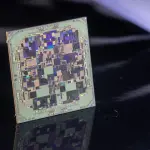
Rhonexum’s inaugural product, a cryogenic integrated circuit, is slated for delivery to ZuriQ before the year’s end, marking a tangible step toward commercializing electronics designed for quantum computers, a field often discussed in theoretical terms. This initial shipment represents the first output of a multi-year commercial framework uniting the two Swiss companies, focused on overcoming a key obstacle in scaling trapped-ion quantum processors: the complexity of delivering control signals to qubits within a cryogenic environment. ZuriQ will gain privileged access to not only current Rhonexum technologies but also to future product developments, establishing a collaborative relationship that extends beyond a standard supplier agreement.
This access allows ZuriQ to directly influence the design of future hardware tailored to its specific trapped-ion roadmap, while Rhonexum receives feedback that will help refine its designs. Pavel Hrmo, CEO of ZuriQ, highlighted the strategic value of the collaboration, stating, “The partnership combines highly complementary capabilities and gives us access to specialized cryogenics electronics technologies that support our future deployment roadmap.” The arrangement is intended to accelerate the development of denser qubit arrays while maintaining the flexibility needed for complex quantum computations.
The partnership’s focus on reducing control signal overhead directly addresses a longstanding challenge in trapped-ion quantum computing. As processors scale to the thousands of qubits required for practical applications, the number of control signals needed to manipulate each qubit becomes a significant bottleneck.
Rhonexum’s expertise in cryogenic electronics, developed through its origins as a spin-out from the AQUA Lab at EPFL, aims to mitigate this issue by integrating control circuitry directly within the quantum computer’s cryogenic environment, the company says. Both ZuriQ and Rhonexum have roots in leading Swiss academic institutions, EPFL, demonstrating a successful translation of academic research into commercial ventures, according to the company.
Hrmo further noted, “Collaboration across the Swiss quantum ecosystem is becoming increasingly important to accelerate industrial adoption and strengthen Europe’s position in the global quantum technology landscape,” speaking at QIDiS 2026. Rhonexum’s CEO added, “Partnering with ZuriQ validates the relevance of our technology and provides a clear pathway toward deployment in quantum computing systems through a long-term commercial relationship.
This agreement is a significant milestone for Rhonexum, as I strongly believe partnerships between hardware innovators are increasingly important to bridge the gap between R&D efforts and breakthroughs and commercial adoption.
Vicente Carbon, CEO of Rhonexum

See today’s quantum computing news on Quantum Zeitgeist for the latest breakthroughs in qubits, hardware, algorithms, and industry deals.