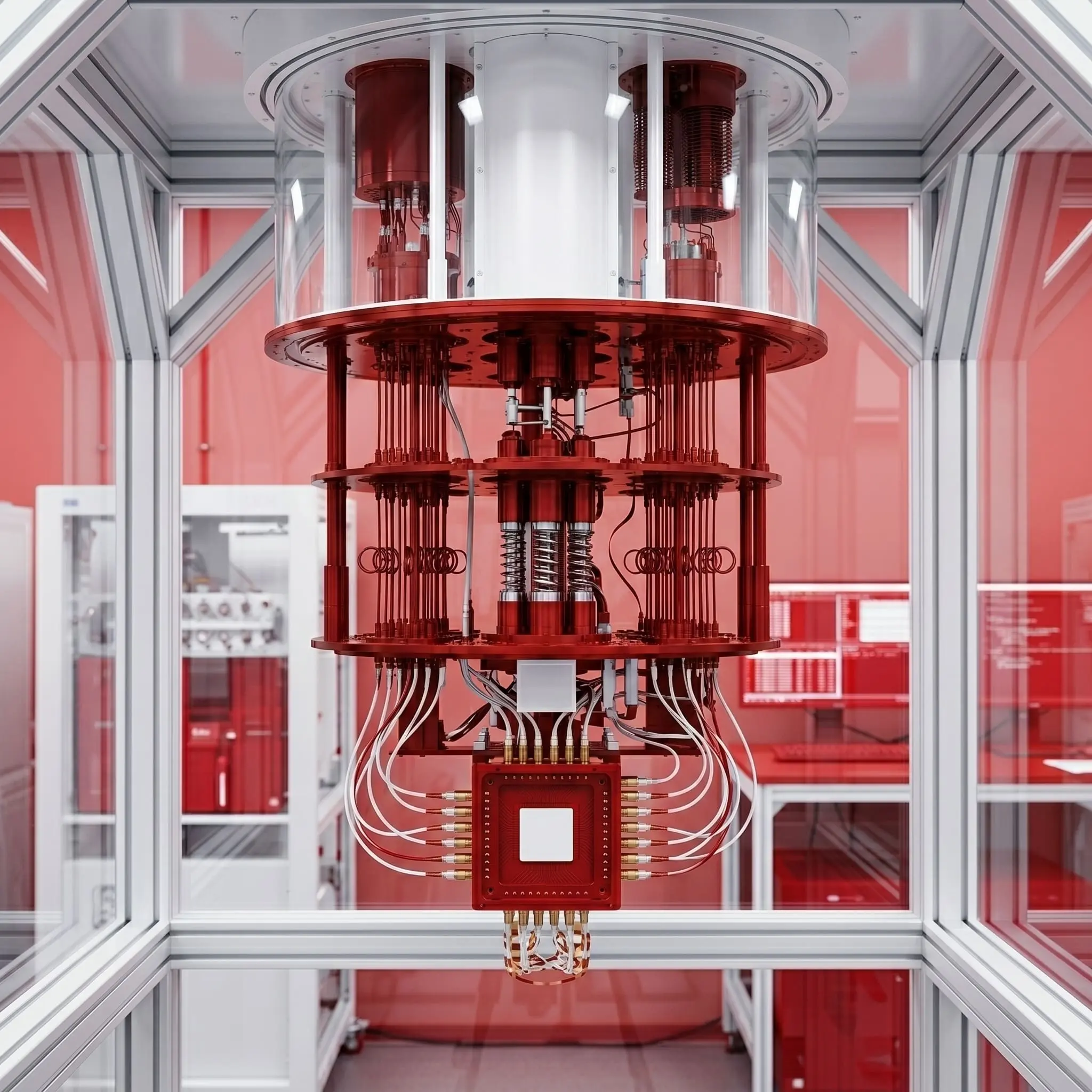
EPFL has become the first Swiss academic institution to offer its researchers cloud access to real quantum computers, integrating the technology directly into its existing high-performance computing infrastructure. The partnership with quantum computing company Quantinuum provides a platform for testing and refining theories in areas where EPFL researchers are already prominent, including quantum algorithms and theoretical quantum computing. “EPFL is pushing the boundaries on quantum algorithms,” explains Vincenzo Savona, professor in the School of Basic Sciences and academic director of the EPFL Center for Quantum Science and Engineering, “as evidenced by being the first Swiss university to have a direct cloud platform for accessing an advanced quantum computer integrated within our own high-performance computing infrastructure.” This move signifies a shift beyond simply accessing quantum computers, toward incorporating them into established research workflows and enabling simulations of complex quantum mechanics.
EPFL and SCITAS Enable Swiss Quantum Computing Access
This isn’t simply about remote access; the Quantinuum quantum computers are integrated directly into EPFL’s existing SCITAS high-performance computing (HPC) infrastructure, streamlining research workflows and enabling a new level of experimentation. Developing and maintaining quantum hardware demands substantial financial investment, making partnerships with companies like Quantinuum essential for academic institutions. Savona further clarifies that “Quantinuum’s quantum computers are among the most powerful, cleanest, and most advanced quantum computers in the world with the lowest level of decoherence,” making them ideal for projects in fields like digital quantum simulation. This integration allows researchers to move beyond purely theoretical studies, with Giuseppe Carleo, an associate professor in SB, noting that the access “opens the door to experiments that go beyond purely theoretical or small-scale numerical studies.” The collaboration between QSE and SCITAS exemplifies a complementary relationship, delivering robust HPC services alongside transdisciplinary quantum research, and ultimately aims to pursue Richard Feynman’s dream of simulating quantum mechanics with a complex quantum system.
Quantinuum’s Trapped-Ion Technology and Low Decoherence
Researchers are now focused on integrating quantum systems into existing computational infrastructure, and a key step in this evolution is EPFL’s recent partnership with Quantinuum, providing cloud access to their hardware via the SCITAS high-performance computing platform. This collaboration isn’t merely about availability, but about embedding quantum capabilities within a robust, scalable environment already used for demanding scientific workloads. Gilles Fourestey, operational director of SCITAS, explains that integrating cloud quantum computing into SCITAS’s HPC environment allows users to access remote quantum systems directly from a familiar HPC interface, without managing separate tools or workflows. Quantinuum’s approach to building quantum computers centers on trapped-ion technology, a method distinguished by its ability to maintain qubit stability, a critical factor in reducing decoherence. These computers utilize electrically charged atoms, or ions, suspended and manipulated by electromagnetic forces and lasers, enabling precise operations and minimizing errors. The low decoherence rates achieved with trapped ions are particularly valuable for complex simulations. Researchers like Giuseppe Carleo, associate professor and head of the Computational Quantum Science Laboratory, anticipate using the hardware for quantum simulation of complex many-body systems, hoping to gain genuinely new insights. Zoë Holmes, assistant professor and head of the Quantum Information and Computing Group at EPFL, plans to investigate whether these machines can handle calculations that are classically impossible, stating, “Quantum hardware is reaching the point where it can implement calculations that are at the very least hard, and potentially impossible, to do classically.” Developing, operating, and maintaining advanced quantum hardware demands substantial investment, making collaboration with industrial leaders like Quantinuum essential even for well-funded academic centers. This capability isn’t simply about providing access; it’s about integrating quantum hardware directly into existing research infrastructure, specifically EPFL’s SCITAS high-performance computing (HPC) platform.
This collaboration illustrates well the complementarity between a platform like SCITAS, focused on delivering robust, scalable high-performance computing services, and a center such as QSE, which drives transdisciplinary research in quantum computing.
Gilles Fourestey, operational director of SCITAS



See today’s quantum computing news on Quantum Zeitgeist for the latest breakthroughs in qubits, hardware, algorithms, and industry deals.