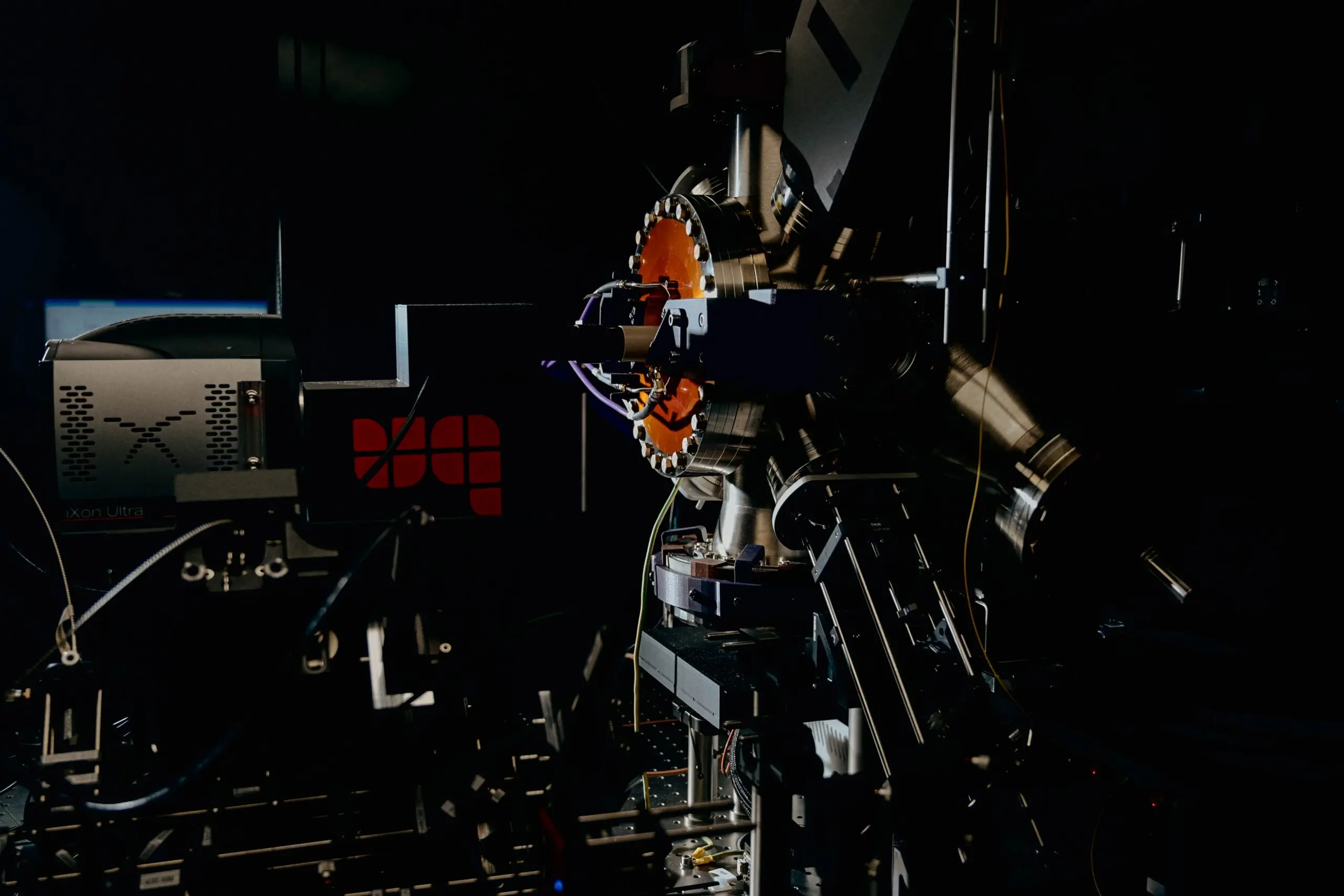
Universal Quantum has launched the iQPU, an integrated quantum processing unit manufactured using a 200mm semiconductor line for reliable, cost-effective production. The chip combines a large trapped-ion compute surface with UQConnect, a modular interconnect technology enabling the connection of multiple processors. According to Sebastian Weidt, CEO and Co-Founder of Universal Quantum, “The question is no longer whether quantum computing can work, but how we build enough high-quality qubits to solve problems that matter.” Systems integrating the iQPU are currently receiving testing.
iQPU Architecture: Trapped-Ion QCCD and Integrated Control Electronics
The iQPU uses a Quantum Charge-Coupled Device (QCCD) architecture to physically move ions across a 400mm² compute surface, a design choice intended to reduce qubit count requirements and accelerate computation speeds. Unlike fixed-qubit systems, this approach establishes flexible, long-range connections between qubits, streamlining the process of solving complex commercial problems. This physical manipulation of ions is central to the iQPU’s scaling strategy, allowing for the addition of capacity without complete machine redesigns. This fabrication process differs from the more experimental approaches often seen in the field, suggesting a focus on practical implementation and scalability.
ALI_TOLLERVEY · Source: universalquantum.com
The integration of ultra-low noise control electronics directly onto the chip minimizes the need for extensive external hardware, addressing a significant engineering challenge known as the “wiring problem”. A company representative explained, “We have brought the ion trap, control electronics and modular connections together in one chip, so the same engineered unit can be manufactured, tested and connected repeatedly to scale to much more powerful quantum computers. That is what turns scale from a scientific aspiration into a practical systems challenge we can solve.” The iQPU’s modular design is enabled by UQConnect, Universal Quantum’s interconnect technology, which allows multiple iQPUs to be linked together.
ALI_TOLLERVEY · Source: universalquantum.com
This capability directly addresses the limitations of single-chip quantum processors. The company reports, “The iQPU allows us to combine our interconnect technology with a chip architecture that can control qubits at scale and is manufactured in commercial silicon foundries. It opens up an exciting route from today’s systems to the utility-scale quantum computers the world needs.” They argue that a scalable quantum computer cannot be built by incrementally adding complexity one qubit at a time.
ALI_TOLLERVEY · Source: universalquantum.com
The question is no longer whether quantum computing can work, but how we build enough high-quality qubits to solve problems that matter.
ALI_TOLLERVEY · Source: universalquantum.com
Sebastian Weidt, CEO and Co-Founder of Universal Quantum
UQConnect Technology Enables Modular Scaling of Quantum Processors
This approach uses industry-standard design and manufacturing tools, addressing a critical need for scalable quantum computing beyond initial demonstrations. Universal Quantum’s strategy focuses on building systems that can be produced reliably, tested consistently, and integrated into established supply chains, a key element for practical deployment. The iQPU’s architecture is designed to support efficient error correction while minimizing the growth in supporting infrastructure like wiring and cooling systems, a common limitation in other quantum designs.
ALI_TOLLERVEY · Source: universalquantum.com
Instead of requiring a complete redesign with each capacity increase, additional iQPUs can be connected using the same foundational architecture. This integration demonstrates a move towards practical use cases and validation of the technology outside of a controlled research environment.
A scalable quantum computer cannot be assembled by adding complexity one qubit at a time.
Mike Newman, VP of Engineering at Universal Quantum
To provide the best experiences, we and our partners use technologies like cookies to store and/or access device information. Consenting to these technologies will allow us and our partners to process personal data such as browsing behavior or unique IDs on this site and show (non-) personalized ads. Not consenting or withdrawing consent, may adversely affect certain features and functions.
Click below to consent to the above or make granular choices. Your choices will be applied to this site only. You can change your settings at any time, including withdrawing your consent, by using the toggles on the Cookie Policy, or by clicking on the manage consent button at the bottom of the screen.
Functional
Always active
The technical storage or access is strictly necessary for the legitimate purpose of enabling the use of a specific service explicitly requested by the subscriber or user, or for the sole purpose of carrying out the transmission of a communication over an electronic communications network.
Preferences
The technical storage or access is necessary for the legitimate purpose of storing preferences that are not requested by the subscriber or user.
Statistics
The technical storage or access that is used exclusively for statistical purposes.The technical storage or access that is used exclusively for anonymous statistical purposes. Without a subpoena, voluntary compliance on the part of your Internet Service Provider, or additional records from a third party, information stored or retrieved for this purpose alone cannot usually be used to identify you.
Marketing
The technical storage or access is required to create user profiles to send advertising, or to track the user on a website or across several websites for similar marketing purposes.