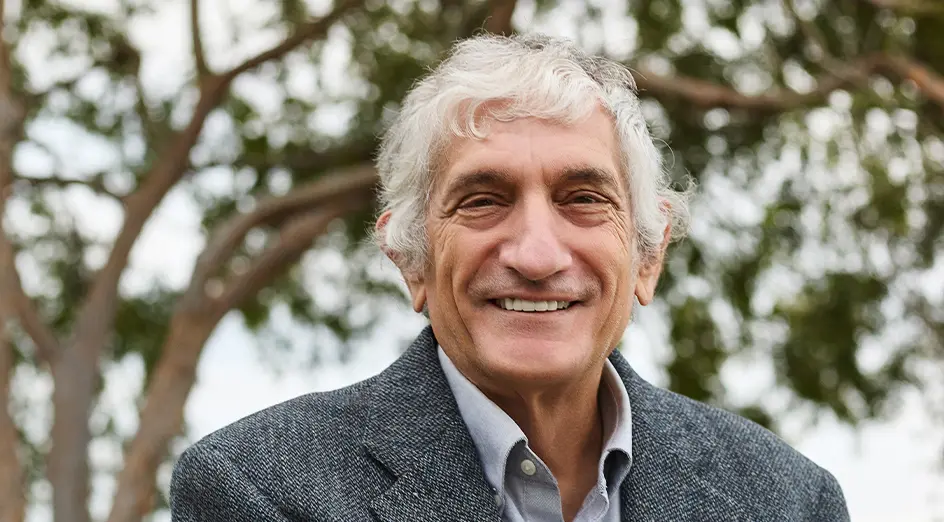
John Martinis, a Nobel laureate from the University of California, will discuss four decades of quantum progress at the University of Western Australia next month, detailing how the field has moved from theory toward practical technology. Professor Martinis shared the 2025 Nobel Prize in Physics with John Clarke and Michel Devoret for their discovery of macroscopic quantum mechanical tunnelling and energy quantisation in an electric circuit.
His lecture will cover work beginning with his 1980s PhD thesis and extend to his 2019 “quantum supremacy experiment” at Google, as well as his current efforts; in 2023, he co-founded Qolab to build a superconducting quantum computer.
Macroscopic Quantum Tunnelling Earns Martinis 2025 Nobel Prize
The award, shared with John Clarke and Michel Devoret, acknowledges work stemming from his doctoral research in the mid-1980s. This early work focused on superconducting qubits, the fundamental building blocks for processing information in quantum computers, and established a trajectory that continued for decades. His career progressed from experiments with these qubits to a period from 2014 to 2020, where he focused on building a functional quantum computer.
This effort culminated in a 2019 experiment demonstrating a milestone. A quantum processor could perform a calculation beyond the capabilities of classical computers. The London Prize in low temperature physics, awarded in 2014, and the John Stewart Bell prize in 2021, further recognized the impact of his contributions to the field. Demonstrating a continued commitment to practical quantum computing, Professor Martinis co-founded Qolab in 2023, a startup dedicated to constructing a superconducting quantum computer.
He believes that using existing semiconductor technology and applying system engineering principles are important steps toward achieving scalable, full-stack quantum technology. “Adopting existing semiconductor technology to build much higher-quality qubits and employing system engineering approaches could lead to full-stack scalable technology,” he explains, outlining his current focus.

See today’s quantum computing news on Quantum Zeitgeist for the latest breakthroughs in qubits, hardware, algorithms, and industry deals.