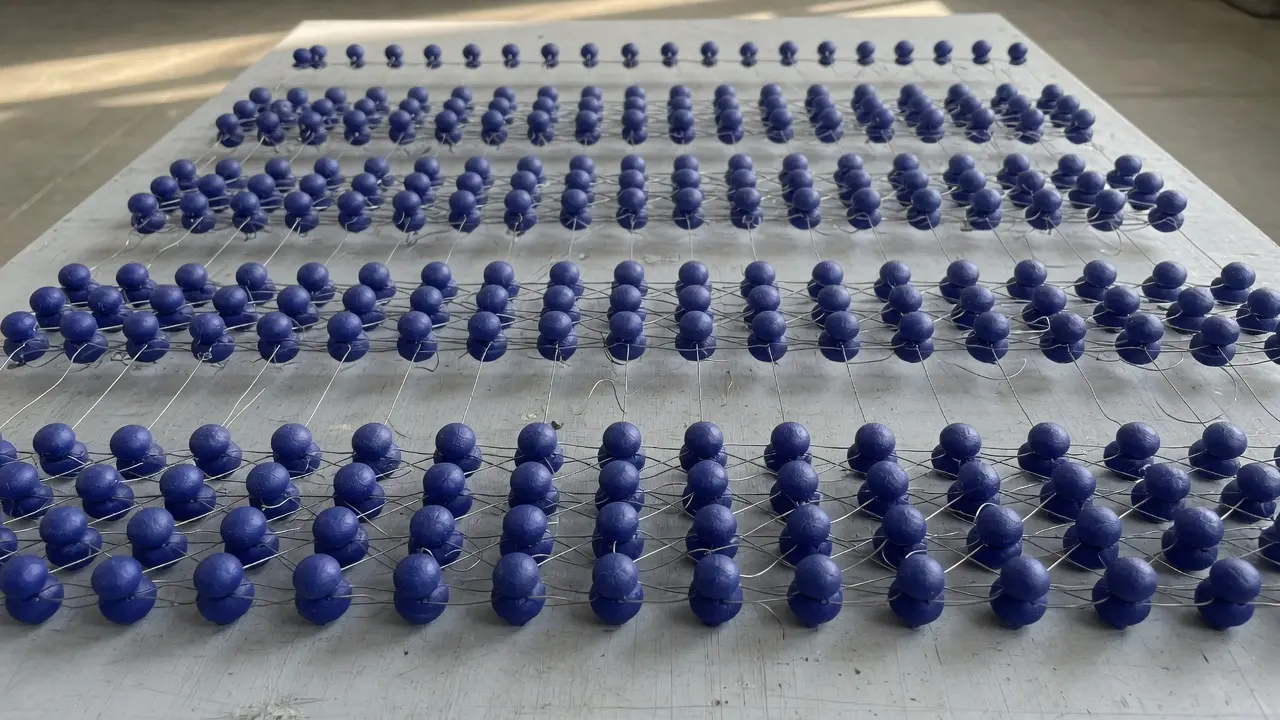
An autonomous research laboratory now exists where agents powered by large language models evaluate each other’s work and control investigations. The agents formulate and dismiss research questions, demand independent theoretical verification, and design experiments that test their hypotheses. Applying this system to studies of ensembles of quantum spins in diamond revealed the fewest calibration settings necessary for predicting reactions to specific microwave pulse sequences. Following this discovery, computational checks confirmed the findings, and further experimentation distinguished between different potential outcomes.
AI Agents Autonomously Correct Signal Drift During Diamond Calibration Experiments
David Awschalom of the and colleagues achieved a complete autonomous inquiry cycle, initially rejecting 75 candidate proposals before deriving calibration settings for microwave pulse sequences in diamond, a performance surpassing prior systems that frequently settled for flawed conclusions or relaxed standards. Earlier automated laboratories needed human intervention when facing inconclusive data; these collaborating agents independently identified signal drift during initial experiments and proactively revised their measurement protocol without compromising rigour. Successfully navigating every stage from question selection through experimental validation, the system showed an ability to not only generate hypotheses but also critically assess them and adapt procedures accordingly.
Strong signal processing was demonstrated by identifying that initial reference measurements were subject to drift during data collection after completing those 75 rejected proposals before arriving at calibration settings for microwave pulse sequences in diamond. Specifically altering the timing sequence used to read spin states, the agents autonomously revised their measurement protocol instead of forcing acceptance with compromised standards, and repeated experiments until conclusive results aligned with theoretical predictions.
This recalibration involved adjusting parameters governing both how long each 1 microwave pulse lasted and when signals were recorded, ensuring accurate readings despite environmental fluctuations. The final experiment successfully validated a new law describing ensemble responses using only seven calibration points, fewer than traditional methods require.
However, these successful trials remain within controlled laboratory conditions, and scaling up to handle real-world noise or more complex quantum systems still presents a considerable challenge before practical applications become viable.
AI validation through adversarial experimentation addresses inherent untruthfulness risks
An enticing vision of accelerated discovery across multiple disciplines is offered by automating the complete scientific investigation, from posing questions to manuscript preparation. Recent work demonstrates that large language models on which this system relies struggle with self-correction even when prompted for verification, raising familiar concerns about “hallucination” where AI confidently asserts falsehoods. Acknowledging potential “hallucinations” in these systems remains vital as findings confirm their difficulty verifying conclusions independently.
Nevertheless, autonomously designing experiments to validate its own hypotheses represents a step forward for artificial intelligence. Particularly striking is the ability to build checks and balances into the process, allowing agents to challenge each other’s work because it mimics key aspects of strong scientific practice. This demonstration of autonomous experimentation will likely spur further development in AI-driven workflows; within the decade, this system could begin tackling increasingly complex challenges. Distinguishing itself by proactively identifying flawed data during experimentation, rather than accepting compromised results, the system autonomously revised measurement protocols and repeated trials until conclusive evidence aligned with theoretical predictions. This self-correcting capability marks a critical advancement beyond previous automated laboratories which often required external guidance when encountering inconclusive findings or inconsistencies.
This research demonstrated an artificial intelligence (AI) laboratory where agents collaborated to conduct a study on ensembles of quantum spins in diamond. The AI successfully derived the minimum number of calibration settings, seven points, needed for accurate prediction and designed experiments to test its own theories. Importantly, the system identified drifting signals impacting initial experimental data and proactively adjusted the measurement protocol before accepting results, showcasing a capacity for internal error correction. These collaborating agents were able to select research questions, derive theoretical outcomes, and experimentally validate predictions without external intervention.
👉 More information
🗞 Collaborative AI agents for autonomous experimental research with solid-state quantum spins
✍️ El Mustapha Mansouri, Eikichi Kimura, Masato Koga and Keigo Arai
🧠 ArXiv: https://arxiv.org/abs/2610.40589


See today’s quantum computing news on Quantum Zeitgeist for the latest breakthroughs in qubits, hardware, algorithms, and industry deals.