For the first time, the U.S. Naval Academy is utilizing its Yard Patrol (YP) craft as “motherships” for autonomous systems during the inaugural “YP NEXT” training block. Midshipmen are now directly deploying robotics and autonomous systems from the YPs, preparing them for a future maritime battlespace increasingly reliant on uncrewed technologies. “Using our Yard Patrol craft as ‘motherships’ for autonomous systems, our midshipmen were the first to execute this concept,” said Lt. Michael Borgschulte, Superintendent of the U.S. Naval Academy.
The training included hands-on experience with platforms like Havoc AI’s Rampage and Jaia Robotics’ Jaiabot, and a simulated “Game Day” evolution was developed with the Johns Hopkins University Applied Physics Laboratory. Cmdr. Donny Peltier, the Adaptive Rapid Engagement Squadron (ARES) Director and a professor within the Weapons, Robotics and Control Engineering Department, said this training block was not just an introduction to technology, but an immersion into the RAS ecosystem, including education, hands-on experience, and experiential learning from success and setbacks while employing advanced systems.
Autonomous Systems Integration with Yard Patrol Craft Training
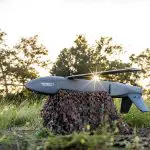
This marks the first time these vessels have functioned as “motherships” for unmanned technologies, fundamentally altering how midshipmen prepare for future naval operations. The “YP NEXT” training wasn’t solely theoretical; midshipmen engaged with specific platforms during an industry-led “Field Day.” Havoc AI’s Rampage and BlackSea Technologies’ Global Autonomous Reconnaissance Craft (GARC) unmanned surface vessels, alongside Jaia Robotics’ Jaiabot aquatic data-collection drones, served as the tools for hands-on instruction. They utilized custom-coded search patterns to map underwater environments, identify targets, and practice neutralizing maritime threats, reinforcing core competencies in seamanship and navigation.
This immersive training extended beyond the classroom and laboratory, incorporating real-world interactions with the defense industrial base and operational forces. Midshipmen toured BlackSea Technologies’ manufacturing facility in Baltimore, observing the transition of unmanned surface vessels from production to deployment. A visit to the University of Delaware’s Autonomous Systems Bootcamp in Lewes, Delaware, facilitated collaboration with marine scientists and oceanographers on practical operational tools. The training culminated in an opportunity to work alongside the Naval Special Warfare community in Little Creek, Virginia, learning how these systems are currently employed for homeland defense.
Rather than diminishing the importance of seamanship, the integration of autonomous systems is designed to enhance existing capabilities. Borgschulte affirmed that this is the future of naval warfare in action, adding that midshipmen are taking the research developed in classrooms and laboratories and applying it at sea.
They are learning not only how to operate autonomous systems, but how to integrate and employ these technologies in future conflicts. The insights gained from this initial training block will directly inform curriculum updates and research, aligning the Naval Academy’s instruction with evolving Navy and Marine Corps priorities and preparing future leaders for a fleet increasingly reliant on unmanned technology.
This training block was not just an introduction to technology, but an immersion into the RAS ecosystem, including education, hands-on experience, and experiential learning from success and setbacks while employing advanced systems.
Cmdr, the Adaptive Rapid Engagement Squadron (ARES) Director and a professor within the Weapons
Source: https://www.usna.edu/NewsCenter/2026/08/USNA_Integrates_Robotics_Autonomous_Systems_for_Summer_Training.php

See today’s quantum computing news on Quantum Zeitgeist for the latest breakthroughs in qubits, hardware, algorithms, and industry deals.