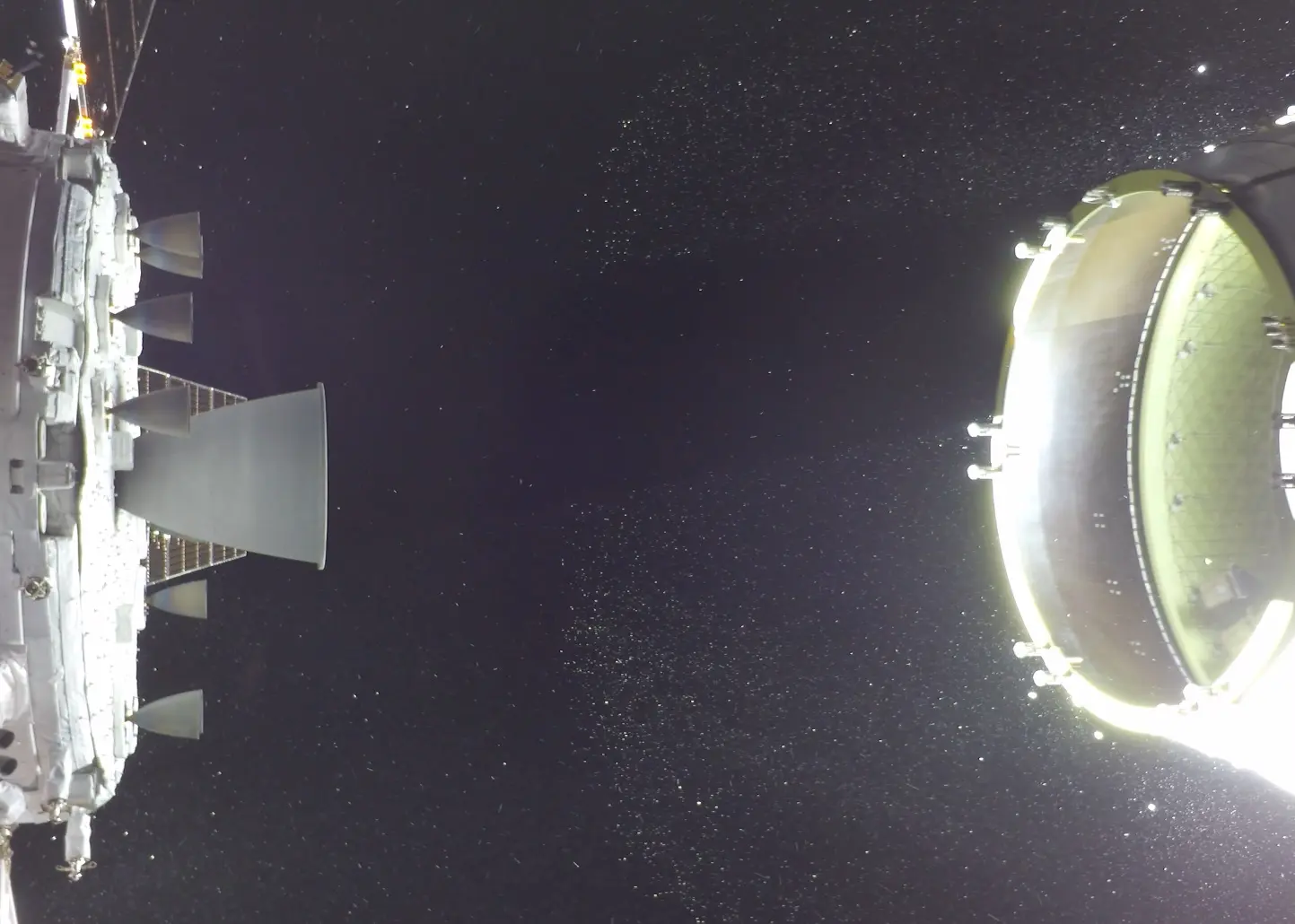
NASA is now seeking proposals for 6U and 12U CubeSats to accompany future Artemis missions, expanding the range of secondary payloads beyond those flown on earlier flights. Organizations hoping to launch these nanosatellites on Artemis III, IV, and V have until Monday, June 1 to respond to the agency’s request for information. The Space Launch System rocket and Artemis program offer significant opportunities for scientific and technological investigations that will advance human space exploration, according to Courtney Ryals, acting manager of SLS payload integration at NASA’s Marshall Space Flight Center in Huntsville, Alabama. Following the successful deployment of 10 CubeSats on Artemis I and four on the crewed Artemis II mission, NASA is demonstrating a growing capacity to integrate these smaller satellites even with astronauts onboard.
Artemis Missions Enable CubeSat Deployment Opportunities
The Artemis program is rapidly evolving beyond lunar ambitions, now actively soliciting proposals for CubeSat integration on Artemis III, IV, and V missions. This expansion signifies a growing acceptance of secondary payloads even on crewed flights. NASA’s request for information, due by Monday, June 1, specifically targets 6U and 12U CubeSats, representing a substantial increase in size compared to earlier Artemis deployments and opening opportunities for more complex scientific investigations. These nanosatellites, measuring 10x10x10 centimeters per unit, are envisioned to deploy either into Earth orbit or onto heliocentric disposal trajectories after Orion spacecraft separation, with some potential for reentry from Earth orbit. This commitment to CubeSat accommodation builds on the success of previous Artemis missions; ten CubeSats accompanied the uncrewed Artemis I, followed by four integrated into the crewed Artemis II flight, demonstrating NASA’s operational capacity to manage these smaller satellites alongside human spaceflight.
Beyond simply providing a launch platform, NASA offers crucial payload integration and engineering support, fostering a collaborative environment for researchers. This initiative aligns with the broader agency goals of establishing a sustained lunar presence and preparing for future crewed missions to Mars, leveraging the capabilities of smaller satellites to augment larger-scale exploration efforts.
SLS Rocket Supports Nanosatellite Integration and Payload Services
The Space Launch System (SLS) rocket is now actively supporting the integration of increasingly sophisticated nanosatellite payloads alongside primary Artemis missions, building on experience gained from earlier flights. This expansion demonstrates a growing capacity to accommodate secondary payloads even during human spaceflight, a capability proven by the successful Artemis II integration. These standardized sizes, each “1U” measuring 10x10x10 centimeters, allow for streamlined integration onto the SLS upper stage. Potential deployment scenarios extend beyond simple Earth orbit; NASA anticipates accommodating CubeSats destined for heliocentric disposal trajectories or even reentry from Earth orbit following Orion spacecraft separation.
The SLS (Space Launch System) rocket and the Artemis missions provide great opportunities for teams to conduct important, science and technology investigations that contribute to the expansion of human space exploration.
Courtney Ryals, acting manager, SLS payload integration, NASA’s Marshall Space Flight Center




See today’s quantum computing news on Quantum Zeitgeist for the latest breakthroughs in qubits, hardware, algorithms, and industry deals.