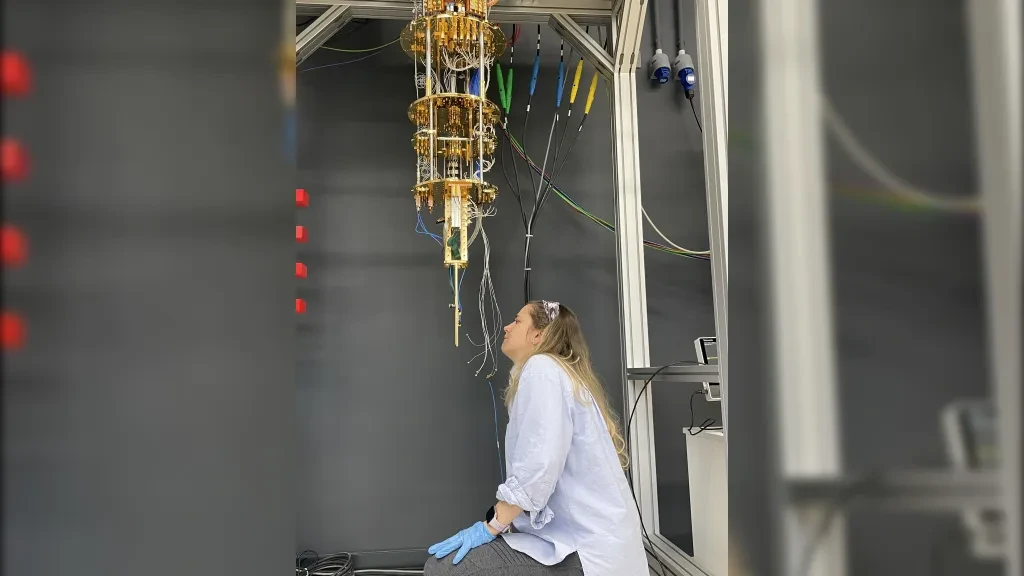
Researchers from the Quantum Hardware group at CIC nanoGUNE, in collaboration with Quantum Motion, have advanced a single-electron box (SEB) sensor that addresses a critical challenge in scaling quantum computing: fitting more qubits onto a single chip without sacrificing precision. The new sensor achieves a spin readout fidelity comparable to the most advanced devices, despite its physically more compact design. This innovation utilizes the industry standard metal, oxide, semiconductor (MOS) process, suggesting a viable path toward manufacturing scalable quantum processors. According to the research team, “the results show that it is possible to reduce the physical footprint of these sensors without sacrificing performance,” enabling more powerful and interconnected quantum systems.
One of the primary obstacles to building more powerful quantum processors is the challenge of increasing qubit density without compromising control and readout fidelity. The team tackled this problem by refining a single-electron box (SEB) sensor. This new iteration of the SEB allows for a greater number of interacting qubits to be integrated onto a single chip while still enabling accurate readings, a feat previously difficult to achieve with shrinking sensor dimensions. This is particularly significant because it directly addresses the spatial constraints within quantum processors, allowing for increased qubit integration on a single surface. Beyond its impact on qubit density, the sensor’s design promises to accelerate the development of more powerful and scalable quantum processors; the team explains that it enables the development of more powerful and scalable quantum processors. The potential applications of SEB sensors, however, are not limited to quantum computing; they also extend to nanoscale thermometry, high-resolution energy spectroscopy, and advanced electrical signal processing, including parametric quantum-limited amplification and frequency mixing for high-precision electronic systems.
Researchers at CIC nanoGUNE, collaborating with Quantum Motion, have detailed a new sensor design to address a core limitation in scaling quantum processors: the ability to densely pack and accurately read qubits. Published in Nature Sensors, the team’s work centers on a single-electron box (SEB) sensor, advanced to minimize physical size while maintaining readout precision essential for implementing quantum error correction. This is a significant departure from conventional scaling trends, where shrinking sensor size often correlates with reduced performance. The team integrated the sensor into a silicon chip utilizing the widely adopted metal, oxide, semiconductor (MOS) process, a fabrication technique already dominant in conventional digital and analogue electronics. This choice of fabrication pathway is notable, as it leverages existing infrastructure and potentially accelerates the path toward mass production and wider adoption of the technology. This increased qubit count is essential for tackling increasingly complex computational problems.




See today’s quantum computing news on Quantum Zeitgeist for the latest breakthroughs in qubits, hardware, algorithms, and industry deals.