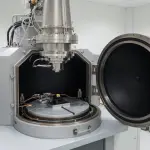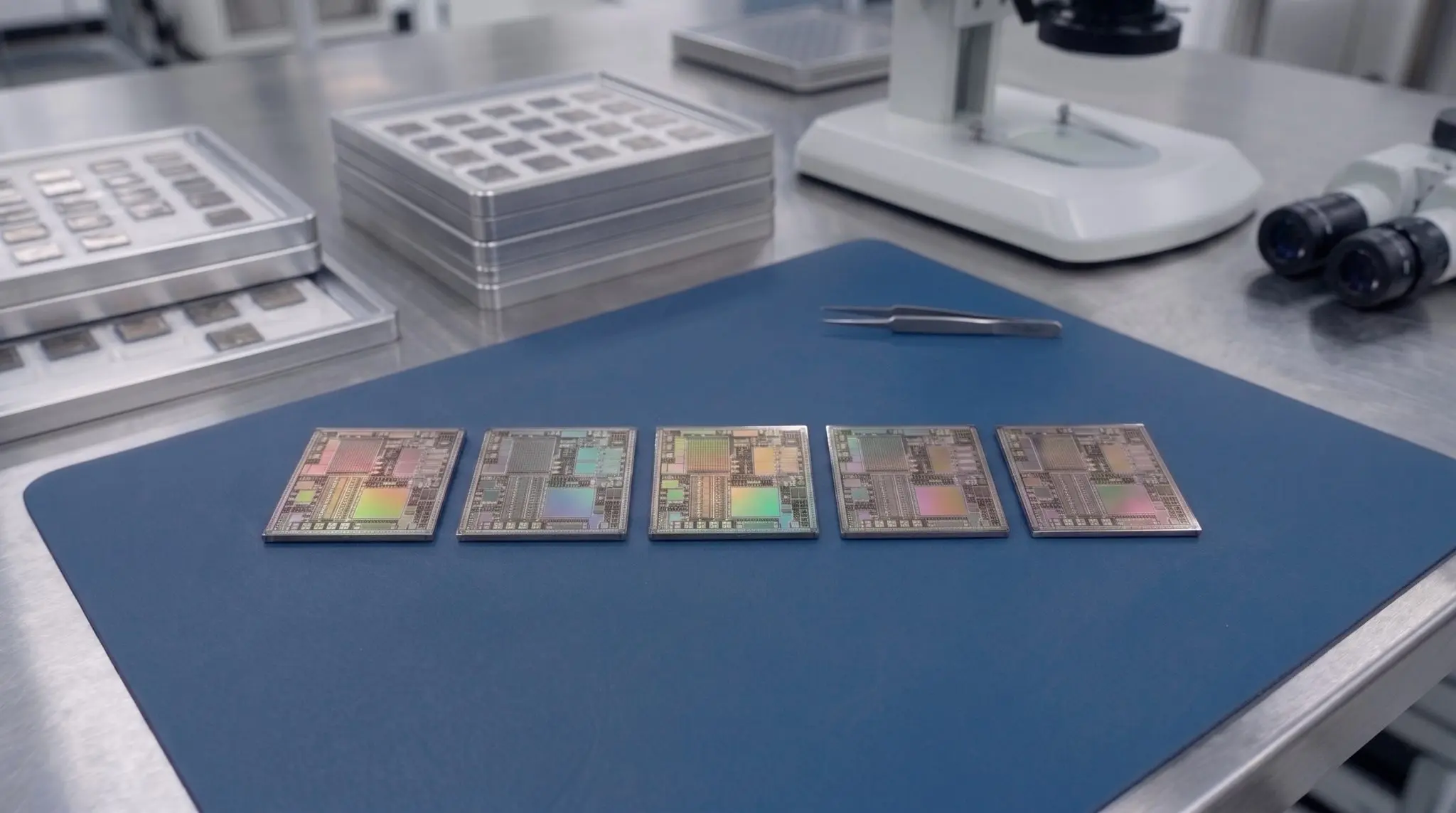
Rice University will lead a four-year project to build an AI-powered materials laboratory following a $19.9 million award from the National Science Foundation. The project, titled “Revolutionizing AI-Driven Autonomous Experimentation for Next-Generation Semiconductor Synthesis” (READINESS), focuses on accelerating the manufacturing of electronic and quantum materials through robotics, artificial intelligence, and remote access. A key component will be a digital twin, allowing researchers to simulate experiments before physical execution to reduce trial-and-error. “This project will give researchers access to capabilities that have traditionally been available only in a limited number of laboratories,” said David Sholl, executive vice president for research, adding that READINESS can accelerate discovery and expand who can participate in materials research.
AI-Driven Automation for Semiconductor Synthesis
The $19.9 million National Science Foundation award to Rice University signals a substantial investment in automating semiconductor materials discovery, extending beyond general materials science to a specific technological priority. Researchers plan to combine automated synthesis equipment with robotic systems and advanced materials characterization tools, streamlining the traditionally iterative process of materials development. A key innovation is the incorporation of a digital twin, a virtual replica of the physical laboratory, enabling researchers to simulate experiments and predict outcomes before committing to physical trials. This virtual modeling capability aims to significantly reduce wasted resources and accelerate the pace of innovation in complex material synthesis. The system will not operate autonomously, but rather as a collaborative partner; Luay Nakhleh, the William and Stephanie Sick Dean of Rice’s George R. Brown School of Engineering and Computing, emphasizes that responsible AI should complement researchers’ capabilities rather than replace their judgment.
The initial focus will be on materials with high technological potential, including two-dimensional materials, oxide semiconductors, and diamond thin films, all critical for advancements in electronics and quantum computing. Collaborators from SUNY Polytechnic Institute and the University of Texas at Austin will contribute to the project, alongside support from the Astera Institute focused on open science and data sharing.
The integration of a digital twin into Rice University’s new AI-powered materials laboratory represents a significant departure from traditional materials discovery methods. By pre-testing conditions like temperature, pressure, and chemical composition within the digital twin, the system aims to predict material properties with greater accuracy. This isn’t about replacing human expertise, however; the AI agent will function as a collaborative partner, analyzing results and recommending new tests while remaining subject to researcher oversight. The system’s ability to learn from both successful and failed experiments will refine its predictive capabilities over time, creating a continuously improving research cycle, according to the Brown School of Engineering and Computing.
Responsible AI should complement researchers’ capabilities rather than replace their judgment.



See today’s quantum computing news on Quantum Zeitgeist for the latest breakthroughs in qubits, hardware, algorithms, and industry deals.