
Welcome to this week’s quantum technology digest. The past seven days brought developments across multiple facets of the field, from hardware advancements in error correction to increasing commercialization efforts. Several companies are making moves to expand access to quantum resources and build out domestic capabilities.
This week’s news demonstrates a clear focus on improving the practicality of quantum computers. Researchers detailed progress in both software-based error mitigation and new quantum code designs. Simultaneously, IBM, AWS, and others are broadening access through cloud services and establishing quantum computing infrastructure in new locations like India and Australia. Public market activity also picked up, with IQM Quantum Computers listing on Nasdaq and Pasqal announcing plans for a similar listing.
While diverse in scope, these articles collectively illustrate a maturing quantum landscape. The field is moving beyond basic research toward tangible engineering solutions and wider availability—a critical step toward realizing the technology’s potential applications. A critical assessment of Microsoft’s qubit claims adds a dose of necessary scrutiny to the field as well.
1. IonQ Software Decoder Cuts Quantum Error Rates by Up to 17x

IonQ Inc. demonstrated a substantial reduction in quantum error rates using a new beam search decoder implemented entirely in software. Their decoder achieved up to a 17-fold decrease in logical error rate compared to the standard BP-OSD decoder, and a 5.6-fold reduction while maintaining fast runtime speeds—below one millisecond per syndrome extraction. Simulations suggest that decoding a trapped ion quantum computer with logical qubits may require only three 32-core CPUs, challenging previous assumptions about the need for specialized hardware for quantum error correction. The source code for this decoder is publicly available to encourage further development within the quantum computing community.
2. New Quantum Codes Simplify Error Correction, Enable Stable Computation
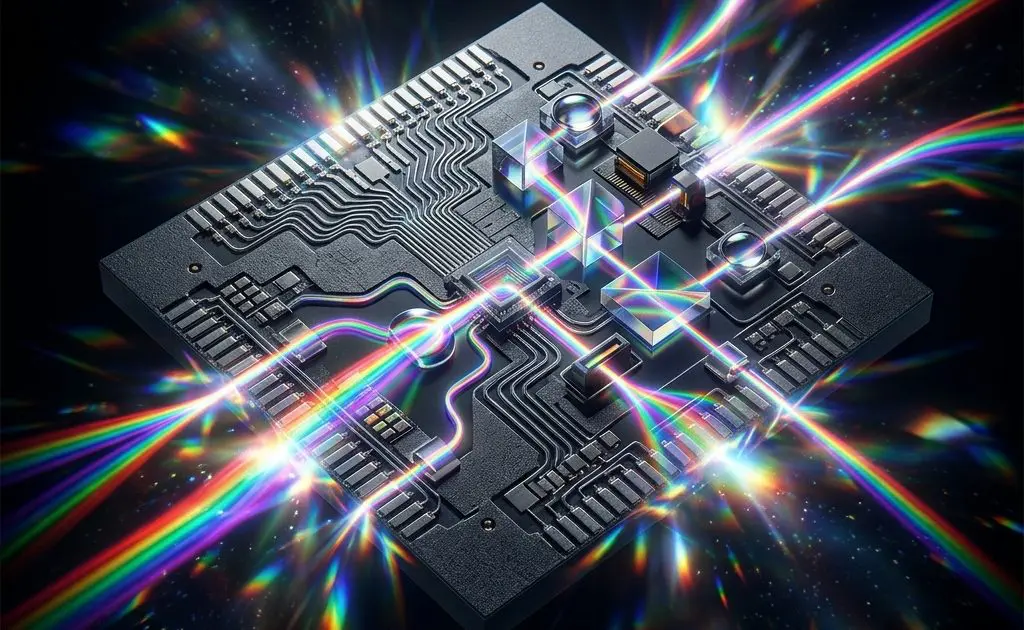
IQM Quantum Computers researchers developed Quantum Low-Density Parity-Check (qLDPC) “barbell” codes to improve quantum error correction and reduce hardware demands. Simulations demonstrated these codes maintained information fidelity across trillions of Quantum Error Correction (QEC) cycles with fewer than 30 data qubits per logical qubit. With a distance-14 code, the team achieved error rates below 10⁻⁷, a significant improvement over comparable surface codes and a key step toward scalable, fault-tolerant quantum computers.
3. IBM to Commission Quantum Computer in India This September
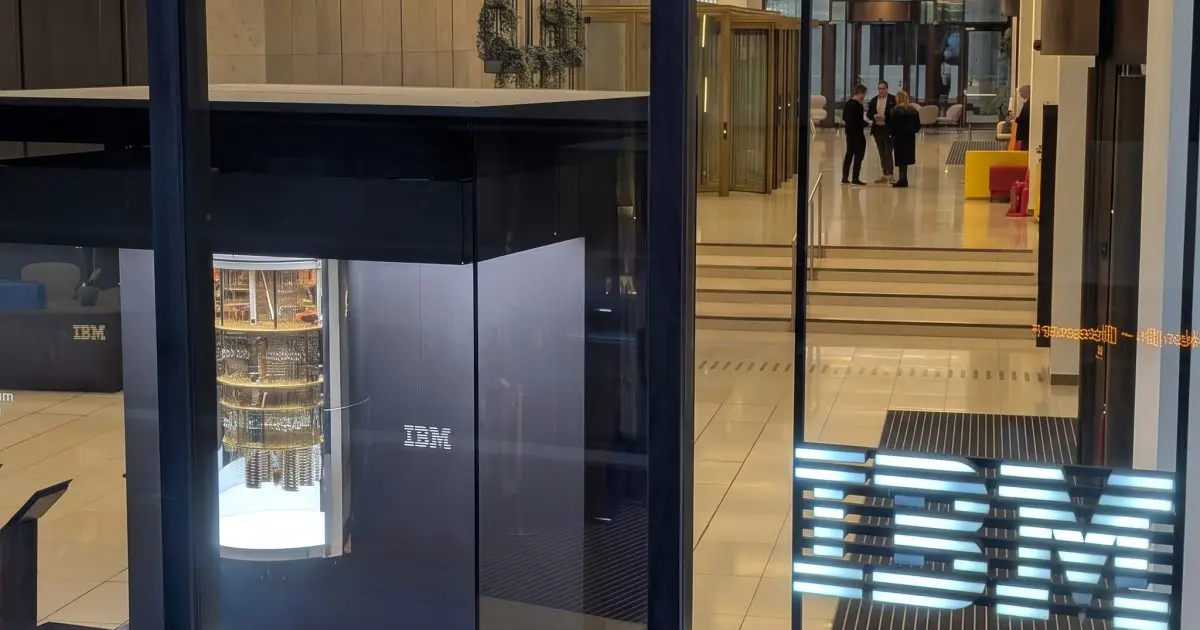
IBM announced that the first of its quantum computers for India will be commissioned in Amaravati this September. The system aims to establish Andhra Pradesh as a quantum technology hub, supporting research, startups, and businesses. IBM’s Arvind Krishna stated quantum computers are predicted to deliver commercial benefits across sectors like pharmaceuticals, finance, and AI within the next two to three years. This installation is part of a larger collaboration between government, industry, and academia to advance quantum technology development and commercialization in India.
4. AWS and QuEra Advance Fault-Tolerant Quantum Computing, Bolstering US Security

Amazon Web Services and QuEra Computing delivered fault-tolerant quantum computing capabilities via the Amazon Braket cloud service, marking a shift from research tools to systems capable of scientifically relevant applications. Recent advancements in quantum error correction and qubit performance enabled this progress, accelerating timelines previously measured in decades. Federal mandates, including a 2024 deadline for adopting post-quantum cryptography, which AWS already met with its validated library, and initiatives like the DOE’s Quantum Genesis, drove this push toward practical quantum systems for national security and scientific discovery. The companies delivered the Libra megaquop-scale device to customers in 2025, focusing initial applications on areas like energy research and materials science. DOE’s Quantum Genesis initiative aims to develop and deploy the world’s first scientifically relevant fault-tolerant quantum computing systems by 2028.
5. Pasqal Advances Nasdaq Listing with $300M+ Funding Round

Pasqal, a neutral-atom quantum computing company employing over 275 people, held an Analyst Day on June 30, 2026, to detail its plans for a Nasdaq listing via a business combination with Bleichroeder Acquisition Corp. II. Backed by over $300 million in international funding, Pasqal presented its market strategy and financial outlook to investors. The company’s technology builds on Nobel Prize-recognized research and currently serves over 25 clients including Aramco, IBM, and Sumitomo, aiming to deliver scalable quantum computing solutions for optimization, simulation, and artificial intelligence.
6. IQM Quantum Computers Lists on Nasdaq, First for European Firm

IQM Quantum Computers was the first European quantum computing company to list on the Nasdaq Global Select Market under the ticker “IQMX”. The company reported a pro forma cash position of EUR 337 million. IQM reported having sold 23 quantum computers worldwide, exceeding the sales of any other quantum manufacturer at the time. IQM focuses on delivering complete, customer-owned quantum systems to enterprises, research institutions, and national labs, including installations at facilities in Italy, Germany, and the United States, demonstrating demand and commercial viability in the field.
7. IBM Achieves Exact MIS Solution on 180-Node Graph Using VQE

IBM Research scientists have demonstrated the Variational Quantum Eigensolver (VQE) can find the exact Maximum Independent Set (MIS) on graphs with 180 vertices. This result surpasses previous gate-based variational algorithm performance, which had stalled at 14 for similar instances, with the true MIS being 15. The team employed ancilla-assisted superposition initialization and spectral graph reordering to improve circuit efficiency and explore multiple optimal solutions, recovering up to 10 distinct MIS per run on a 99-node instance. Hardware tests on IBM Quantum systems showed the algorithm recovered approximately half the noiseless MIS diversity with a reduced shot budget.
8. Microsoft’s Majorana Qubit Claims Challenged in Peer Review
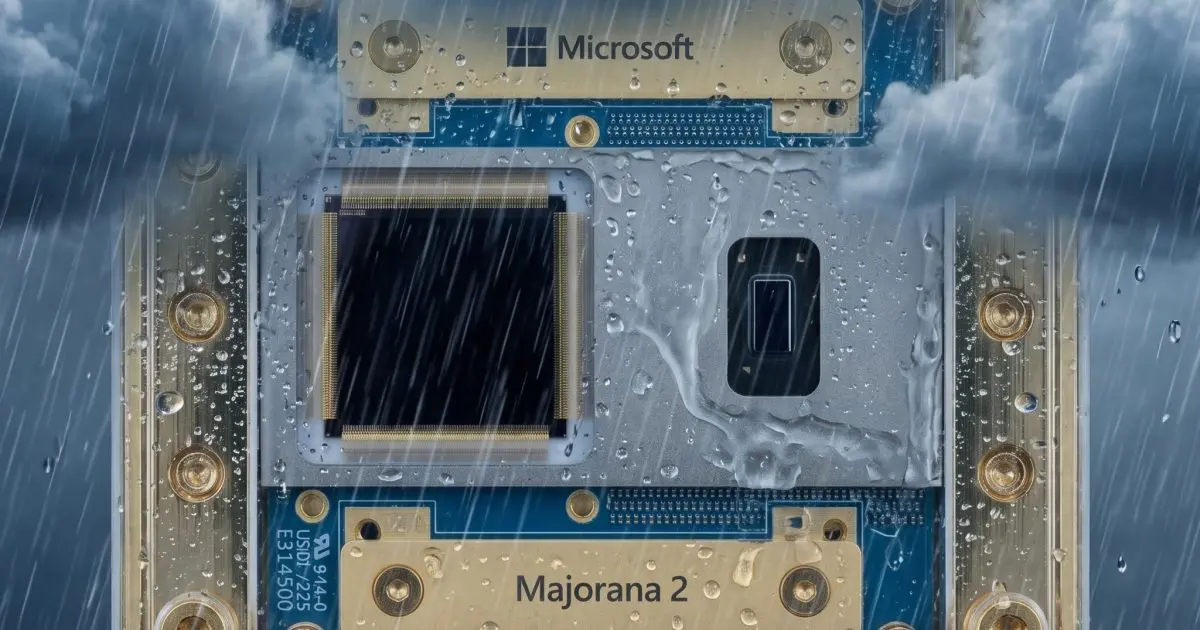
A critique published in Nature by Henry Legg of the University of St Andrews alleged that Microsoft’s 2025 results demonstrating a Majorana qubit relied on coding errors and selective data presentation. Microsoft responded, asserting the errors were minor and its underlying physics is valid, but the core dispute centered on whether the device achieved the necessary topological protection. The challenge surfaced as Microsoft promoted a successor chip and had previously targeted 2029 for a commercially viable quantum computer. This goal is now in doubt due to the ongoing debate over the foundational measurement. The critique appeared in the February 2025 paper by Microsoft Azure Quantum, and a right of reply was published in the same issue. The article details the disagreement regarding whether the device truly achieved topological protection, crucial for reliable information storage.
9. Archer Materials Partners with IonQ to Build Australian Quantum Capabilities
Archer Materials has entered a three-year agreement with IonQ, a $21 billion quantum computing company, to access the IonQ Quantum Cloud. This collaboration aims to develop quantum applications for defense, AI, and healthcare, as well as assess the viability of deploying an IonQ computer within Australia. Archer will invest $1.5 million and intends to offer dedicated quantum computing resources to Australian customers, potentially unlocking a $6 billion domestic market by 2030.
10. IBM Quantum Conference Applications Open, Focuses on Quantum Advantage
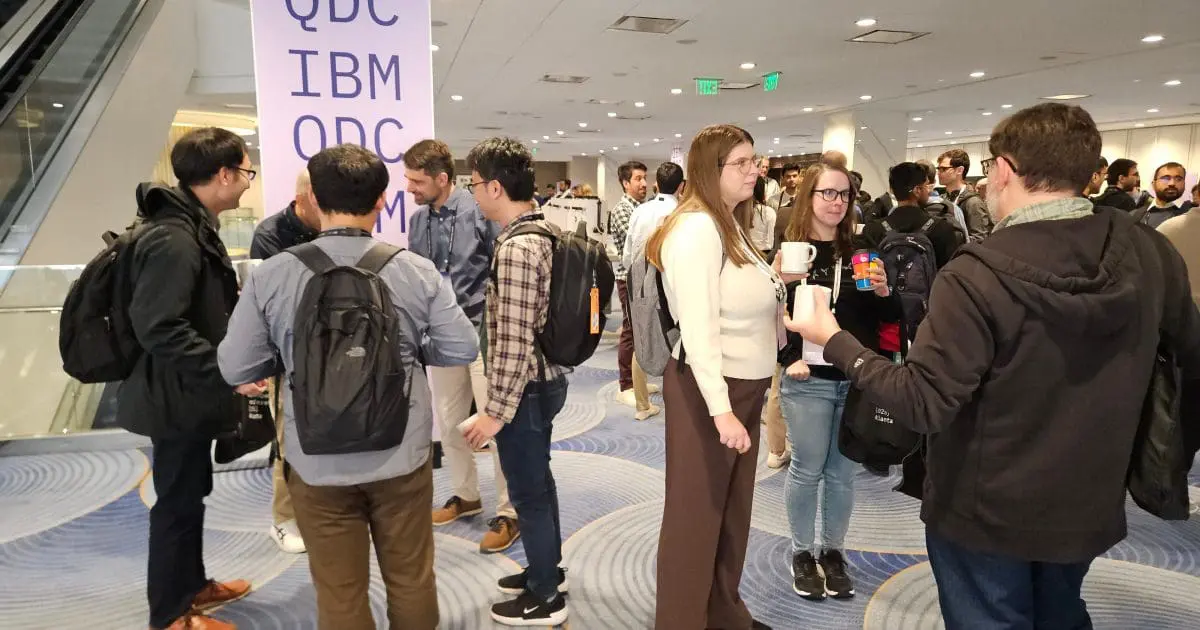
IBM announced that applications closed on September 21 for its Quantum Developer Conference, which was held November 11-13 in Chicago, Illinois. The conference centered on the progression from quantum usefulness to demonstrable quantum advantage, featuring updates from the IBM Quantum Roadmap and advancements in areas like Hamiltonian simulation and Qiskit tooling. IBM prioritized applicants with active Qiskit experience and relevant research backgrounds, and first-round acceptance letters were sent on August 10, with final letters on October 12. Recordings of presentations were made available on the IBM Quantum Platform after the event.




See today’s quantum computing news on Quantum Zeitgeist for the latest breakthroughs in qubits, hardware, algorithms, and industry deals.