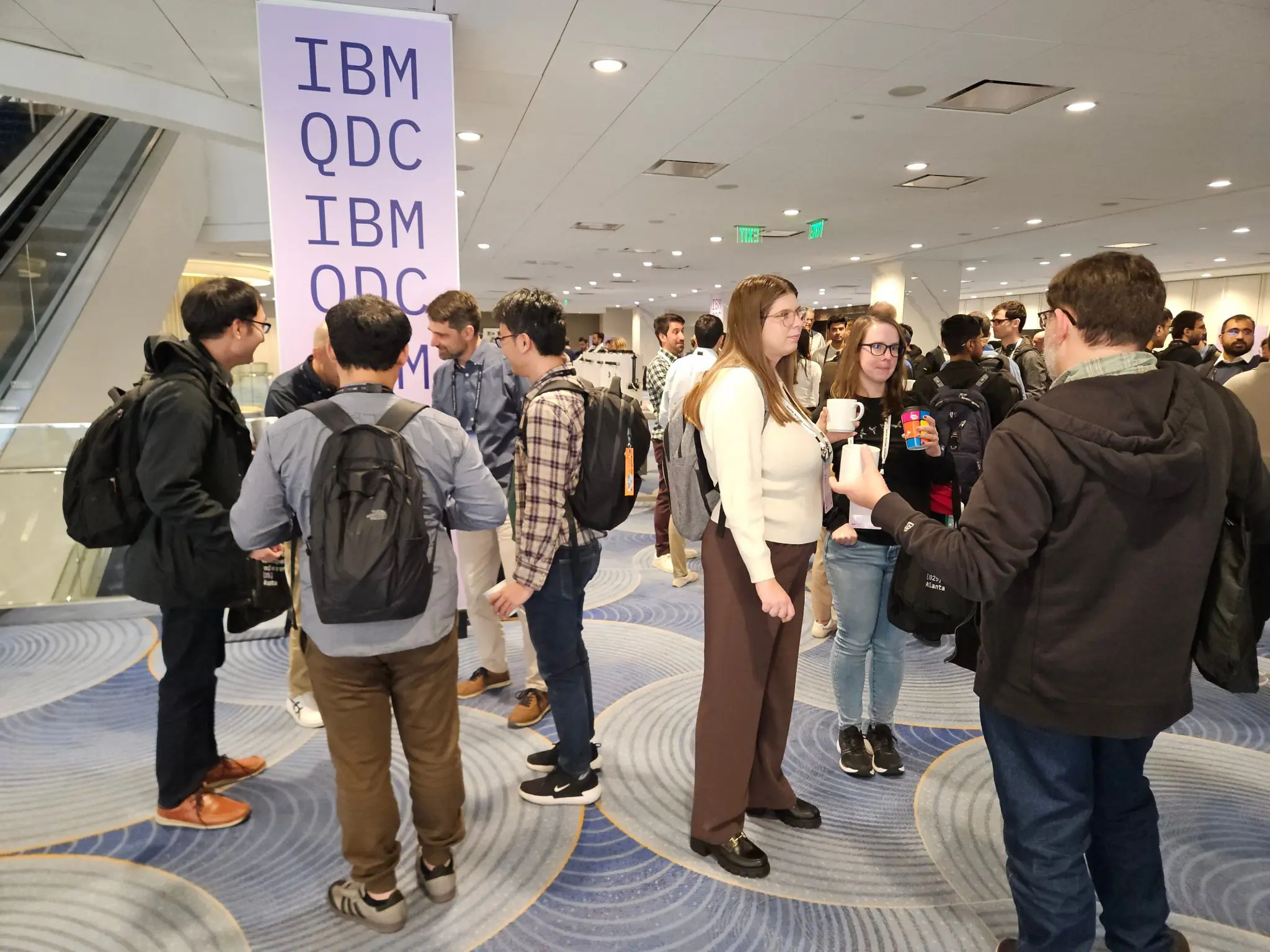
The IBM Quantum Developer Conference will be held November 11, 13 at the Sheraton Grand Riverwalk in Chicago, Illinois, bringing together researchers and innovators focused on a pivotal shift in the field. Applications opened this week for the exclusive three-day event, designed to explore the move “from quantum usefulness to quantum advantage,” according to IBM. The conference will offer attendees an in-depth look at the latest breakthroughs, including updates from the IBM Quantum Roadmap and advantage claims from the wider community. Prospective attendees must apply for consideration, with the application window closing September 21, and first-round acceptance letters scheduled to be sent August 10, prioritizing active Qiskit users with relevant research experience.
IBM Quantum Developer Conference 2026: Application Timeline & Details
Prospective participants must submit their applications by September 21, and invitations will begin to be sent on August 10. Final acceptance letters will follow on October 12, completing the selection process before the conference commences November 11, 13. This year’s conference focuses on the transition “from quantum usefulness to quantum advantage,” signaling a deliberate shift toward demonstrable results and practical applications of quantum computing. Attendees will gain access to lectures, demos, and hands-on workshops covering innovations in areas like Hamiltonian simulation, optimization, and the expanded Qiskit functions catalog. IBM experts will be available for direct guidance, aiming to help attendees translate insights into real-world computational workflows.
The conference is geared toward an active quantum community; the review team will prioritize applicants who are active Qiskit users with research or development experience in relevant quantum fields. IBM states that attendees will know how to apply these developments to their own projects and make real-world impacts across domains, and recordings of all presentations will be published on the IBM Quantum Platform following the event for those unable to attend in person.
Hamiltonian Simulation, Qiskit Tooling, and Quantum Workflows
The focus within quantum computing is rapidly shifting from demonstrating basic functionality to achieving demonstrable advantage over classical systems, and the IBM Quantum Developer Conference reflects this transition. These methods, crucial for modeling complex quantum systems, are increasingly being paired with advanced software tools to accelerate progress. Attendees will receive an in-depth look at new capabilities within the Qiskit framework, IBM’s open-source quantum software development kit, including an expanded functions catalog and a new benchmarking toolkit designed to rigorously assess performance. Beyond the core algorithms, the conference will address the practicalities of integrating quantum processing units with high-performance computing infrastructure, acknowledging the need for hybrid approaches to tackle computationally intensive problems. Advances in quantum error detection and correction, essential for building reliable quantum computers, will also be highlighted.
The event is not solely theoretical; IBM experts will be available to provide direct guidance on how to turn these insights into real computational workflows. Ultimately, the conference aims to equip developers with the skills to apply these advancements. Applications close on September 21. First-round acceptance letters will be sent on August 10, underscoring the selective nature of this exclusive gathering.
Throughout, IBM experts will be on hand to offer direct guidance on how to turn these insights into real computational workflows.
IBM
Researchers will present findings on progress toward fault-tolerant quantum computing, a significant hurdle in realizing the technology’s full potential. The conference agenda also highlights Hamiltonian simulation and optimization, alongside new tooling for the Qiskit software development kit, and an expanded functions catalog.



See today’s quantum computing news on Quantum Zeitgeist for the latest breakthroughs in qubits, hardware, algorithms, and industry deals.