A clear engineering path now exists for fault-tolerant quantum computers, with a delivery timeline measured in months, not decades, a surprising acceleration given the field’s historically distant outlook. Amazon Web Services is positioned to support this rapid advancement, having expanded its strategic collaboration with QuEra Computing to bring the first of these machines to the cloud through Amazon Braket, with scientifically relevant applications starting soon. This shift comes as the White House reinforces the importance of quantum technologies with two Executive Orders, described as “the most significant federal commitment to quantum technologies in a generation.” Federal agencies are now mandated to transition to NIST-approved post-quantum cryptography by the end of 2024 for key establishment and for digital signatures, a deadline AWS is already prepared to meet with its FIPS 140-3 validated cryptographic library.
White House Directives Accelerate Quantum Computing & Security
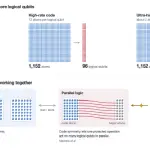
This acceleration is fueled by recent advances in quantum error correction, where research teams have successfully demonstrated core building blocks like logical qubits that surpass the performance of their physical counterparts, alongside real-time error correction at scale and coherent operation of thousands of qubits within a single system. Amazon Web Services (AWS) and QuEra Computing are prepared to deliver Libra, a megaquop-scale device capable of executing one million quantum operations over hundreds of logical qubits, to Amazon Braket customers by 2025, marking a significant step toward practical quantum applications. These early applications will focus on scientific computing workloads with direct relevance to federal agency missions, spanning energy research, materials science, and national security. Central to this is the Quantum Computer for Application Development and Discovery Science (QC-ADDS) Effort, designed to provide a quantum computer at the scale needed for scientific discovery to a Department of Energy (DOE) facility.
This urgency stems from the growing threat of attacks, where adversaries collect encrypted data with the intention of decrypting it once sufficiently powerful quantum computers become available. AWS has been proactively addressing this security challenge, achieving FIPS 140-3 validation for AWS-LC, its cryptographic library deployed across its infrastructure. This validation ensures that agencies utilizing AWS workloads are already operating on a PQC-ready cryptographic foundation without requiring additional procurement or deployment. DOE’s Quantum Genesis initiative and Q Competition further underscore this commitment, aiming to develop and deploy the world’s first scientifically relevant fault-tolerant quantum computing systems by 2028. The initiative will integrate a National Quantum Supercomputing User Facility with DOE’s existing exascale high-performance computing (HPC), AI, and networking infrastructure, creating a powerful platform for scientific advancement.
Amazon Braket’s cloud-native integration with classical HPC resources is critical, as fault-tolerant quantum workloads inherently require tight coordination between quantum processors and large-scale classical compute for preprocessing, error decoding, and postprocessing. The federal government’s intent is clear: the United States must move beyond quantum research and into the deployment of systems capable of scientifically relevant computation, with the Department of Energy tasked to establish activities and programs for national security applications and logistics and supply chain optimization, and DOE directed to define technical specifications within 90 days.
This is a very special moment. For the first time, a dream of realizing useful, fault-tolerant quantum computers is in our direct line of sight. Designed to enable quantum computation at an unprecedented scale, these systems should realize truly unique applications. We are proud to significantly expand our collaboration with AWS to bring these unique capabilities to the broader community of scientific users.
Prof. Mikhail Lukin, Chief Science Officer, QuEra Computing
QuEra & AWS Deliver Fault-Tolerant Quantum Computing via Braket
The pursuit of practical quantum computing has long been characterized by incremental progress and distant timelines, but a confluence of engineering advances and strategic partnerships is rapidly altering that landscape. Currently, quantum systems exist primarily as research tools and experiments, with limited computational power and significant error rates hindering their ability to tackle real-world problems. However, a clear pathway toward fault-tolerant quantum computers, machines capable of surpassing the limitations of classical supercomputers, is now demonstrably within reach, with delivery projected in a matter of months rather than years. The system AWS and QuEra are building directly aligns with these targets, offering 250 logical qubits and cloud-native integration with classical HPC infrastructure. Amazon Braket’s hybrid approach, seamlessly integrating quantum processors with classical compute resources, is essential for managing the complex workflows inherent in fault-tolerant quantum computing, allowing agencies to build end-to-end pipelines without the need for separate infrastructure or security protocols.
Libra Device Achieves Megaquop Scale for Scientific Discovery
The arrival of Libra signifies a clear engineering pathway toward fault-tolerant quantum computers, a shift from decades-long projections to a delivery horizon measured in months. This advancement is particularly significant because it promises to tackle problems currently intractable for even the most powerful classical supercomputers, opening new avenues for research across multiple federal agencies. The core of Libra’s capability lies in its projected performance: a capacity to execute one million quantum operations using hundreds of logical qubits. This scale, termed “megaquop,” isn’t merely about raw processing power; it’s about achieving a level of computational fidelity that allows researchers to generate scientifically meaningful data, complementing and validating results from classical methods. At 250 logical qubits and up to 100,000 hard fault-tolerant operations, the system aims to reduce uncertainty and strengthen conclusions in fields where classical simulations rely on approximations.
Specific applications prioritized by the Department of Energy and national security initiatives include quantum chemistry for advanced energy research, materials science focused on superconductivity, and simulations of fundamental forces in high-energy physics. These areas represent computational bottlenecks where the unique strengths of quantum hardware can provide a decisive advantage. The potential extends beyond these initial focus areas, encompassing drug discovery at the National Institutes of Health, logistics and supply chain optimization within the Department of Defense, and financial risk modeling at Treasury.
AWS Infrastructure Supports NIST-Approved Post-Quantum Cryptography
Federal agencies face a rapidly approaching deadline to fortify digital infrastructure against the looming threat of quantum decryption, and Amazon Web Services is positioning itself as a key partner in that transition. The company’s commitment extends beyond simply meeting the mandate; AWS security experts have been actively involved in PQC research and the development of the NIST standards themselves for years, contributing to the foundational work underpinning the federal transition. The urgency is amplified by global regulatory pressures, with international bodies setting hard deadlines for quantum-resistant confidentiality as early as 2027 and authentication by 2030, making this a worldwide imperative. AWS has a well-defined migration plan already in execution, aligning with the deadline outlined in the Executive Order. This proactive approach allows agencies to focus on application modernization rather than foundational cryptographic infrastructure.
Beyond security, AWS is also developing the quantum computing capabilities that necessitate this cryptographic overhaul. This development is particularly noteworthy given the recent advancements in quantum error correction, which have established a clear engineering path toward building machines capable of solving problems beyond the reach of classical supercomputers.


See today’s quantum computing news on Quantum Zeitgeist for the latest breakthroughs in qubits, hardware, algorithms, and industry deals.