
Welcome to this week’s quantum technology digest! We’ve curated the ten most impactful stories showcasing the rapid and diverse advancements occurring across the quantum landscape. From hardware breakthroughs to innovative algorithmic approaches and strategic partnerships, the field continues to push boundaries at an impressive pace.
This week’s selection highlights a particularly strong focus on scaling quantum systems – both in terms of qubit count (Pasqal’s 1024-atom register and ParityQC’s 52-qubit QFT) and resource efficiency (memQ’s DARPA contract). Alongside these hardware gains, we’re also seeing significant progress in software and application development, with NVIDIA Ising promising faster error correction, Algorithmiq demonstrating healthcare applications, and Quantinuum charting new algorithmic territory. The increasing collaboration between quantum companies and established research institutions, as evidenced by the IBM/Illinois alliance, further underscores the move toward practical quantum solutions.
Overall, this week demonstrates a maturing ecosystem – one that isn’t just focused on fundamental qubit development, but is actively tackling the complex challenges of building useful, reliable, and scalable quantum technologies across various domains.
1. IonQ Expansion: Washington State Bets Big on Quantum Future with $500K Investment

IonQ, a leading quantum computing firm, is receiving a $500,000 investment from Washington state’s Economic Development Strategic Reserve Fund to expand its Bothell, Washington facility, the nation’s first dedicated quantum computing manufacturing hub. This funding, matched by over $14 million in private investment, is projected to create between 1,200 and 2,000 jobs over the next five years and further establish Washington as a key region for quantum manufacturing. IonQ’s technology, leveraging individual atoms for computation, aims to revolutionize sectors like healthcare, energy, and cybersecurity by solving problems beyond the capabilities of traditional computers. This investment underscores the state’s commitment to fostering a thriving quantum ecosystem and attracting high-value jobs.
2. Pasqal Achieves 1024-Atom Quantum Register with Record-Low Defects & Lifetimes
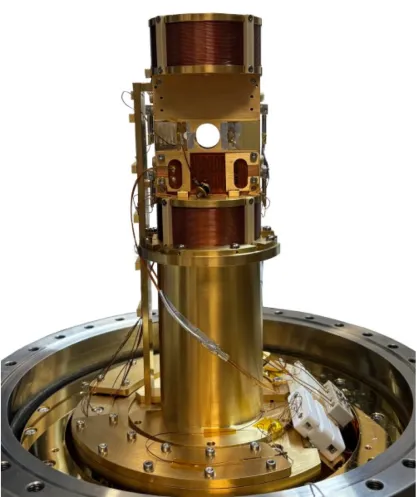
Pasqal has achieved an advance in neutral atom quantum computing by creating registers containing 1024 atoms with less than 0.5% defects, demonstrating a level of control previously unseen at this scale. This milestone builds upon last year’s achievement of 506 defect-free atoms, approximately doubling the prior record while maintaining low error rates and validating their approach to scaling quantum systems through uniform traps, fast manipulations, and efficient rearrangement. The achievement enables capabilities for both analog and digital computation, allowing the simulation of more complex materials and providing crucial overhead for quantum error correction. Pasqal overcame key hurdles in laser power and vacuum quality through innovative cryogenic engineering and optical techniques. The resulting registers exhibit qubit lifetimes exceeding 80 seconds and coherence times of up to 5000 seconds, a fortyfold improvement over previous cryogenic setups. Roughly 10% of attempts yield completely defect-free arrays, and 95% exhibit fewer than 0.5% defects.
3. Cat Qubit Stability Boosted by Novel Voltage-Biasing Technique

Researchers at Alice & Bob and the Laboratoire de Physique de l’École Normale Supérieure have demonstrated a promising new method for stabilizing cat qubits using direct current voltage biasing of a Josephson junction. This approach, detailed in Physical Review Applied, aims to achieve a “two-to-one photon interaction” that exponentially suppresses bit-flip errors and reduces the need for extensive quantum error correction. By directly manipulating the qubit’s Hamiltonian and incorporating a specialized frequency filter to combat voltage noise, the team’s simulations suggest enhanced qubit coherence and a higher photon exchange rate compared to traditional parametric pump techniques – all without relying on simplifying approximations.
4. IBM Quantum Hardware Powers Healthcare Algorithm Breakthroughs in Q4Bio Challenge

Algorithmiq, collaborating with the Cleveland Clinic and IBM, secured the $2 million prize in Wellcome Leap’s Q4Bio challenge by successfully simulating key processes in photodynamic therapy using IBM’s quantum hardware. Notably, five of the six Q4Bio finalists chose to run their large-scale demonstrations on IBM quantum computers, highlighting the company’s leading position in providing systems with the necessary qubit count (over 100) and circuit depth for complex healthcare applications. These projects, including genome encoding by the University of Oxford and biomarker discovery by Infleqtion/University of Chicago/MIT, demonstrate a tangible move towards practical quantum computing solutions in healthcare with a realistic 3-5 year timeframe for viable results. The challenge underscores the increasing focus on hybrid quantum-classical algorithms as a pathway to near-term quantum advantage.
5. NVIDIA Ising: AI Boosts Quantum Calibration & Error Correction Speed

NVIDIA has unveiled NVIDIA Ising, a family of open-source quantum AI models designed to dramatically accelerate the calibration and error correction of quantum processors. These models deliver up to 2.5x faster performance and 3x higher accuracy in decoding processes, crucial for building scalable and reliable quantum systems, effectively positioning AI as the “control plane” for quantum machines. Already adopted by institutions like Atom Computing and Harvard, Ising offers a comprehensive toolkit including workflows and microservices, while also prioritizing data security through local execution. This development is poised to unlock practical quantum applications and contribute to the projected $11 billion quantum computing market by 2030.
6. Quantum Oracle Sketching: A Leap Forward in Large-Scale Data Analysis

Researchers at Google Quantum AI have demonstrated a significant speedup in classical data analysis using a novel technique called quantum oracle sketching. This method allows quantum computers to efficiently classify and reduce the dimensions of massive datasets – achieving reductions of four to six orders of magnitude in machine size with fewer than 60 logical qubits – by intelligently “sampling” classical data without fully loading it into the quantum system. By bypassing traditional data loading bottlenecks, this work showcases a demonstrable quantum advantage over classical machine learning for tasks like genomics, materials science, and sentiment analysis, paving the way for more powerful and efficient data processing.
7. memQ Lands DARPA Contract to Revolutionize Quantum Resource Efficiency

memQ has been awarded a contract by the Defense Advanced Research Projects Agency (DARPA) to develop a novel quantum compiler as part of the Heterogeneous Architectures for Quantum (HARQ) program, with the ambitious goal of reducing quantum computing resource demands by 1,000x. This work addresses the current limitation of relying on single qubit types by focusing on optimizing workloads across diverse qubit modalities linked by quantum networks. The project, a collaboration with qBraid, MIT, Yale, and the University of Chicago, will create hardware- and network-aware interfaces crucial for scalable and efficient quantum computation, building upon memQ’s existing xDQC and xQNA technologies.
8. IBM & Illinois Forge Quantum-Classical Computing Alliance for 5 Years

IBM and the University of Illinois Urbana-Champaign are expanding their Discovery Accelerator Institute with a five-year plan to integrate Illinois’ NCSA supercomputers with IBM quantum systems. Building on a foundation of over 230 published research papers, this collaboration aims to pioneer quantum-centric supercomputing – a combined approach leveraging the strengths of both classical and quantum computation to solve previously intractable problems in fields like AI, chemistry, and materials science. A core focus will be the “Algorithms-to-Silicon-to-Systems” (AS2) initiative, unifying algorithm design with hardware and software development for a more holistic and efficient AI paradigm.
9. ParityQC Achieves Record 52-Qubit Quantum Fourier Transform on IBM Heron

ParityQC has demonstrated a new quantum computing record by implementing a 52-qubit Quantum Fourier Transform (QFT) on an IBM Quantum Heron processor, nearly doubling the previous benchmark. This achievement, enabled by the synergy of IBM’s hardware and ParityQC’s proprietary “Parity Twine” architecture, showcases a significant leap in processing capability and efficiency – reducing gate count and eliminating error-prone SWAP gates. The exponential scaling observed suggests quantum computing may be entering a period of rapid advancement mirroring Moore’s Law, with implications for fields like cryptography, finance, and materials science.
10. Quantinuum’s Mixed State Algorithm: A New Path for Matrix Calculations

Quantinuum has unveiled a novel probabilistic quantum algorithm that utilizes mixed states to approximate matrix integrals and weighted sums, diverging from traditional block encoding methods. This approach allows for flexible computation through a multi-path design – returning the current state, applying a positive map, or restarting – and offers a deterministic stopping rule for efficient oracle calls. Researchers demonstrate this algorithm’s potential for solving Lyapunov equations and inverting matrices, suggesting mixed state encoding could become a valuable, and distinct, resource compared to block encoding for specific quantum computing challenges, particularly in complex system analysis. This work, published in Physics Applied, builds on previous research and expands the possibilities for versatile quantum algorithms.



See today’s quantum computing news on Quantum Zeitgeist for the latest breakthroughs in qubits, hardware, algorithms, and industry deals.