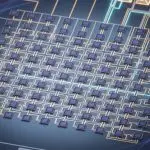
Pasqal has achieved an advance in neutral atom quantum computing by creating registers containing 1024 atoms with less than 0.5% defects, demonstrating a level of control previously unseen at this scale. This milestone doubles the company’s prior record of 506 atoms while maintaining low error rates, validating their approach to scaling quantum systems through uniform traps, fast manipulations, and efficient rearrangement. The achievement enables capabilities for both analog and digital computation, allowing the simulation of more complex materials and providing crucial overhead for quantum error correction. According to the company, reaching 1000 atoms is a critical scalability test and identifies the operational bottlenecks to scale further, with these 1024-atom registers also exhibiting qubit lifetimes exceeding 80 seconds.
Atom Register Preparation Achieves Sub-0.5% Defect Rate
Building upon last year’s achievement of 506 defect-free atoms, the team’s success is not simply about increasing the atom count, but about maintaining high fidelity while scaling, a critical hurdle for practical quantum processors. The ability to reliably arrange and control over one thousand qubits opens doors to tackling increasingly complex computational problems. Digital computation benefits from increased qubit numbers through the implementation of quantum error correction, effectively creating more robust logical qubits from multiple physical ones. Pasqal’s approach, relying on uniform traps, fast manipulations, and efficient rearrangement, has now been validated at this larger scale, with researchers pinpointing operational bottlenecks for future improvements. Two key challenges were overcome to reach this milestone; insufficient laser power was addressed by combining two lasers using spatial light modulators, effectively doubling the available power and generating over 2000 traps for atom loading.
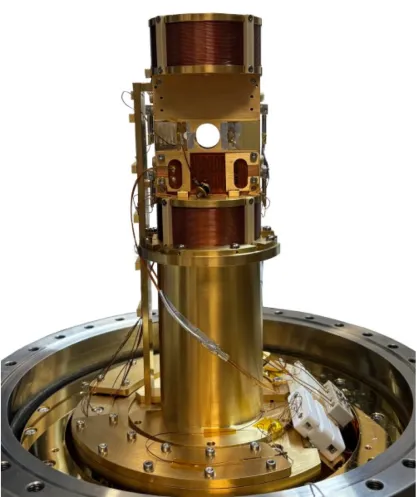
Simultaneously, improvements to the cryogenic platform, featuring 4 Kelvin/30 Kelvin shielding and in-vacuum optics, enhanced vacuum quality and extended atom lifetimes. The resulting registers are not just large, but remarkably stable, exhibiting coherence times of up to 5000 seconds, or 80 minutes. This extended lifetime, a fortyfold improvement over previous cryogenic setups, minimizes defects during register preparation and enhances fidelity for both analog and digital computations by suppressing blackbody radiation and prolonging Rydberg state lifetimes.
Laser Power & Vacuum Improvements Enable 1024-Atom Scaling
While many groups are pursuing increased qubit counts, Pasqal’s approach focused on maintaining fidelity as the system grew, a critical factor for practical quantum computation. The company did not simply add more atoms; they refined the underlying technology to ensure reliable control at a larger scale, a feat previously hampered by limitations in laser power and vacuum quality. Initially, scaling to over 1000 atoms presented a power constraint; the existing single-laser setup lacked the capacity to generate sufficient traps. Maintaining a sufficiently low-pressure environment also proved difficult, restricting atom lifetimes to only a few hundred seconds. A redesigned 4 Kelvin cryogenic platform, incorporating 4 Kelvin/30 Kelvin shielding and improved in-vacuum optics and pumping, extended these lifetimes dramatically. This engineering resulted in a trapping lifetime reaching approximately 5000 seconds, over 80 minutes, a fortyfold improvement over the previous cryogenic setup. The resulting register is not merely larger, but demonstrably more reliable. Roughly 10% of attempts yield completely defect-free arrays, with 95% exhibiting fewer than 0.5% defects, a remarkably low error rate for a system of this size.
Second Atom Lifetimes via 4K Cryogenic Engineering
Pasqal is pushing the boundaries of neutral atom quantum computing with a newly demonstrated 1024-atom register, a feat achieved not simply through increased atom count, but through sustained high fidelity and extended coherence times. This level of control is crucial as the field moves beyond proof-of-concept experiments toward practical quantum computation, demanding increasingly reliable qubit arrays. Scaling to over 1000 atoms presented significant engineering hurdles, particularly in maintaining stable trapping conditions and extending qubit lifetimes. This extended coherence time is vital, allowing for more computational steps before quantum information is lost. The combination of operational excellence and advanced cryogenic engineering, the company claims, delivers large, high-fidelity qubit arrays, paving the way for increasingly complex applications and ultimately, fault-tolerant quantum computation.
Neutral Atom Arrays Unlock Fault-Tolerant Quantum Computing
The pursuit of practical quantum computers recently achieved a significant milestone with Pasqal’s demonstration of a 1024-atom quantum register exhibiting remarkably low defect rates; this achievement moves the field closer to realizing fault-tolerant quantum computing. Beyond simply increasing qubit counts, the company prioritized maintaining high fidelity as they scaled, a crucial factor for complex calculations and error correction. This leap in qubit reliability is coupled with unexpectedly long coherence times, with neutral atoms maintaining quantum information for over 5000 seconds, or 80 minutes. The preparation of the 1024-atom register involves a two-step rearrangement process, first capturing an image to identify occupied traps and then using an algorithm to efficiently move atoms while avoiding collisions. Roughly 10% of attempts yield fully defect-free arrays, while 95% fall below the 0.5% defect threshold, demonstrating the effectiveness of their combined operational excellence and cryogenic engineering. The company is now focused on testing fault-tolerance on full, end-to-end applications, building on this foundation to achieve even more reliable control and longer coherence times.
Our team has demonstrated the preparation of 1024-atom register with very low averaged defect rate. This result shows that our neutral-atom platform can scale to the thousands of qubits, opening the path to large-scale quantum computing.
Adrien Signoles, Chief Hardware Officer at Pasqal


See today’s quantum computing news on Quantum Zeitgeist for the latest breakthroughs in qubits, hardware, algorithms, and industry deals.