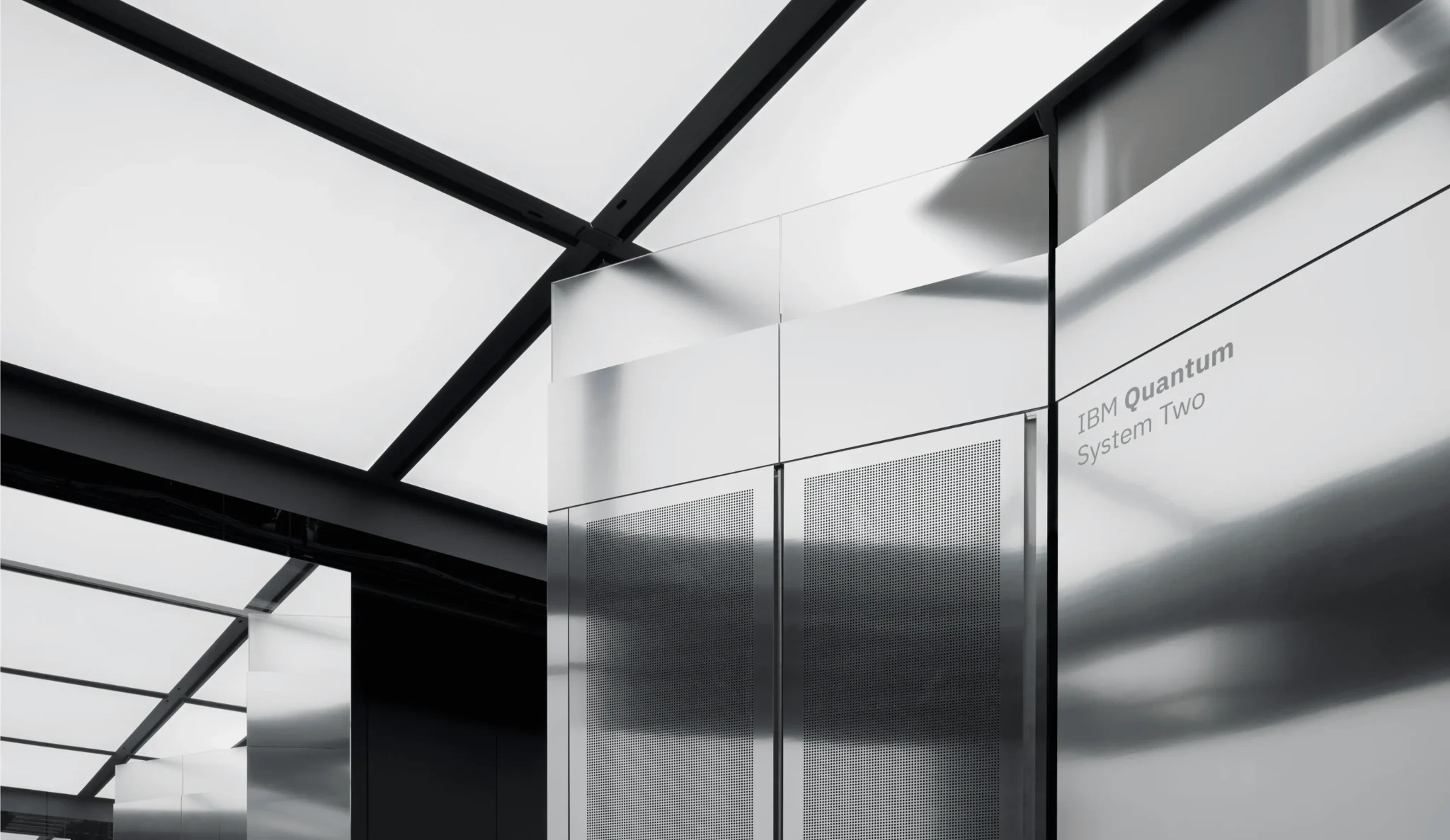
IBM and the University of Illinois Urbana-Champaign are deepening their collaboration, integrating the university’s NCSA Delta and DeltaAI supercomputers with IBM quantum computers to pioneer a new approach to quantum-centric supercomputing. This expansion of the IBM-Illinois Discovery Accelerator Institute, launched in 2021, builds upon productivity demonstrated by the more than 230 research papers already published by its members. The Institute will pursue breakthroughs combining the strengths of quantum and classical computing, developing AI systems and algorithms for problems currently intractable for even the most powerful supercomputers. “I’m pleased to see the IBM-Illinois Discovery Accelerator Institute building on years of progress and partnership with U. of I. as Illinois innovators pursue critical discoveries in quantum computing and AI,” said Governor JB Pritzker.
IBM and U. of I. Launch Quantum-Centric Supercomputing Integration
More than 230 peer-reviewed publications already stem from the IBM-Illinois Discovery Accelerator Institute, a figure demonstrating progress achieved since its establishment in 2021 and signaling a strong foundation for the next five years of collaborative research. This integration aims to create a quantum-centric supercomputing architecture, combining the strengths of both computational paradigms to tackle previously intractable problems. Researchers will concentrate on developing workflow management tools to seamlessly link IBM quantum systems with NCSA’s high-performance infrastructure, fostering research across academic, industrial, and governmental sectors within Illinois. The expanded Institute will explore hardware integration and focus on algorithm development, seeking solutions where classical and quantum systems complement each other. Researchers aim to create new algorithms that neither type of computer could solve independently, with applications spanning chemistry, condensed-matter physics, and materials science.
Alongside this, the Institute will advance AI systems research, addressing challenges in scalable and adaptable distributed inference for AI workloads. A new research area, dubbed Algorithms-to-Silicon-to-Systems (AS2), will attempt to unify algorithm design with silicon development and systems software, aiming for a paradigm shift toward co-evolution rather than isolated development. “Our goal with the expansion is to build on past successes and continue advancing the institute’s impact. We aim to reach new heights in the next five years. Our students have expressed appreciation to both Illinois and IBM for involvement in a truly unique program,” said Deming Chen, IIDAI co-director and Abel Bliss Professor of Engineering at The Grainger College of Engineering. The initiative has garnered high-level support, with Rashid Bashir, Vice Chancellor for Chicago Strategic Partnerships and Dean of The Grainger College of Engineering, present at the announcement alongside Illinois Governor JB Pritzker and Jay Gambetta, Director of IBM Research.
Algorithms-to-Silicon-to-Systems Co-Evolution for AI Workloads
The convergence of algorithmic development, specialized silicon design, and comprehensive systems engineering is reshaping artificial intelligence workloads, and the IBM-Illinois Discovery Accelerator Institute is now positioned to accelerate this trend. Having already established a strong foundation with over 230 research papers published since its 2021 launch, the Institute is pivoting towards a holistic approach where these three elements are not developed in isolation, but rather co-evolve to maximize performance and efficiency. This strategy acknowledges that current AI systems are often bottlenecked not by the algorithms themselves, but by the limitations of the underlying hardware and software infrastructure. A key component of this new direction is the “Algorithms-to-Silicon-to-Systems” (AS2) research area, which aims to fundamentally alter the design paradigm for AI systems. Rather than treating algorithms, silicon, and systems software as separate entities, AS2 seeks a unified approach where all three are designed in concert.
The anticipated outcome is a substantial leap in productivity, accessibility, and scalability, enabling the creation of complex, high-performance systems with verifiable correctness and robustness. This is particularly crucial as AI workloads become increasingly demanding, requiring specialized hardware to overcome the constraints of general-purpose processors. This isn’t simply about running quantum tasks on a supercomputer; it’s about forging a deeper architectural connection between classical and quantum computing resources. Researchers will focus on developing quantum-centric workflow management tools to seamlessly integrate IBM’s quantum processors with NCSA’s high-performance computing infrastructure. “IBM is thrilled to help provide quantum-centric supercomputing to Illinois researchers, alongside an expansion of the IBM-Illinois Discovery Accelerator Institute’s efforts in AI for systems design,” said Jay Gambetta, Director of IBM Research and IBM Fellow. Institute members will explore how these combined architectures and novel algorithms can tackle problems that are currently intractable for either type of computer alone, pushing the boundaries of scientific discovery in fields like chemistry and materials science.
I’m pleased to see the IBM-Illinois Discovery Accelerator Institute building on years of progress and partnership with U. of I. as Illinois innovators pursue critical discoveries in quantum computing and AI.
Governor JB Pritzker
Discovery Accelerator Institute’s Five-Year Research Priorities
Central to this effort is the development of new algorithms designed to leverage the unique strengths of both quantum and classical systems. The expanded collaboration extends beyond research, with a strong emphasis on education and workforce development. IBM and the University of Illinois will jointly lead initiatives to cultivate expertise in quantum computing, AI systems, and high-performance computing, offering curriculum development, hands-on training, and collaborative research opportunities. This commitment to training the next generation of scientists and engineers is seen as crucial for maintaining Illinois’ position as a global hub for AI and quantum-enabled scientific discovery. The Institute’s presence in Chicago, at the Discovery Partners Institute, will further integrate it with the broader quantum ecosystem, solidifying the state’s role in this rapidly evolving field.
IBM is thrilled to help provide quantum-centric supercomputing to Illinois researchers, alongside an expansion of the IBM-Illinois Discovery Accelerator Institute’s efforts in AI for systems design. As the brilliant minds within the Institute discover and test new algorithms, they will drive groundbreaking research to power the applications made possible by AI and quantum computing.
Jay Gambetta, Director of IBM Research and IBM Fellow
Illinois Quantum Ecosystem Expansion & Workforce Development
This isn’t simply running quantum algorithms on existing supercomputers; researchers envision a tightly coupled system where both architectures work synergistically, tackling problems currently beyond the reach of either alone. This integration will be underpinned by the development of new workflow management tools, designed to seamlessly connect IBM’s quantum hardware with NCSA’s high-performance computing resources. Researchers will focus on creating novel algorithms capable of leveraging the strengths of both systems, specifically targeting classically hard problems in fields like chemistry, condensed-matter physics, and materials science. Crucially, the expanded collaboration extends beyond research to prioritize workforce development.
The Grainger College of Engineering is thrilled to host this flagship partnership with IBM to define the future of how AI, quantum and supercomputing will come together for the greatest impact.
Rashid Bashir, dean of The Grainger College of Engineering and vice chancellor of Chicago strategic partnerships with the University of Illinois Urbana-Champaign


See today’s quantum computing news on Quantum Zeitgeist for the latest breakthroughs in qubits, hardware, algorithms, and industry deals.