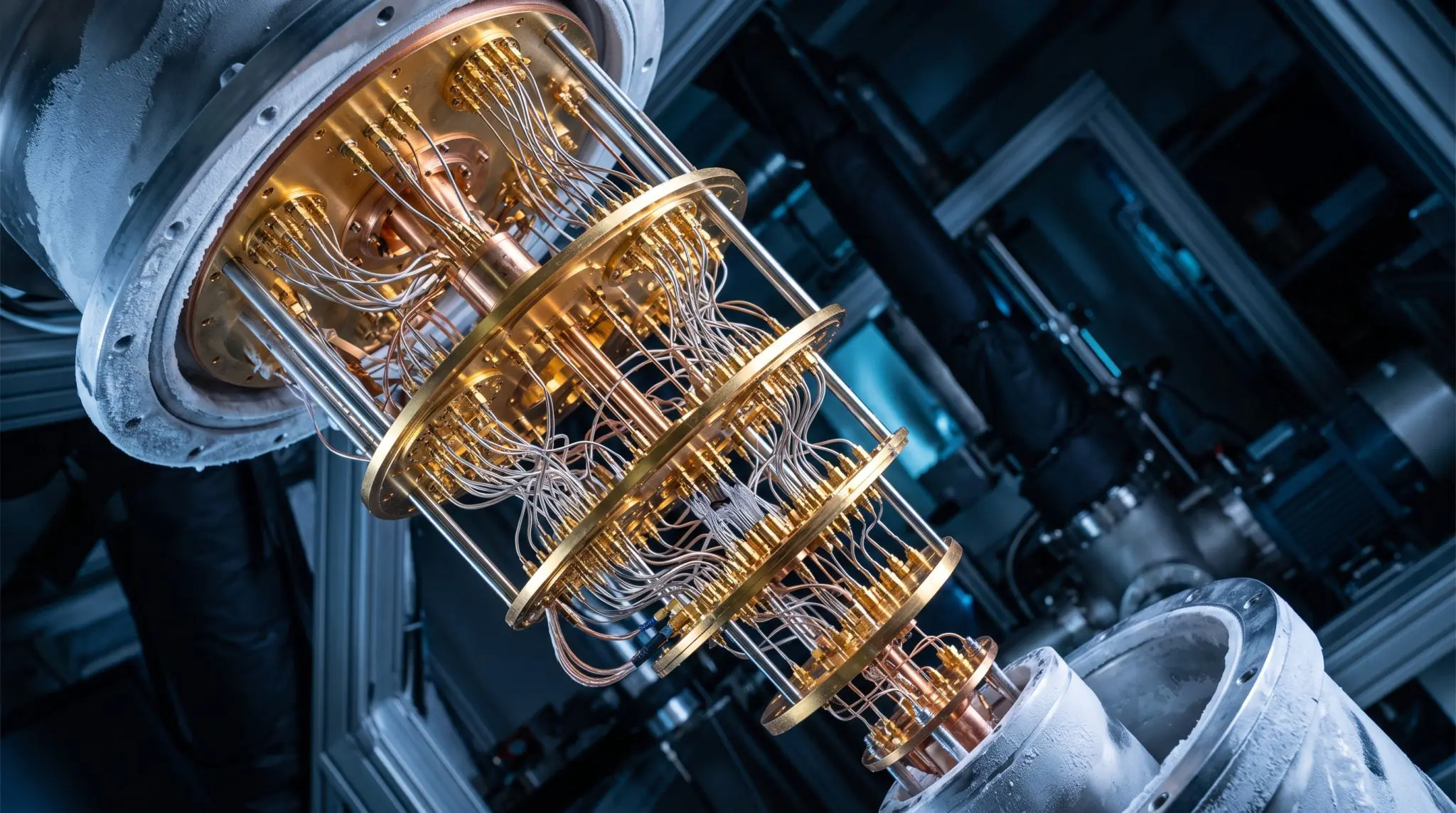
In eight days this month, customers on three continents signaled a shift in quantum computing, building in-house capability with complete systems, not just experimenting with access. Eldorado Research Institute in Brazil will install an IQM Spark in the first quarter of 2027, marking the first quantum computer in South America, while a Japanese corporation is purchasing two systems, indicating a move beyond simple experimentation.
“The real news is not that they all bought computers,” says IQM. This complete approach, hardware, software, integration, and upgrades, is what buyers now demand to realize the potential of quantum technology.
IQM’s Three-Continent Expansion: Quantum Computer Stack Adoption
This blended approach, combining local hardware with cloud-based resources, allows the institute to begin practical quantum work without immediately investing in a large-scale, fully-owned machine. IQM notes this pairing allows for both hands-on learning and access to greater computational power when required, a strategy particularly suited for institutions building quantum expertise from the ground up.
Four European nations are also sharing access to a single quantum system housed at CSC in Kajaani, Finland, integrated within the LUMI AI Factory, demonstrating a collaborative model for quantum infrastructure. This system, an IQM Halocene H4 with 150 physical qubits, is slated for delivery in the first quarter of 2027 and will undergo upgrades in 2028 to achieve lower logical error rates and real-time error correction.
IQM, founded in 2018 and now publicly listed as IQMX on Nasdaq, is positioning itself not merely as a hardware vendor, but as a provider of a complete quantum stack, the company says. The company emphasizes the importance of error correction, software integration, and application development alongside the physical quantum processor, according to IQM. A Japanese corporation is procuring two quantum computers, signaling a commitment that extends beyond exploratory research and indicates a drive to build internal quantum capabilities.
This purchase, coupled with the Brazilian and Finnish deployments, highlights a shift in customer behavior, a move toward owning the entire quantum computing “stack,” encompassing hardware, software, and the necessary infrastructure for practical application. This integrated approach aims to deliver a functional quantum ecosystem, not just isolated machines.
Eldorado Research Institute: Building a South American Quantum Foundation
The institute’s approach pairs ownership of a smaller, IQM Spark system with remote access to a larger, cloud-based IQM computer in Europe, providing a blended learning and research environment. This strategy allows researchers to gain hands-on experience with quantum hardware while still using greater computational resources when needed for complex problems, a balance Eldorado prioritizes for long-term growth. IQM’s technology builds on superconducting qubits, a method increasingly favored for its potential scalability and error correction capabilities, and the company’s Halocene H4 line, featuring 150 physical qubits, is now commercially available.
Founded in 2018 and headquartered in Espoo, Finland, IQM distinguishes itself by offering a complete quantum stack, encompassing not only the hardware but also the software and integration services necessary for practical application, the firm reports. The decision by Eldorado to invest in a physical system, rather than relying solely on cloud access, reflects a broader trend observed across multiple continents.
The Japanese corporation TOYO, for example, is buying an IQM Radiance system and intends to open access to both for a network of organizations across Japan, a move impossible with rented quantum time. This emphasis on owning the entire stack, hardware, software, and integration, allows institutions like Eldorado and TOYO to control their quantum future and cultivate local ecosystems around the technology, fostering a more sustainable and independent quantum landscape.
Finland’s LUMI-IQ: Path to Scalable Logical Qubit Operations
CSC and the LUMI AI Factory are charting a course toward functional logical qubits with a planned upgrade to the LUMI-IQ system, jointly owned by Finland, Czechia, Norway, and Poland. The upgrade, co-funded by the EuroHPC Joint Undertaking, will transform the existing superconducting quantum computer into one capable of error-corrected operations, beginning with the installation of an IQM Halocene H4 system in 2027. This phased approach prioritizes a pathway to logical qubit stability over sheer qubit count, a strategy the four nations contracted for to ensure long-term value.
The LUMI-IQ system’s evolution will unfold in stages, initially deploying a 150-physical qubit machine with early error correction capabilities. By 2028, the focus shifts to reducing logical error rates and implementing real-time correction protocols, building on the initial hardware foundation.
The final phase, slated for 2029, involves upgrading to a Halocene H5 system, enabling full logical operations on up to nine logical qubits. This deliberate progression allows for continuous refinement and integration of error mitigation techniques, maximizing the utility of the investment. Unlike simply accessing quantum resources via the cloud, these institutions are building in-house expertise and infrastructure, fostering a self-sufficient quantum ecosystem.
The ability to control the entire process, from hardware upgrades to software development, allows for tailored solutions and accelerates the path toward practical applications. IQM’s Halocene product line, recently launched with a 150-qubit, error-correction-focused design, supports this strategy, offering a commercially available platform for both research and development.
TOYO Corporation: Japan’s Quantum Testbeds and Ecosystem Access
TOYO Corporation’s recent acquisition of two quantum computers signals a commitment extending beyond mere experimentation, establishing a dedicated in-house capability with both hardware and software components. The Japanese technology group intends to deploy an IQM Spark at its research and development center in Kiba, Tokyo, alongside an IQM Radiance system at the Advanced Industrial Science and Technology (AIST)’s G-QuAT facility, both delivered at the end of 2026 and operational in early 2027, the company states.
This dual purchase distinguishes TOYO’s investment, demonstrating a strategic focus on building internal expertise rather than relying solely on cloud-based quantum access. TOYO’s unique approach centers on utilizing the quantum systems as testbeds for evaluating and verifying components integral to superconducting quantum computers through its established strength in advanced measurement technologies.
Unlike typical deployments focused immediately on solving complex computational problems, TOYO intends to scrutinize the underlying hardware, assessing performance and reliability in a practical setting. This focus on component verification suggests a long-term vision of contributing to the broader quantum computing supply chain, potentially influencing future hardware designs and manufacturing processes. Further solidifying its commitment to fostering a national quantum ecosystem, TOYO plans to open access to both systems to a diverse range of Japanese entities, including companies, organizations, research institutes, and universities.
“An ecosystem is not built with machines nobody outside the building can touch,” the company asserts, highlighting the importance of shared resources for accelerating innovation. This decision to democratize access differentiates TOYO’s strategy, positioning it as a facilitator of quantum adoption across multiple sectors, and enabling collaborative research and development efforts beyond its internal teams.
The company’s strategy extends to the application layer, building a complete “stack” of quantum resources, and ensuring that improvements to hardware do not render existing software investments obsolete. This comprehensive approach, according to IQM, is prioritizing long-term value over short-term gains.



See today’s quantum computing news on Quantum Zeitgeist for the latest breakthroughs in qubits, hardware, algorithms, and industry deals.