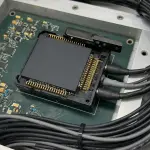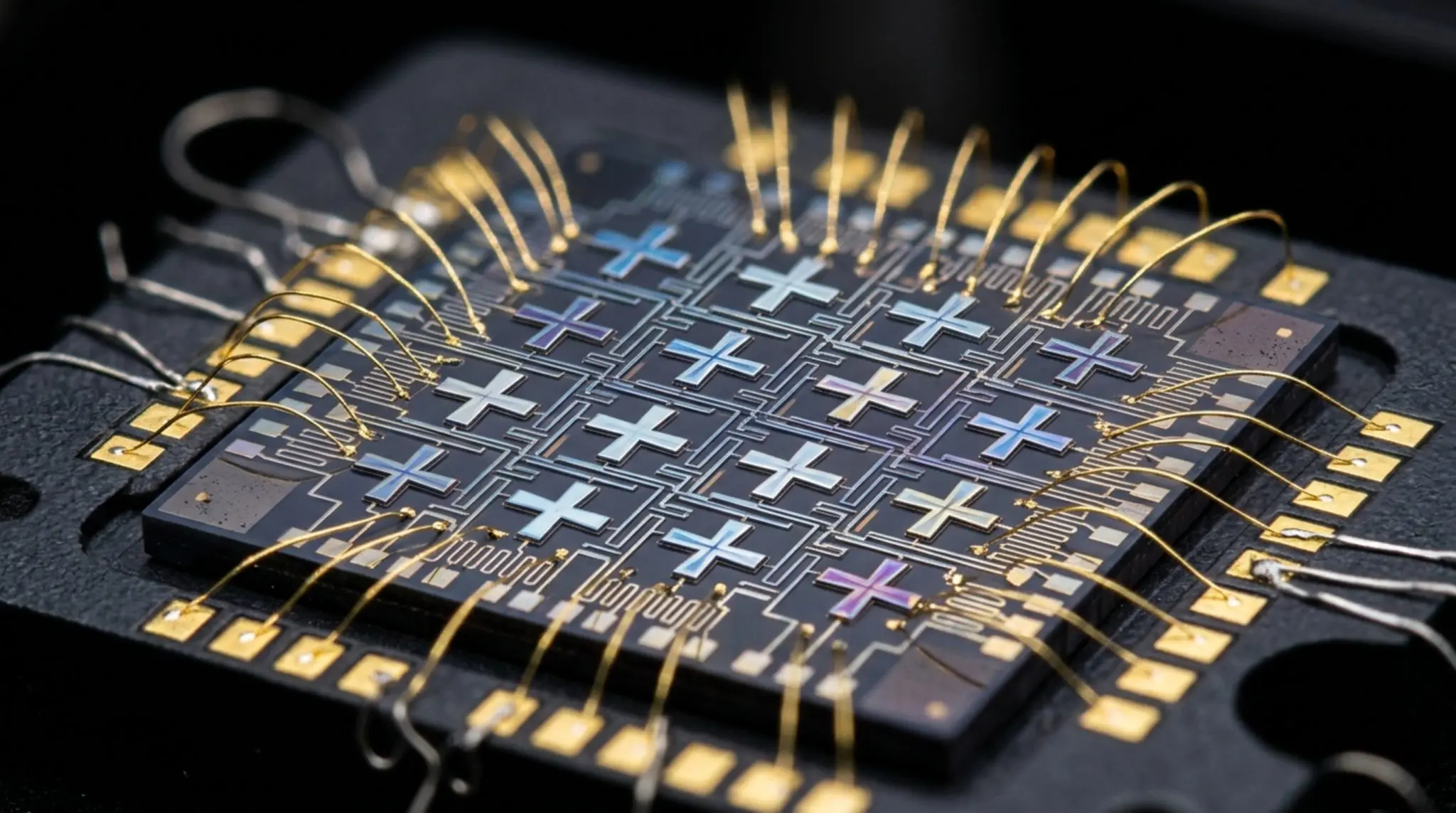
Xanadu Quantum Technologies and GlobalFoundries will combine forces to manufacture components for utility-scale quantum computers using GlobalFoundries’ 300 mm production line in Malta, New York. The partnership prioritizes industrializing Xanadu’s Superconducting Nanowire Single-Photon Detectors (SNSPDs), technology the company expects will increase the speed of its quantum systems, and combining these SNSPDs with Xanadu’s ultra-low loss silicon nitride (SiN) photonics, the backbone of its quantum architecture, marks a shift from prototyping to industrial-grade production. “Transitioning quantum computing technology to a high-volume manufacturing line is fundamental to delivering quantum computing at scale,” said Dr. Christian Weedbrook, Founder and Chief Executive Officer of Xanadu.
Xanadu and GlobalFoundries Partnership: Scaling Photonic Quantum Manufacturing
This move signifies a critical transition from prototyping to industrial-grade production for Xanadu’s photonic quantum computing technology. These detectors, widely recognized for their reliability, are expected to increase the speed of Xanadu’s quantum computers and reduce the necessary chip overheads for utility-scale systems.
Xanadu’s technology relies on a foundation of ultra-low loss silicon nitride (SiN) photonics, used as optical circuit boards to guide photons with minimal signal loss, combined with the high-efficiency SNSPDs. This combination forms the core of Xanadu’s approach to photonic quantum computing, and the collaboration with GlobalFoundries is intended to refine and scale up this platform.
Beyond SNSPDs and SiN, Xanadu and GlobalFoundries are also exploring the development of high-performance quantum modules designed to further enhance the power and utility of Xanadu’s systems, the company says. The anticipated output of this collaboration will underpin Xanadu’s upcoming fault-tolerant demonstrators, supporting the company’s long-term goal of providing the hardware architecture for future quantum data centers.
“Partnering with GlobalFoundries allows Xanadu to refine and scale up our existing photonics platform and apply GF’s industrial expertise and technology to our photonic chip production,” said Nicholas Sergeant, VP of Quantum Technology Solutions at GF, who added, “By combining Xanadu’s advanced photonic computing technology with GF’s 300 mm manufacturing expertise, this partnership creates a path to industrialize the critical components needed to accelerate the deployment of fault-tolerant systems and enable future quantum computing architectures.”
By combining Xanadu’s advanced photonic computing technology with GF’s 300 mm manufacturing expertise, this partnership creates a path to industrialize the critical components needed to accelerate the deployment of fault-tolerant systems and enable future quantum computing architectures.
Nicholas Sergeant, VP of Quantum Technology Solutions at GF
See today’s quantum computing news on Quantum Zeitgeist for the latest breakthroughs in qubits, hardware, algorithms, and industry deals.