Eighteen A-level students received free instruction in quantum technology at the University of Bristol during the week of August 3-7, as QET Labs hosted its twelfth annual Quantum in the Summer school. The program covered topics ranging from superposition to quantum computing applications, and organizers were impressed with the students’ quick grasp of complex concepts and insightful questions.
“We were impressed with how quickly the students grasped the concepts and demonstrated their knowledge through asking excellent questions,” said a QET Labs spokesperson. Beyond lectures, fully funded social activities like stargazing at We The Curious Planetarium aimed to build a lasting sense of community among the students.
QET Labs Hosts Twelfth Annual Quantum In The Summer School
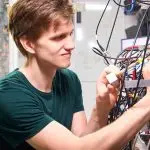
The week-long program combined theoretical sessions with hands-on experiments, covering topics from quantum superposition and entanglement to practical applications in computing and measurement technologies. Students visited a board game cafe, participated in an escape room challenge, went bowling, and experienced stargazing at We The Curious Planetarium, building connections that extended beyond academic pursuits. The program’s structure aimed to create lasting connections between aspiring quantum physicists, supporting collaboration and knowledge-sharing. The final day featured a careers panel designed to broaden students’ perspectives on potential pathways following a physics degree.
Christy Nunns, Founder of Wavelength Studio, joined academic and industry researchers Freddie Burns, Dr Rachel Clark, and Sabrina Wang, to discuss their experiences and career trajectories. Students were able to ask questions about navigating careers in both research and commercial settings, gaining insight into the diverse opportunities available with a physics background. Funding for the program came from QET Labs, the Quantum Engineering CDT, QCi3 hub, QEPNT hub, and QCS hub, enabling the fully funded experience for all attendees.


See today’s quantum computing news on Quantum Zeitgeist for the latest breakthroughs in qubits, hardware, algorithms, and industry deals.