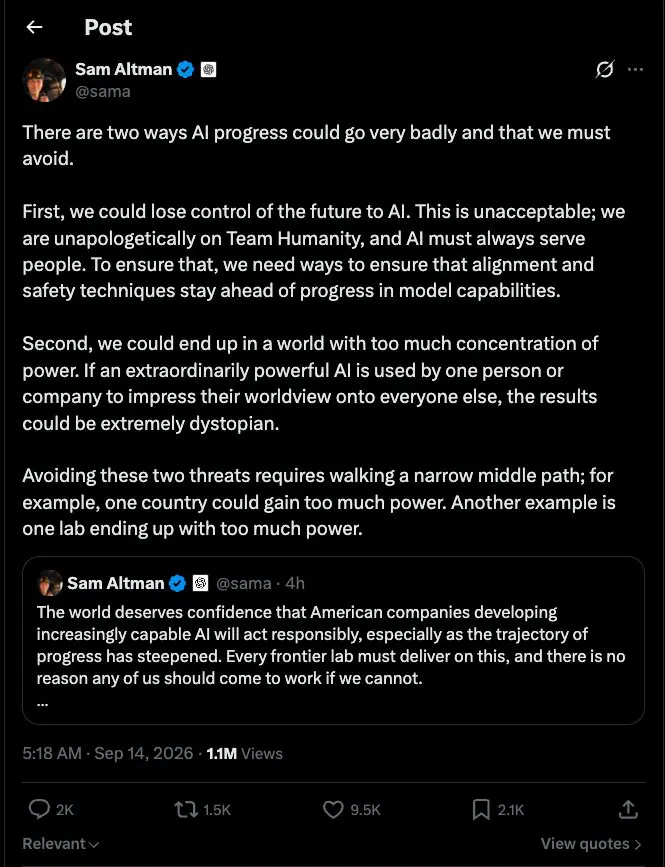
OpenAI is now building explicit safety cases before undertaking powerful artificial intelligence tests, a shift signaling a proactive approach to development rather than solely focusing on post-completion safety. Sam Altman frames the largest AI risks as losing “control of the future to AI” or facing a “dystopian” outcome should a single entity impose its worldview, issues he describes as existential and political.
The company is pursuing these measures without awaiting federal legislation, welcoming concepts and asserting that progress should be deliberately paced; “no amount of American competitive pressure should justify recklessness,” Altman states. This move represents a departure from previous frameworks geared towards deployment, prioritizing safety throughout the entire development process.
OpenAI Prioritizes Proactive Safety Cases Before AI Capability Runs
OpenAI now formulates explicit safety cases before initiating frontier reinforcement learning runs expected to substantially increase AI capability, a shift from previous practices focused on post-completion model safety. This proactive approach acknowledges that Responsible Scaling Policies and Preparedness Frameworks, while valuable, historically centered on deployment rather than the development process itself. The company is embedding safety considerations directly into the stages where models are gaining power, rather than reacting to risks after they emerge.
Altman asserts that avoiding these scenarios demands a careful balance, noting that excessive concentration of power, whether within a single country or laboratory, presents a critical threat. He emphasized the need for responsible action from all frontier labs, stating, “There is no reason any of us should come to work if we cannot” ensure safety and alignment.
OpenAI is actively pursuing these safety measures independently of pending federal legislation or the need for an anti-trust exemption, welcoming concepts to bolster confidence. The company’s commitment to proactive safety extends to accepting interventions that may slow progress, recognizing that safety cases and monitoring procedures carry inherent costs. While acknowledging the need for international coordination, the company believes initial steps toward enhanced safety must originate internally, prioritizing self-regulation and responsible innovation before awaiting external mandates.