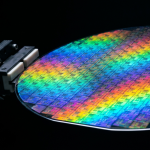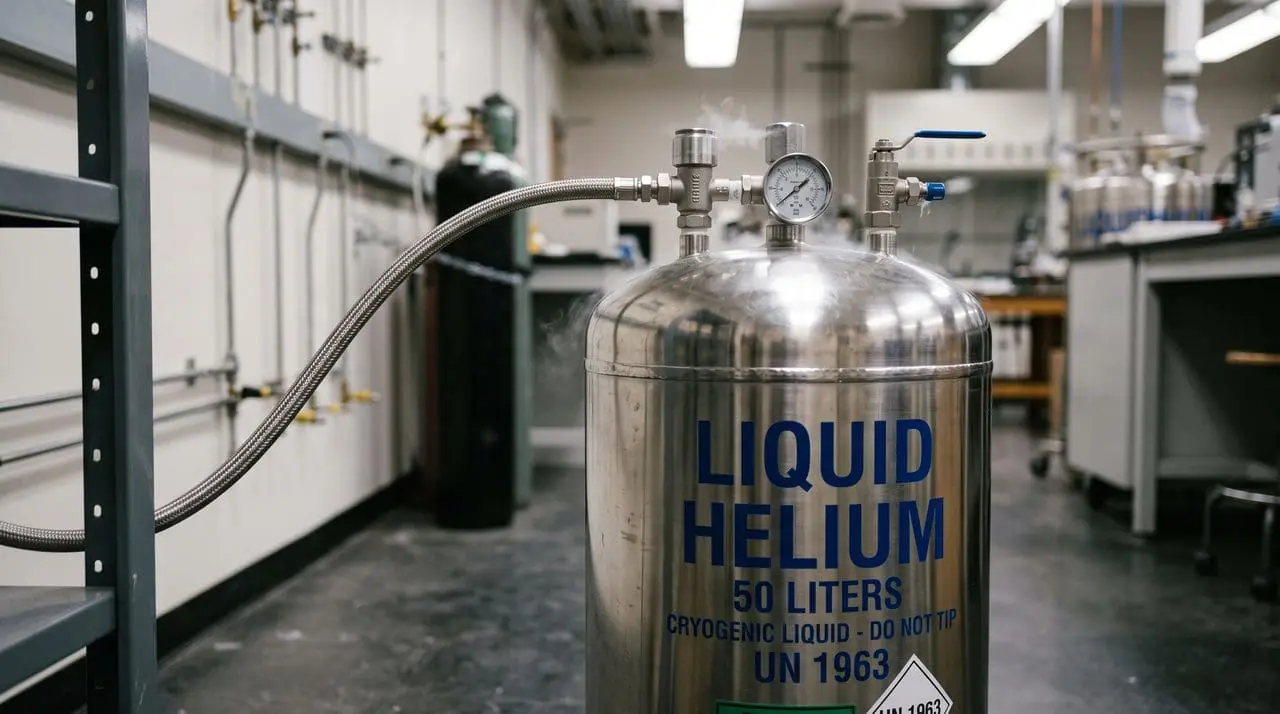
PsiQuantum plans to house its ambitious quantum computer within 100 stainless-steel cabinets, each six feet tall and constantly cooled by liquid helium to just above absolute zero. Founded in 2016 by physicists from UK universities, the company is competing to be first to build a functional quantum computer using photons, particles of light, instead of traditional bits. This machine, still under development, aims to dramatically accelerate complex calculations, potentially reducing the time to predict drug interactions from over 10 years to just four minutes, according to Philipp Ernst, vice president of quantum applications for PsiQuantum. The vision, rooted in concepts Richard Feynman first laid out in 1981, has already attracted $1 billion in funding and a partnership with a major chip manufacturer to utilize existing semiconductor fabrication plants. It also has a second site in the works in Australia, which will be operational, meaning hardware-ready, in 2027. It is one of just two companies to reach the third stage of an intensive evaluation program to see which quantum companies might succeed.
Photonic Qubit Approach for Quantum Computation
This ambitious design, resembling a hybrid of a data center and an ice cream factory, highlights the practical engineering challenges inherent in realizing functional quantum computation. Inside these cabinets will reside hundreds of chips, each containing thousands of photons, particles of light, navigating a complex network of optical switches and beam splitters, where precise measurement of each photon’s final location is critical for solving problems intractable for conventional computers. Founded in 2016 by physicists originating from UK universities, PsiQuantum’s strategy centers on harnessing photons as qubits, a departure from the superconducting and electron-based approaches favored by competitors like Google, IBM, and Intel. This choice stems from the unique properties of photons, capable of maintaining quantum states for extended periods, potentially billions of years, as evidenced by photons in the cosmic microwave background. However, photons typically avoid interaction, a significant hurdle for quantum computation which requires qubits to influence one another.
A discovery in 2001 offered a solution, demonstrating that interactions could be simulated through a network of beam splitters and detectors, forming the theoretical basis for PsiQuantum’s design. Terry Rudolph, one of the company’s four founders, explains that “Photons have lots of nice things going for them,” emphasizing the potential of this photonic approach. This commitment to practical implementation, coupled with a $1 billion funding round and construction of facilities in Chicago and Australia, the latter slated to be operational, meaning hardware-ready, in 2027, has garnered significant attention and scrutiny.
PsiQuantum aims to dramatically reduce the time required for complex calculations, citing the example of predicting cytochrome P450 enzyme effects on drugs, a process currently taking over 10 years but targeted for completion in four minutes. Rudolph believes that advancements in computational power are intrinsically linked to technological progress, stating, “I don’t think it’s a coincidence that the Industrial Revolution coincided with our ability to calculate and simulate the laws of Newtonian mechanics.”
Photons have lots of nice things going for them,” Rudolph says.
Terry Rudolph, one of PsiQuantum’s four founders
PsiQuantum’s Founding and Early Theoretical Work
PsiQuantum entered a rapidly evolving field where multiple organizations are pursuing functional quantum computers, each with distinct technological approaches. While many competitors focus on superconducting circuits or trapped ions, PsiQuantum distinguished itself from its inception by focusing its strategy on photons, particles of light, as the foundation for its quantum bits. The company’s early work focused on overcoming a fundamental challenge: photons typically avoid interacting, a critical impediment for quantum computation which demands qubit interaction. The theoretical groundwork for PsiQuantum’s approach extends back to 1981, when Richard Feynman first proposed the concept of quantum computers. They demonstrated a method to simulate photon interaction using beam splitters and detectors, effectively circumventing the issue of limited natural interaction. This breakthrough, according to internal accounts, directly inspired the creation of PsiQuantum, providing a pathway to translate theoretical possibility into a tangible engineering challenge.
The team divided responsibilities, with Rudolph concentrating on theoretical underpinnings, Mark Thompson on engineering, Pete Shadbolt on scaling, and Jeremy O’Brien initially leading investor relations and articulating the company’s goals. Their early efforts centered on addressing the practical limitations of building a quantum computer of sufficient size and stability. Initial designs suggested a machine requiring the scale of California, prompting a need for size reduction. The core process involves generating entangled photons using lasers, a technique leveraging the quantum phenomenon where particles share a single state rather than maintaining individual ones.
There’s a PlayStation 6 probably coming up from Sony next year or the year after, and people are programming those games right now,” he says.
Scaling Quantum Systems with Liquid Helium Cabinets
PsiQuantum is tackling a formidable engineering challenge in its pursuit of a functional quantum computer: maintaining the extreme cryogenic environment required for its photonic qubits. Unlike many competitors focusing on superconducting or trapped ion systems, PsiQuantum’s approach necessitates cooling hundreds of silicon chips to temperatures just a few degrees above absolute zero, a feat accomplished through the use of approximately 100 stainless-steel cabinets. Each cabinet, roughly six feet tall, will act as a self-contained cryostat, continuously supplied with liquid helium to suppress thermal noise that would otherwise disrupt the delicate quantum states of the photons. This scale, resembling a data center integrated with an ice cream factory, underscores the practical hurdles in translating quantum theory into a tangible machine. The sheer logistical complexity of supplying and maintaining this cryogenic infrastructure is significant.
Each photon within the system must be meticulously accounted for, as precise measurement of its final state is crucial for extracting meaningful results from computations that would overwhelm classical computers. This demands not only a robust cooling system but also a sophisticated control network to manage the entanglement and manipulation of thousands of photons across hundreds of chips. Terry Rudolph, one of PsiQuantum’s four founders, explains that this endeavor builds upon decades of theoretical work, tracing its roots back to Richard Feynman’s initial vision in 1981.
It is very hard for an outsider to evaluate,” says Scott Aaronson, a theoretical computer scientist at the University of Texas at Austin who runs a popular blog that often covers the industry.
Scott Aaronson, a theoretical computer scientist at the University of Texas at Austin
PsiQuantum’s ambitious project extends beyond simply building a quantum computer; it targets specific, computationally intensive problems with real-world impact, notably the prediction of cytochrome P450 enzyme behavior. These enzymes, crucial in drug metabolism, currently present a significant bottleneck in pharmaceutical development, with accurate prediction of their effects on novel molecules often requiring over a decade of research. The scale of the proposed solution is considerable. Within these cabinets reside the chips, and upon them, thousands of photons, particles of light, manipulated through complex optical networks. The challenge, as Rudolph explains, lies in the typically non-interactive nature of photons; research offered a workaround.
I am more optimistic now than I have been at any point in the past 10 years.
Government Evaluation and $1 Billion Funding for PsiQuantum
Beyond the hype surrounding quantum computing, a clear frontrunner is emerging in the race to build a commercially viable machine. PsiQuantum, founded in 2016 by physicists from UK universities, has secured a pivotal position not solely through technological ambition, but through a combination of substantial funding and rigorous evaluation. Last year’s $1 billion investment, coupled with construction underway at facilities in Chicago and a planned Australian site operational by 2027, signals a level of commitment rarely seen in this nascent field. This financial backing isn’t simply venture capital; it reflects a strategic alignment with interests, evidenced by PsiQuantum being one of two companies, alongside Microsoft, to reach the third stage of an intensive evaluation to see which quantum companies might succeed. The scale of PsiQuantum’s undertaking is considerable. Unlike many competitors focused on theoretical prototypes, the company is actively pursuing a large, functional quantum computer.
This approach has drawn scrutiny, as evaluating progress in quantum computing is far more complex than traditional technology assessment. Advances are incremental and often opaque, making external verification difficult. However, the company is rapidly approaching a critical juncture; the coming year will likely reveal whether their years of development and substantial investment will culminate in a genuinely useful quantum computer. This isn’t merely about building a machine, but about demonstrating its practical application in solving problems intractable for conventional computers. A key focus for PsiQuantum lies in accelerating complex calculations within pharmaceutical research. This infrastructure underscores the immense engineering challenges inherent in controlling and manipulating thousands of photons, the particles of light, that form the basis of PsiQuantum’s quantum computations.
it now seems likely that someone will build a utility-scale quantum computer by 2033,” referring to a machine that generates more value from its calculations than it costs to build and operate.
Micah Stoutimore, his successor



See today’s quantum computing news on Quantum Zeitgeist for the latest breakthroughs in qubits, hardware, algorithms, and industry deals.