
Jason Cong and Jens Palsberg of UCLA will co-lead national quantum computing efforts following the distribution of $290 million in funding from the National Science Foundation. The funding is distributed among eight institutes, with each scientist heading separate institutes focused on overcoming critical barriers to reliable quantum computation.
Cong will direct UCLA’s development of AI-based tools to improve quantum computer efficiency, while Palsberg will co-lead a UC Berkeley-based network including UCLA Samueli, UC Santa Barbara, Caltech, and Stanford. “Quantum computers have the potential to solve problems that are out of reach for today’s computers, but we still have a lot of work to do to get there,” Palsberg said.
Fault-Tolerant Systems Research Led by Harvard, UCLA, and MIT
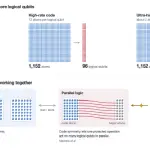
Cong will spearhead UCLA’s development of artificial intelligence-based tools designed to enhance the reliability and efficiency of quantum computers, addressing the pervasive issue of errors in these nascent systems. This work forms a core component of the newly established Institute for Fault-Tolerant Quantum Systems, Architectures and Applications, a collaborative effort led by Harvard University with UCLA Samueli and MIT as key partners.
Researchers aim to create quantum computers capable of performing calculations reliably despite inherent noise and instability. The NSF Quantum Leap Challenge Institutes are among eight institutes receiving more than $290 million in new funding to advance U.S. quantum science and accelerate the development of technologies with practical applications.
The Institute for Quantum Computation, renewed with a five-year, $37.5 million grant, will investigate the potential of quantum computation and develop new technologies, with the UCLA team concentrating on resolving bottlenecks within trapped-ion quantum computing systems and creating software to evaluate diverse quantum technologies. The UCLA researchers anticipate their contributions will pinpoint areas where quantum computers can deliver the most substantial impact, moving beyond theoretical potential toward practical applications. Cong’s focus on AI-driven solutions suggests a shift toward automated error mitigation, while Palsberg’s work on software comparison aims to establish benchmarks for evaluating the performance of different quantum platforms.
Quantum computers have the potential to solve problems that are out of reach for today’s computers, but we still have a lot of work to do to get there.
Jens Palsberg, Professor at UCLA Samueli School of Engineering
Source: https://newsroom.ucla.edu/releases/ucla-computer-scientists-take-key-roles-quantum-computing



See today’s quantum computing news on Quantum Zeitgeist for the latest breakthroughs in qubits, hardware, algorithms, and industry deals.