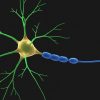
NetraMark is tackling a critical problem in drug development: clinical trials that appear to fail not because a drug is ineffective, but because positive responses are masked by patient variability. Ira Geraci, PhD, has a unique background in theoretical physics, neuroscience and machine learning that he applies to address this challenge, focusing on identifying specific patient subgroups who might benefit from a treatment.
“What if some clinical trials don’t fail because the drug doesn’t work – but because we’re asking the wrong patients to participate in the same trial?” Geraci asks; his work at NetraMark uses NetraAI to search complex datasets for these hidden patterns and potentially redesign patient selection for future trials.
NetraAI Identifies Patient Subgroups in Clinical Trial Data
NetraMark’s NetraAI uses explainable artificial intelligence to search for clinically meaningful patterns within complex clinical trial datasets, potentially reshaping how patient selection occurs in future trials. The system aims to identify subgroups of patients who respond differently to the same treatment, addressing the possibility that trial failures stem from averaging responses across populations where a drug only benefits a subset. Differences within clinical trial populations can obscure genuine treatment effects, complicating decisions about drug development.
NetraAI doesn’t simply identify correlations; it seeks interpretable patterns, generating hypotheses about why certain patients respond while others do not. Explaining these findings is important for translating AI results into clinically useful, testable hypotheses. The potential extends beyond simply identifying responders. The technology could also help refine the very definition of a disease.
By uncovering hidden subgroups, researchers might realize they are treating what appears to be a single condition but is, in reality, a collection of distinct diseases requiring tailored approaches. According to Geraci, the work spans AI, mathematics, disease and drug development, ultimately shifting how we conceptualize illness itself.




See today’s quantum computing news on Quantum Zeitgeist for the latest breakthroughs in qubits, hardware, algorithms, and industry deals.