A new technique reliably isolates single molecules within arrays of optical tweezers, even when starting with several molecules per trap. It employs static and microwave electric fields, termed “collisional shielding”, which prevents molecular losses caused by collisions during the isolation process. The method achieves over ninety-nine percent accuracy in isolating individual molecular particles using light traps. The technique addresses a longstanding problem of molecule losses that previously hindered creating large stable groupings; it prevents these losses allowing construction of more complex systems.
These advancements utilise unique properties of isolated molecules potentially benefiting fields like quantum computing and simulation. A set of tools now enables reliable isolation of single molecular particles held within microscopic tractor beams, known as optical tweezers, with over ninety-nine percent accuracy. This advancement tackles a persistent issue of molecule losses which previously limited the creation of stable groupings; it prevents these losses enabling construction of more complex systems for quantum technologies.
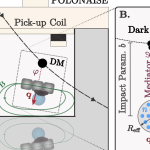
Harvard University researchers employ what they term “collisional shielding”, best imagined as surrounding each molecule with an invisible force field that stops them from bumping into their neighbours and becoming unstable due to long-range bound states. This method utilises static and microwave electric fields, allowing scientists to create highly filled arrays of polar molecules; however, achieving this requires precise control during array assembly, beginning with small ensembles within each trap. Further details outline how this collisional shielding works in practice and its potential impact on future experiments.
High Fidelity Isolation of Single Sodium Chloride Molecules via Collisional Shielding
Single NaCs molecules can now be isolated from pairs with over 99% fidelity, a significant improvement on earlier loading efficiencies which typically reached only 20-50% across an array. This sharp advancement surpasses previous methods hampered by molecular losses during ensemble isolation, enabling the creation of denser arrays suitable for quantum applications. Static and microwave electric fields create “collisional shielding”, actively suppressing two-body loss and eliminating long-range bound states that cause instability.
This approach allows controlled removal of all but one molecule per trap site, paving the way for more complex systems benefiting areas like quantum computing and simulation. Over 95% fidelity has been achieved when isolating individual NaCs molecules within an array of optical traps, focused laser beams used to hold particles. An additional electric field gradient then induces controlled movement of interacting molecules out of each trap until only a single molecule remains, allowing for denser arrangements than previously possible; this process eliminates commonly encountered instabilities even with linear microwave polarization.
These results represent a step forward in preparing highly filled molecular tweezer arrays, though sustained coherence or entanglement between individual molecules is not yet demonstrated. Scaling towards functional quantum devices still requires addressing challenges related to maintaining stable interactions over extended periods. The technique relies on suppressing two and three body losses through dressed rotational states coupled by dipole-dipole interaction, creating repulsive barriers preventing short range inelastic processes.
Removing field linked (FL) bound states is also key as their presence would otherwise induce unwanted molecular combinations during the isolation procedure. This method employs static and microwave electric fields to prevent molecular losses stemming from collisions, a significant obstacle in creating stable arrays of individual molecules. Beginning with small ensembles already trapped within optical tweezers forms the basis of this approach; then selective removal eliminates all but one molecule per trap site.
Estimations are based upon realistic experimental parameters, however data confirming these predictions in practice have not yet been presented, nor has confirmation that shielding persists across different polar molecule species. A new technique isolates single bosonic molecules within microscopic traps using focused laser beams known as optical tweezers, achieving over 99% fidelity when separating pairs of NaCs molecules. Existing techniques typically load these molecular arrays with only 20-50% efficiency per site and this represents an improvement on those methods.
Establishing electric field-based collisional shielding aims for sharply higher filling fractions and addresses a key limitation hindering scalable assembly for quantum science applications; the work tackles the longstanding challenge of preventing molecular losses due to collisions during array assembly. The approach combines static and microwave electric fields to effectively repel molecules from each other and suppress energy-losing interactions that lead to instability. A carefully applied electric field gradient then allows controlled removal of all but one molecule from each trap location within the ensemble.
The researchers have demonstrated a new technique for reliably isolating single bosonic molecules within optical tweezers, starting with ensembles containing multiple molecules per trap site. By generating tunable interactions through combined static and microwave electric fields, they actively suppressed molecular losses caused by collisions, this prevents unstable groupings forming due to long-range bound states between molecules. Achieving over ninety nine percent fidelity surpasses previous methods limited by these collisional losses; it opens possibilities for creating denser arrays vital for advancements in quantum technologies like simulation and computation. This builds upon prior successes stabilising bulk gases of ultracold dipolar molecules by adapting techniques originally used for evaporative cooling and Bose, Einstein condensation.
The researchers successfully prepared single NaCs bosonic molecules in optical tweezers from initial ensembles with high fidelity exceeding 99% per pair. By using static and microwave electric fields to shield the molecules, they prevented energy-losing collisions that cause instability during assembly. The authors suggest this method establishes collisional shielding as a tool for creating highly filled tweezer arrays of polar molecules.
👉 More information
🗞 A Protocol for Shielding-Enhanced Loading of Single Polar Molecules into Optical Tweezers
✍️ Reuben R. W. Wang, Christian H. Nunez, Conner Williams, Amanda Younes, Li Du, Hossein R. Sadeghpour and Kang-Kuen Ni
🧠 ArXiv: https://arxiv.org/abs/2608.20332



See today’s quantum computing news on Quantum Zeitgeist for the latest breakthroughs in qubits, hardware, algorithms, and industry deals.