Researchers at the University of Portsmouth and Syracuse University investigate how quantum decoherence influences the tunneling dynamics of quantum fields in cosmological spacetimes. The study, published in the September 2026 issue of the Journal of Cosmology and Astroparticle Physics, finds that while decoherence is essential for suppressing quantum interference between vacua, its impact on the relative vacuum populations is limited.
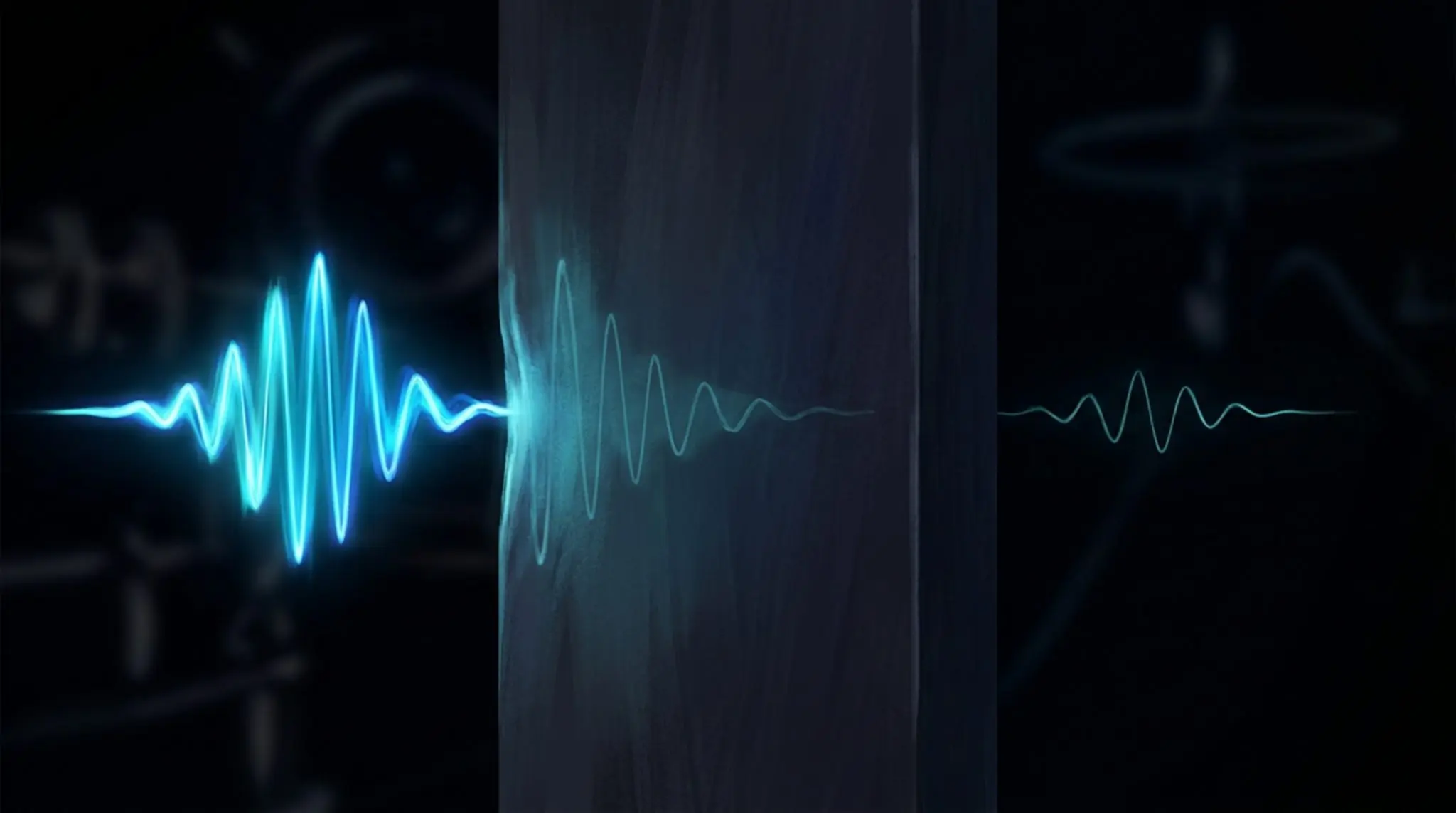
Once the system has decohered, quantum tunneling between vacua becomes strongly suppressed, effectively locking the system into the stochastically selected local minimum. This “cosmic lockdown” mechanism is a manifestation of the quantum Zeno effect. Environmental monitoring stabilizes enhanced false-vacuum occupation for light fields by preventing them from tunneling.
Scalar Field Tunneling in Inflationary Cosmology
Researchers discovered that environmental monitoring, a consequence of decoherence, effectively prevents lighter fields from transitioning to a different vacuum state, a phenomenon they term. This stabilization occurs even though decoherence alone does not dramatically alter the overall distribution of quantum states. This mechanism manifests as a quantum Zeno effect, where continuous observation, in this case, by environmental interactions, inhibits change, specifically preventing tunneling between vacua.
Their simulations revealed that heavier fields readily settle into the lowest energy state, but lighter fields require the stabilizing influence of decoherence to avoid unwanted transitions. The study’s approach involved deriving stochastic equations that describe how quantum fields evolve in a cosmological setting, accounting for interactions with a “continuum of spectator fields”. These interactions introduce decoherence, effectively “locking” the system into a particular state.
While decoherence is known to suppress quantum interference, the research demonstrates that decoherence plays a large part in stabilizing false vacuum occupation for lighter fields, preventing them from tunneling to a lower energy state. Fields with masses exceeding the Hubble scale, a measure of the universe’s expansion rate, relax into the true vacuum with a high probability, but the fate of lighter fields is different.
These lighter fields exhibit enhancements in false-vacuum occupation, meaning they are more likely to remain in a higher energy state, unless stabilized by decoherence. “Environmental monitoring stabilizes enhanced false-vacuum occupation for light fields by preventing them from tunneling,” the team explains, detailing the mechanism behind this stabilization.
The International School for Advanced Studies (SISSA) was founded in 1978 and was the first institution in Italy to promote post-graduate courses leading to a Doctor Philosophiae (or PhD) degree. A centre of excellence among Italian and international universities, the school has around 65 teachers, 100 post docs and 245 PhD students, and is located in Trieste, in a campus of more than 10 hectares with wonderful views over the Gulf of Trieste.
SISSA hosts a very high-ranking, large and multidisciplinary scientific research output. The scientific papers produced by its researchers are published in high impact factor, well-known international journals and in many cases in the world’s most prestigious scientific journals such as Nature and Science. Over 900 students have so far started their careers in the field of mathematics, physics and neuroscience research at SISSA.
The work demonstrates a systematic approach to understanding quantum dynamics in cosmology, offering new insights into the early universe and its ultimate fate. The results show that decoherence is a fundamental mechanism that can preserve the stability of the universe.


See today’s quantum computing news on Quantum Zeitgeist for the latest breakthroughs in qubits, hardware, algorithms, and industry deals.