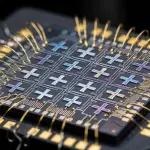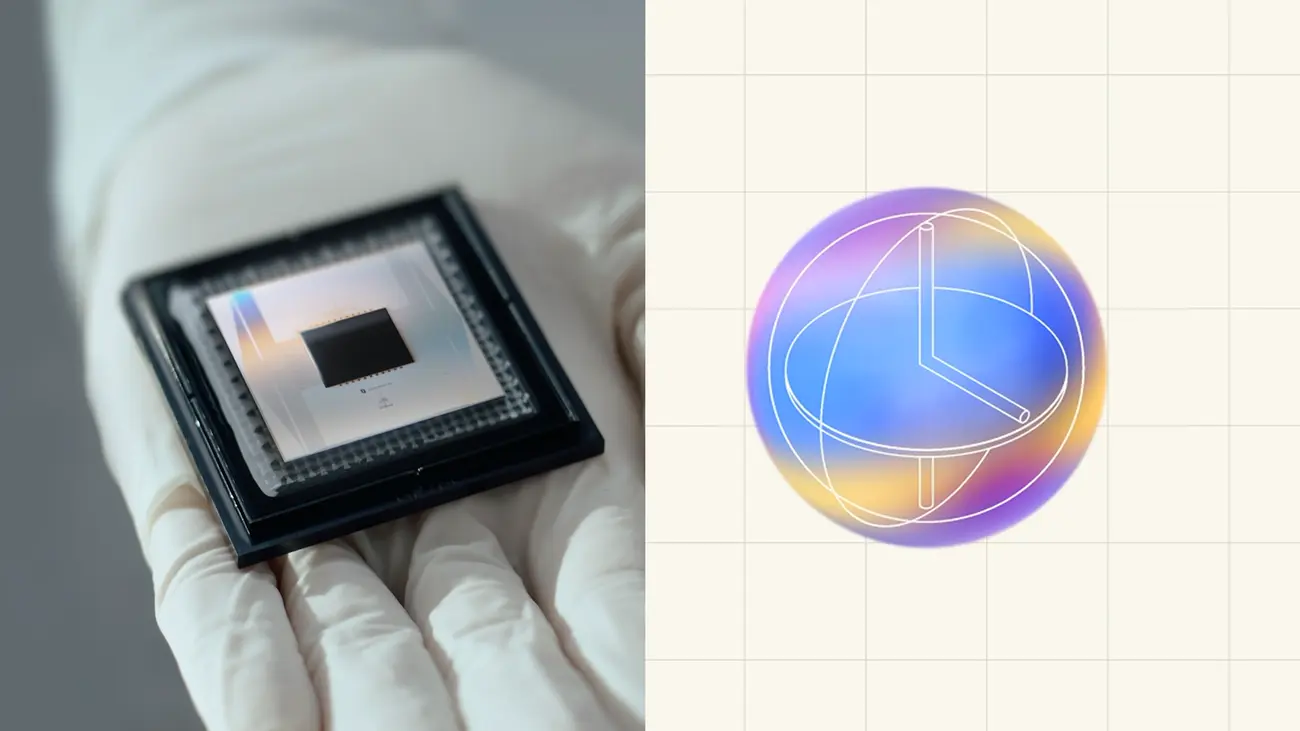
Google Quantum AI researchers Craig Gidney, Noah Shutty, and Cody Jones have demonstrated a technique that reduces quantum error rates by 40x on the company’s Willow processor, the company says. This breakthrough addresses a critical bottleneck in quantum computing, where creating the necessary states for complex operations had previously been estimated to require up to 95% of a computer’s capacity.
“We’ve shown that magic state cultivation works on Google Quantum AI hardware,” says a Google Quantum AI software engineer. Published in Science, this work represents the first practical solution to a longstanding resource challenge, bringing scalable quantum computing closer to reality.
Magic State Cultivation Reduces Quantum Error Rates
A 40-fold reduction in quantum errors was achieved using a technique called magic state cultivation on Google Quantum AI’s Willow processor, a result that brings scalable quantum computing closer to practical application. This improvement directly addresses a longstanding challenge in the field: the immense resource cost of creating the specialized quantum states needed for complex calculations. By injecting a noisy state and applying coordinated measurements, the team successfully grew exceptionally pure, low-error states suitable for quantum computation.
The core innovation lies in its efficiency. Prior to this work, estimates suggested that as much as 95% of a quantum computer’s capacity could be consumed simply generating these states, according to Google Quantum AI. This left a minimal amount of processing power for actual computation, creating a significant barrier to scaling up quantum systems.
The cultivation process allows for the creation of these states with far fewer resources, potentially freeing up a substantial portion of a quantum computer’s capacity for performing calculations. The team’s success demonstrates, on real hardware, that efficient creation of these magic states is achievable, the company says. Establishing this capability required overcoming substantial technical hurdles, including unexpected interference from equipment. Google Quantum AI research scientist Emma Rosenfeld initially observed data that appeared to contradict established physics, which after months of investigation was traced to electrical equipment drift and temperature variation impacting measurement validity.
The team responded by adding extra control to the system and inventing a new benchmarking technique, using cultivation itself as a tool to measure its own performance. This iterative process of refinement and innovation ultimately led to the achievement of a record logical fidelity of 99.99% for the cultivated T-states.
Beyond the reduction in errors, the team also demonstrated compatibility between different quantum error correction methods. They successfully switched between methods ideal for cultivation and a more established method, grafting states from a distance-3 color code to a distance-5 surface code. This grafting protocol, originally proposed in a 2024 theory paper, proved that purified states can be transferred smoothly within Google’s hardware.
While scaling up the cultivation process for larger quantum computers remains a challenge, this achievement transforms a key theoretical idea into an experimentally demonstrated reality. The researchers are now focused on expanding the scope of the technique, aiming to demonstrate its effectiveness on larger and more complex quantum systems.