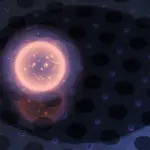
Researchers have mapped the energy spectra of up to seven electrons contained within gallium arsenide quantum dots, exceeding the capabilities of many existing spectroscopic techniques. The team, spanning the University of Sheffield, Johannes Kepler University Linz, and the University of Sussex, achieved this detailed mapping by utilizing nuclear spins as a non-invasive probe, circumventing the disruptive effects of traditional charge transport spectroscopy.
Experiments on low-strain GaAs/AlGaAs epitaxial dots, as described by the authors, revealed anomalously fast nuclear spin diffusion, supported by first-principles modelling. This work uncovers few-electron states as a new operating regime for optically active quantum dots, offering a potential test-bed for fundamental physics and scalable quantum control.
GaAs Quantum Dots Enable Few-Electron Spin Qubit Research
Traditionally, charge transport spectroscopy has been employed to probe electronic states in quantum dots, but the act of measuring current disrupts the delicate quantum states within. The team circumvented this limitation by employing spin currents instead of charge currents, achieving what they describe as near-equilibrium probing.
Experiments conducted on low-strain GaAs/AlGaAs epitaxial dots revealed not only the energy spectra for various charge configurations, hosting up to seven electrons, but also subtle properties of these multi-electron states. This approach allows for the study of quantum dots that benefit from excellent optical properties, a characteristic often incompatible with traditional charge transport methods.
The observations extend beyond simple energy mapping; the research uncovered long-lived spin-qubit states within the s and p electron shells, alongside ground-state phase transitions and regimes of strong spin-orbit coupling. The team detected anomalously fast nuclear spin diffusion, a phenomenon that could have implications for enhancing signal strength in nuclear magnetic resonance spectroscopy. These experimental findings are strongly supported by first-principles configuration-interaction numerical modeling, indicating a high degree of accuracy in the spectroscopic technique and the theoretical framework used to interpret the results.
The ability to accurately probe these few-electron states is significant because knowledge of the energy spectrum completely defines the dynamics of a quantum system for a given initial state, making spectroscopy a key characterization technique. The researchers found that epitaxial quantum dots can operate at higher, few-Kelvin temperatures than gate-defined quantum dots, which operate at milli-Kelvin temperatures.
This is a crucial step towards creating more practical and robust quantum computing systems, as maintaining extremely low temperatures is a major obstacle in current quantum technologies. Beyond qubit development, the research reveals observations of filling patterns in s and p shells.
Low-Strain GaAs/AlGaAs Dots Reveal Multi-Electron Spectra
Current methods for characterizing quantum dots often struggle to move beyond basic measurements of electronic states, particularly when examining systems with multiple electrons. Epitaxial quantum dots, known for their favorable optical properties, typically lack compatibility with charge transport techniques, and alternative spectroscopic methods offer limited insight into complex multi-electron behavior. This level of detail surpasses many existing techniques, allowing for the mapping of electron arrangements within individual quantum dots and the observation of filling patterns in s and p shells.
Strong spin-orbit coupling regimes were also observed, particularly within a five-electron configuration, indicating complex interactions between electron spin and orbital motion. The team’s approach relies on measuring the spatial flow of spin momentum, or spin current, rather than charge current, thereby minimizing disruption to the quantum system.
This technique leverages the sensitivity of nuclear spins to the electronic environment, allowing for a nearly non-invasive assessment of the quantum dot’s energy landscape. Supporting these experimental findings is first-principles configuration-interaction numerical modelling, which demonstrates strong agreement with the observed spectra and provides further insights into the behavior of electrons within the quantum dots.
Charge Transport Limitations in Epitaxial Quantum Dots
Armando Rastelli and colleagues at the Institute of Semiconductor and Solid State Physics Johannes Kepler University Linz have developed a new spectroscopic technique to overcome longstanding limitations in characterizing semiconductor quantum dots. Traditionally, probing the electronic quantum states within these structures relied on charge transport spectroscopy, a method hampered by its disruptive impact on the delicate quantum systems it seeks to analyze and largely restricted to gate-defined quantum dots.
The modelling supports the experimental data, suggesting a pathway towards more practical quantum technologies that can operate at less demanding cryogenic temperatures. “We conduct our experiments on GaAs/AlGaAs QDs grown by in-situ etching and infilling of nanoholes,” the paper states, highlighting the specific materials and fabrication techniques employed in this research.
Ground-State Phase Transitions Observed in Quantum Dots
These observations extend beyond simple energy level mapping, demonstrating the potential for tailoring spin coherence and electrical control within these structures. This interaction is crucial for manipulating and controlling qubits, and its detailed characterization within these quantum dots is a significant step forward. The sensitivity of this spectroscopic technique stems from its ability to map multiple electron arrangements, a capability driven by its sensitivity to the electronic energy landscape. By measuring the nuclear spin relaxation rate as a function of gate bias, the team was able to extract ground state energies for different charge configurations.
Hyperfine Coupling Enables Non-Invasive Nuclear Spin Probing
Researchers have successfully employed a novel technique leveraging hyperfine coupling, the interaction between electron and nuclear spins, to non-invasively probe these quantum states in epitaxial GaAs/AlGaAs structures. This approach circumvents limitations inherent in charge transport spectroscopy, which can disrupt the delicate quantum systems it aims to study, and offers a more detailed analysis than alternative optical methods.
This new spectroscopic technique relies on measuring spin currents rather than charge currents, achieving near-equilibrium probing of the quantum dots. Experiments are conducted on low-strain GaAs/AlGaAs epitaxial dots, revealing energy spectra for charge configurations with up to seven electrons and the subtle properties of the multi-electron states.
These observations are particularly significant as they demonstrate the potential for tailoring spin characteristics within these quantum dots for advanced qubit designs. The ability to accurately map these states is bolstered by the modelling, which provides a theoretical framework for understanding the complex interactions within these nanoscale systems and predicting their behavior.
👉 More information
🗞 Few-Electron Spin Qubits in Quantum Dots Probed Through Nuclear Spin Magnetism
✍️ Peter Millington-Hotze, Petr Klenovsky, Harry E. Dyte, George Gillard, Santanu Manna, Saimon F. Covre da Silva, Armando Rastelli and Evgeny A. Chekhovich
🧠 DOI: http://link.aps.org/doi/10.1103/j8xw-w72c

See today’s quantum computing news on Quantum Zeitgeist for the latest breakthroughs in qubits, hardware, algorithms, and industry deals.