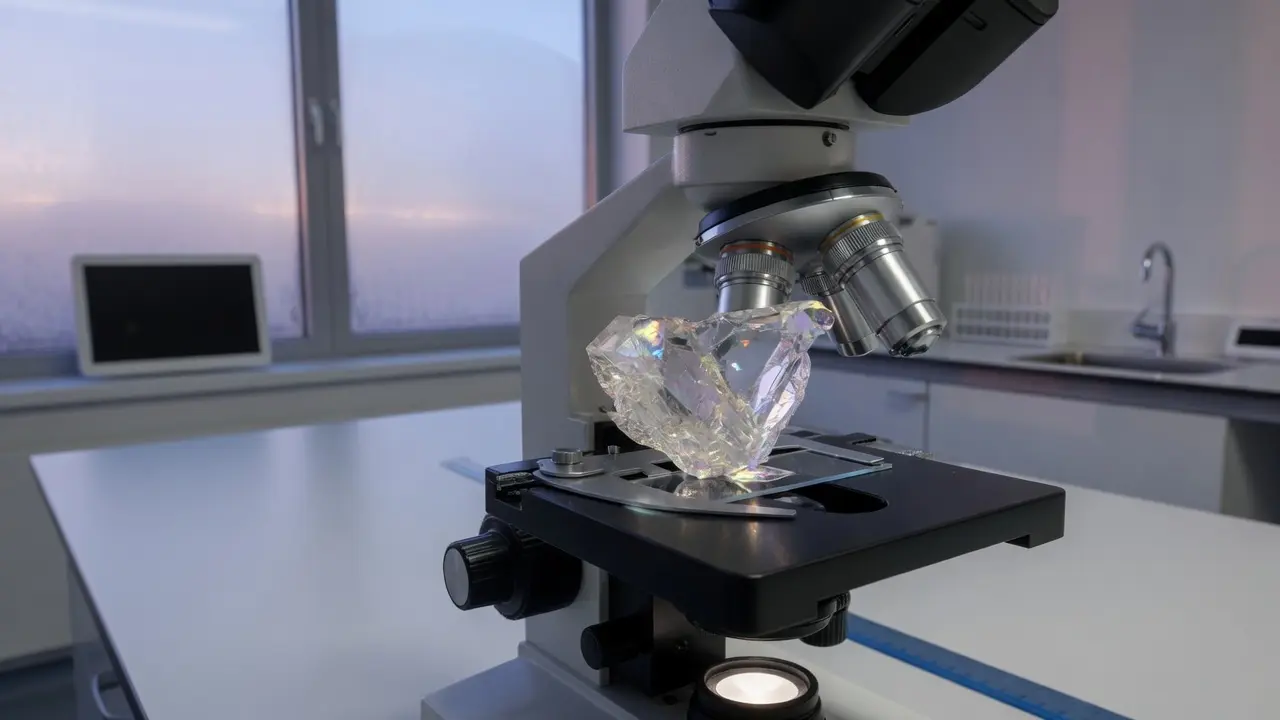
Diamond (SiV-) is particularly favourable for strain-coupling to nanomechanical resonators because of its large spin-strain susceptibility and compatibility with device integration. Tensioned nanomechanical resonators offer an attractive route due to their ultra-long mechanical coherence times enabled by diluting defect-induced dissipation. However, it remains unclear if the same dilution effect undermines strain-mediated coupling to material defect centres. A tensioned diamond nanobeam platform enhances strain coupling to SiV- orbital states through monitoring the optical response of the SiVs to both static and dynamical strain within the mechanical resonator.
Refined Strain Sensitivity Enables Accurate Quantum System Modelling And Coherence Enhancement
David Iles, Tim Schroder, and their colleagues achieved a threefold improvement in silicon vacancy centre (SiV-) strain sensitivity, revising previously reported values down to approximately 0.356. Earlier figures overestimated coupling strength and hindered accurate modelling of hybrid quantum systems.
Uncertainties from complex material stacks and imprecise knowledge of device deformation had hampered previous measurements; however, the team demonstrated that dissipation dilution does not weaken SiV mechanical interaction but instead enhances it through active strain localisation at resonator clamps. This breakthrough overcomes a key obstacle, allowing for realisation of seconds-long coherence times essential for scalable quantum information processing.
Enhanced Strain Control Paves Way For Scalable Diamond Quantum Systems
Diamond defects offer a promising route to scalable quantum technologies via their interaction with mechanical vibrations, a concept known as optomechanics, but sustaining both strong coupling *and* minimal energy loss is notoriously difficult. Enhanced strain sensitivity was found within tensioned nanobeams. However, the question remains: can precise control of dynamic strain localisation at resonator clamps be reliably scaled up for complex multi-qubit architectures. Consistent performance across multiple components will be demanded by building larger architectures and maintaining these improvements in more intricate systems will prove vital.
Enhanced coupling alongside coherence represents a step forward for solid-state quantum mechanics. Embedding silicon vacancy centres, atomic defects within diamond, into tensioned nanomechanical resonators has demonstrated a new platform for hybrid quantum systems. It also enhances sensitivity to applied strain, resolving a longstanding challenge where improving one aspect often compromised the other; this paves the way towards more stable and reliable quantum information processing architectures because longer coherence times are key for future sensing or computational applications, establishing foundations upon which more complex architectures can begin to emerge and realising its potential in practical devices.
Embedding negatively charged silicon vacancies in diamond (SiV-) into tensioned nanobeams enabled enhanced coupling between the SiV- orbital states and mechanical resonators. Researchers found that dissipating defects did not weaken interaction with these centers but instead improved it through localized strain at resonator clamps. This resulted in greatly improved accuracy of SiV-strain sensitivity compared to previous measurements, while simultaneously extending mechanical coherence. The findings demonstrate a pathway towards hybrid quantum systems capable of maintaining coherence for seconds, a necessary feature for scalable quantum information processing.
👉 More information
🗞 Dissipation dilution enhances SiV coupling to vdW diamond nanomechanics
✍️ Guanhao Huang, Amberly Xie, Chang Jin, Evelyn Hu and Marko Lončar (Harvard University)
🧠 ArXiv: https://arxiv.org/abs/2610.39271


See today’s quantum computing news on Quantum Zeitgeist for the latest breakthroughs in qubits, hardware, algorithms, and industry deals.