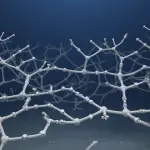
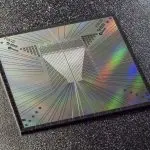
Fujitsu, TU Delft, and QuTech have built a prototype quantum module operating at 1.55 kelvin (−271.6 °C), a temperature that could simplify the complex cooling typically required for quantum computers. The system utilizes tin-vacancy (SnV) centers in diamond, offering an alternative to qubit technologies like superconducting circuits or trapped ions and enabling modular designs connected by light, Fujitsu says. By integrating spin qubits with on-chip photonics, the collaboration’s prototype will soon be available for experimentation through Fujitsu’s Hybrid Quantum Computing Platform. This development represents an early system-level step toward scalable quantum computing architectures.
SnV Centers in Diamond Enable Optical Qubit Interfaces
The prototype quantum module integrates a nanoscale diamond piece housing a single tin-vacancy (SnV) center with an alumina optical waveguide, creating a pathway for photon-mediated qubit interactions. This design addresses a critical challenge in scaling quantum computers beyond single-chip architectures by facilitating efficient quantum information exchange between separate modules.
Researchers envision future systems composed of interconnected quantum processors, relying on optical links to maintain coherence across larger distances. The collaboration, initiated in 2020, focused on SnV centers due to their unique optical properties; these atomic-scale defects in diamond serve as promising interfaces between stable spin qubits and photons capable of carrying quantum states.
By guiding photons emitted from the SnV center through the alumina waveguide, a component of a larger photonic integrated circuit, the team demonstrated a potential method for transmitting quantum information, according to Fujitsu. The research highlights the potential for linking qubits not only across chips but also between separate cryogenic systems. This approach differs from architectures relying on superconducting circuits, trapped ions, or neutral atoms, diversifying the quantum hardware landscape.
The system’s ability to combine diamond spin qubits with on-chip photonics is a key step toward realizing scalable quantum computing architectures, offering a pathway to overcome the limitations of direct electrical connections. The researchers report that this prototype demonstrates this concept at a system level.
Fujitsu-Delft-QuTech Prototype Validates Modular Quantum Architecture
Operating at 1.55 kelvin (−271.6 °C), the newly constructed prototype validates a modular quantum architecture by integrating diamond-based spin qubits with on-chip photonics, a combination intended to simplify cooling demands compared to many existing quantum systems. This prototype does not immediately aim to create a large-scale processor; instead, it tackles a fundamental hurdle for future quantum computers: how to integrate disparate components beyond the limitations of a single chip.
The system’s design establishes a foundation for more advanced systems by uniting spin qubits, integrated photonics, chip fabrication, and hardware control within a single platform. Fujitsu’s Hybrid Quantum Computing Platform will provide access to this prototype, allowing researchers to experiment with and further develop the technology.
Several quantum computing hardware platforms are currently under investigation, including superconducting circuits, trapped ions, and neutral atoms, but diamond spin qubits offer a distinct approach due to their capacity to interface with light. The collaboration reports that bringing these elements together is an important engineering step toward an architecture in which multiple quantum modules could be linked, highlighting the potential for scalability. Currently, the prototype demonstrates a single quantum module, but the team intends to build a system comprised of multiple interconnected modules by 2027, the company says.
QuTech has concurrently established a Quantum Systems Integration Unit focused on developing full-stack superconducting quantum computers using a European supply chain. Demonstrating scalability to a useful number of high-quality qubits remains a significant engineering challenge, but this prototype represents an important initial step in that direction, validating the core technologies needed for future optically connected quantum computers.
Source: https://qutech.nl/2026/09/09/diamond-spin-quantum-computing-takes-a-step-toward-optical-scaling/


See today’s quantum computing news on Quantum Zeitgeist for the latest breakthroughs in qubits, hardware, algorithms, and industry deals.