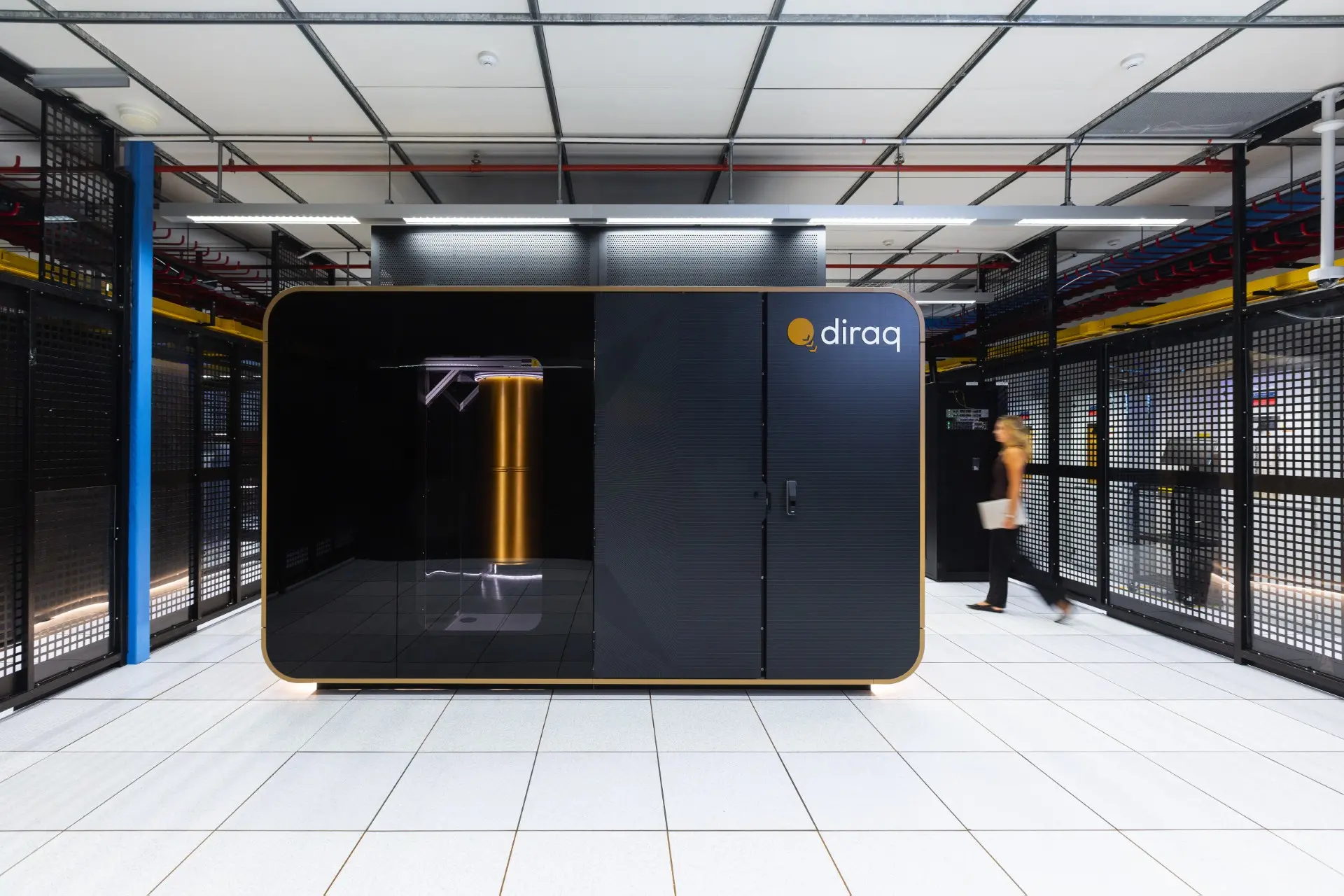
November 9, 2026, marks a shift in quantum computing as Diraq has deployed the world’s first silicon spin quantum computer within an Equinix data center in Sydney, Australia. This installation signals a move beyond laboratory experimentation toward commercial accessibility for the technology, designed to scale without requiring expansive data center overhauls. “We are now at a point where quantum computing can start to reach industries and the people they serve,” said Andrew Dzurak, CEO and Founder of Diraq, adding that their silicon spin approach aims to deliver utility within five years, not decades.
Silicon Spin Qubit Deployment at Equinix Data Centre
Diraq’s newly deployed quantum computer at the Equinix data center in Sydney, Australia, currently consumes less than 20kW of power, a figure the company projects will reach approximately 300kW for a utility-scale system, less than one-third the energy demand of a single AI rack. This compact power profile distinguishes Diraq’s approach from other quantum computing architectures, which often require substantial infrastructure upgrades to accommodate their energy needs and cooling requirements.
The system’s physical footprint is also minimized; the current installation occupies 170 square feet, with future utility-scale deployments anticipated to require only 50 square feet of floor space. The deployment at Equinix represents a step in validating Diraq’s silicon spin quantum technology within a real-world operating environment, moving it beyond laboratory experimentation and into a commercial data center alongside existing computing infrastructure.
Harmeen Mehta, Executive Vice President and Chief Digital and Innovation Officer at Equinix, stated, “Diraq’s deployment in our data center is an important proof point for quantum, demonstrating a path for these systems to operate alongside the digital infrastructure enterprises already rely on.” This co-location is intended to demonstrate the compatibility of Diraq’s quantum system with established digital infrastructure, a key factor in accelerating its adoption by businesses. Diraq’s strategy centers on using existing semiconductor manufacturing processes to build its quantum computers, allowing for scalability without requiring corresponding expansions of data center infrastructure.
This contrasts with other quantum approaches that necessitate significant and costly modifications to existing facilities. The current system operates with eight qubits. The company is actively working towards a 256-qubit system within the next year, demonstrating a clear roadmap for increasing computing power through processor upgrades rather than wholesale infrastructure changes.
This improvement could also yield significant cost savings, potentially saving around US$600 million per medicine by identifying and eliminating failed candidates earlier in the development process, Diraq says. Diraq’s target cost for utility-scale systems, tens of millions of dollars, is intended to make the economic benefits of quantum computing achievable in practice, a challenge for some other quantum modalities, according to the company. Diraq’s recent advancements, including reaching Stage C of DARPA’s Quantum Benchmarking Initiative and securing a US$38 million letter of intent under the CHIPS and Science Act, further emphasise the company’s progress and potential.
The company’s research indicates that technologies using advanced quantum physics have already contributed $19 to $27 trillion in value through applications like semiconductors, GPS and MRI, with quantum computing poised to unlock an additional $3.5 trillion at maturity. “Being inside a commercial data center is how we start proving that claim,” said Dzurak. “This deployment puts the system where it will actually operate, running alongside the infrastructure it’s designed to work with.” The company believes the future of computing will be defined not by AI, cloud, or quantum in isolation, but by their synergistic integration.
Diraq’s silicon spin approach, with its focus on scalability, cost-effectiveness and compatibility with existing infrastructure, aims to position quantum computing as a practical and accessible tool for a wide range of industries. The deployment at Equinix is a key step in realizing that vision, demonstrating a pathway for quantum computers to operate smoothly within the digital ecosystem.
We are now at a point where quantum computing can start to reach industries and the people they serve.
Andrew Dzurak, CEO and Founder of Diraq




See today’s quantum computing news on Quantum Zeitgeist for the latest breakthroughs in qubits, hardware, algorithms, and industry deals.