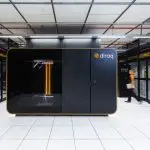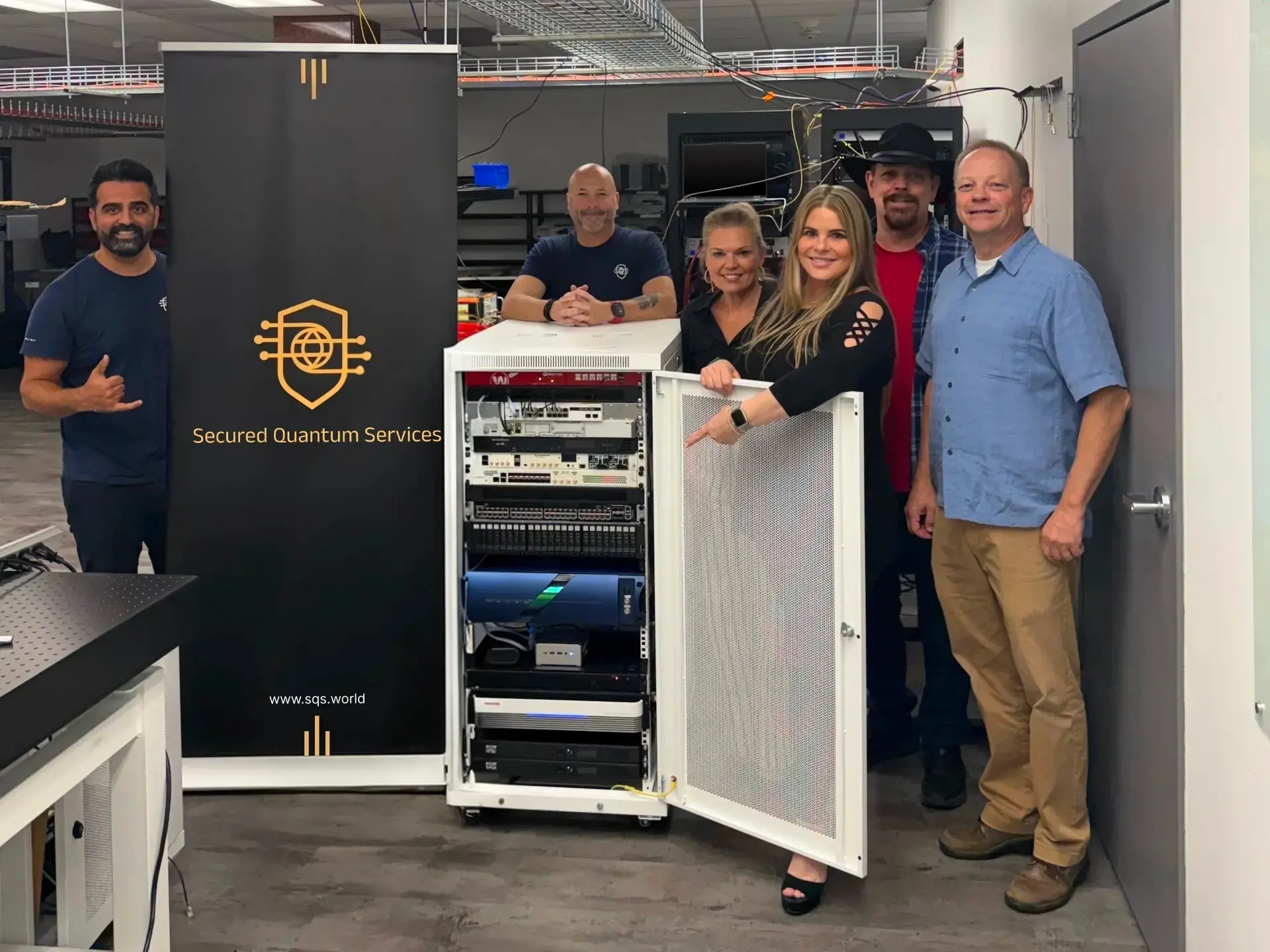
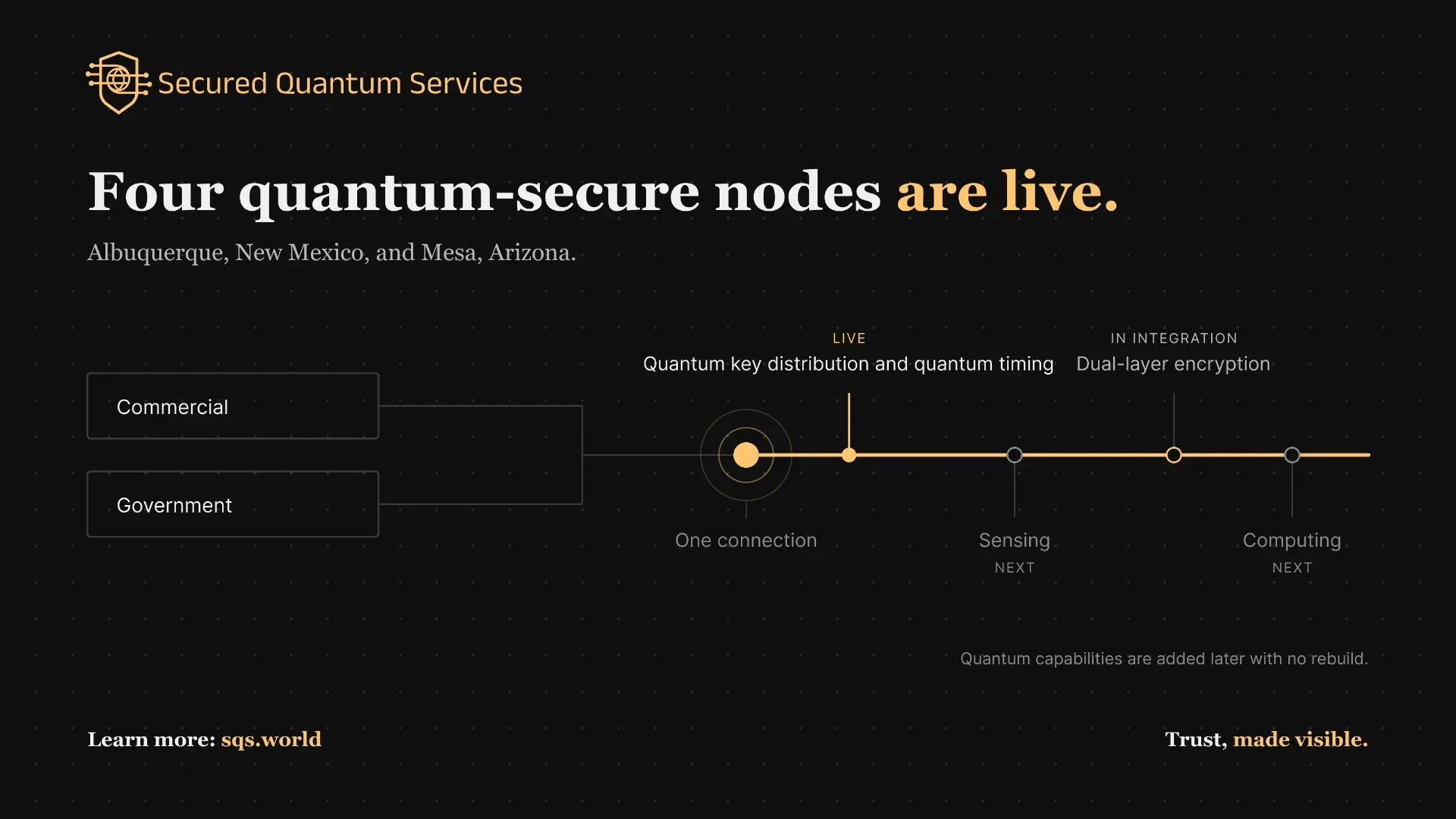
Secured Quantum Services has activated its first operational nodes in Albuquerque, New Mexico, delivering quantum key distribution systems from Toshiba and a quantum optical clock capable of GPS-independent timekeeping. The deployment establishes a new model for accessing quantum technology as a utility, designed to function alongside existing infrastructure rather than replace it.
“Most of the industry hands you a product and leaves the quantum transition to you. We’re building the utility instead,” said Zain Premji, co-founder and Chief Strategy Officer of SQS. This service aims to provide quantum-safe encryption for sectors including banking, critical infrastructure and defense.
SQS Deploys Quantum Key Distribution and Timing in Albuquerque
The SQS platform in Albuquerque now distributes time using a quantum optical clock, offering synchronization independent of traditional GPS signals. Toshiba quantum key distribution systems form the backbone of the secure communication links between SQS nodes, exchanging encryption keys protected by the laws of physics. This method differs from conventional cryptographic systems that rely on mathematical complexity, which are increasingly vulnerable to attacks from quantum computers.
The keys generated through quantum key distribution are then integrated into algorithms, creating a layered security approach designed to withstand both current and future threats. “The SQS Platform demonstrates how quantum key distribution can be delivered as part of a broader quantum-safe architecture, combining physics-based security with modern cryptographic protections,” stated a representative from Toshiba, highlighting the collaborative effort to make quantum security accessible. SQS designed its infrastructure to operate alongside existing classical systems, avoiding the need for wholesale infrastructure replacement.
This pragmatic approach acknowledges the significant investment organizations have already made in their current networks and aims to provide a smooth upgrade path to quantum-safe security. The company’s strategy focuses on delivering capabilities as a service, similar to how organizations consume power or bandwidth, reducing the complexity and cost associated with adopting quantum technologies. The deployment in Albuquerque represents a step toward realizing a quantum utility model, where organizations can access quantum capabilities without becoming quantum experts.
SQS anticipates expanding its infrastructure to additional sites in the coming months, building a network that can support a growing demand for quantum-safe security. The company’s focus on operational stability and interoperability positions it to deliver a scalable and sustainable quantum security solution.
The SQS Platform demonstrates how quantum key distribution can be delivered as part of a broader quantum-safe architecture, combining physics-based security with modern cryptographic protections.
Albuquerque Node Addresses “Harvest Now, Decrypt Later” Threats
The immediate threat of “harvest now, decrypt later” attacks is being directly addressed by the operational nodes in Albuquerque, New Mexico, through a system designed to deliver encryption keys secured by the laws of physics. This approach differs from conventional cryptography, which relies on the computational difficulty of mathematical problems, by using the inherent security of quantum mechanics. The Albuquerque deployment isn’t simply demonstrating a laboratory proof-of-concept. It’s establishing a live, operational system that integrates quantum security with existing infrastructure.
They want their data protected and their operations untouched. That’s exactly what this platform is being built to deliver,” stated SQS. This pragmatic design choice allows organizations to begin bolstering their defenses against future quantum threats without requiring a complete overhaul of their current systems, a significant consideration given the substantial investments already made in classical infrastructure.
The system’s architecture also incorporates a quantum optical clock, providing a time synchronization method independent of GPS, a critical element for maintaining operational stability and resilience, Toshiba says. Beyond key exchange, the precision of this clock is foundational to the platform’s broader security capabilities. The SQS infrastructure is built to accommodate future advancements in quantum technologies, such as quantum sensing and computing, all deploying through the same underlying network.
This forward-looking design anticipates a smooth transition as these technologies mature, allowing customers to benefit from new capabilities without requiring additional infrastructure connections. The challenges of operationalizing quantum technology extend beyond the laboratory, according to SQS. “Everyone in quantum can show you a lab. The hard part is the work nobody sees: integration, timing, uptime, keeping systems from different vendors running together in the field day after day,” a company representative noted.
The Albuquerque node represents a deliberate effort to address these practical hurdles, demonstrating the feasibility of a scalable and sustainable quantum utility model. Organizations increasingly recognize the approaching quantum threat, and are actively seeking practical pathways to quantum readiness that avoid disruptive infrastructure rebuilds.
Most of the industry hands you a product and leaves the quantum transition to you. We’re building the utility instead.
Zain Premji, co-founder and Chief Strategy Officer of SQS


See today’s quantum computing news on Quantum Zeitgeist for the latest breakthroughs in qubits, hardware, algorithms, and industry deals.