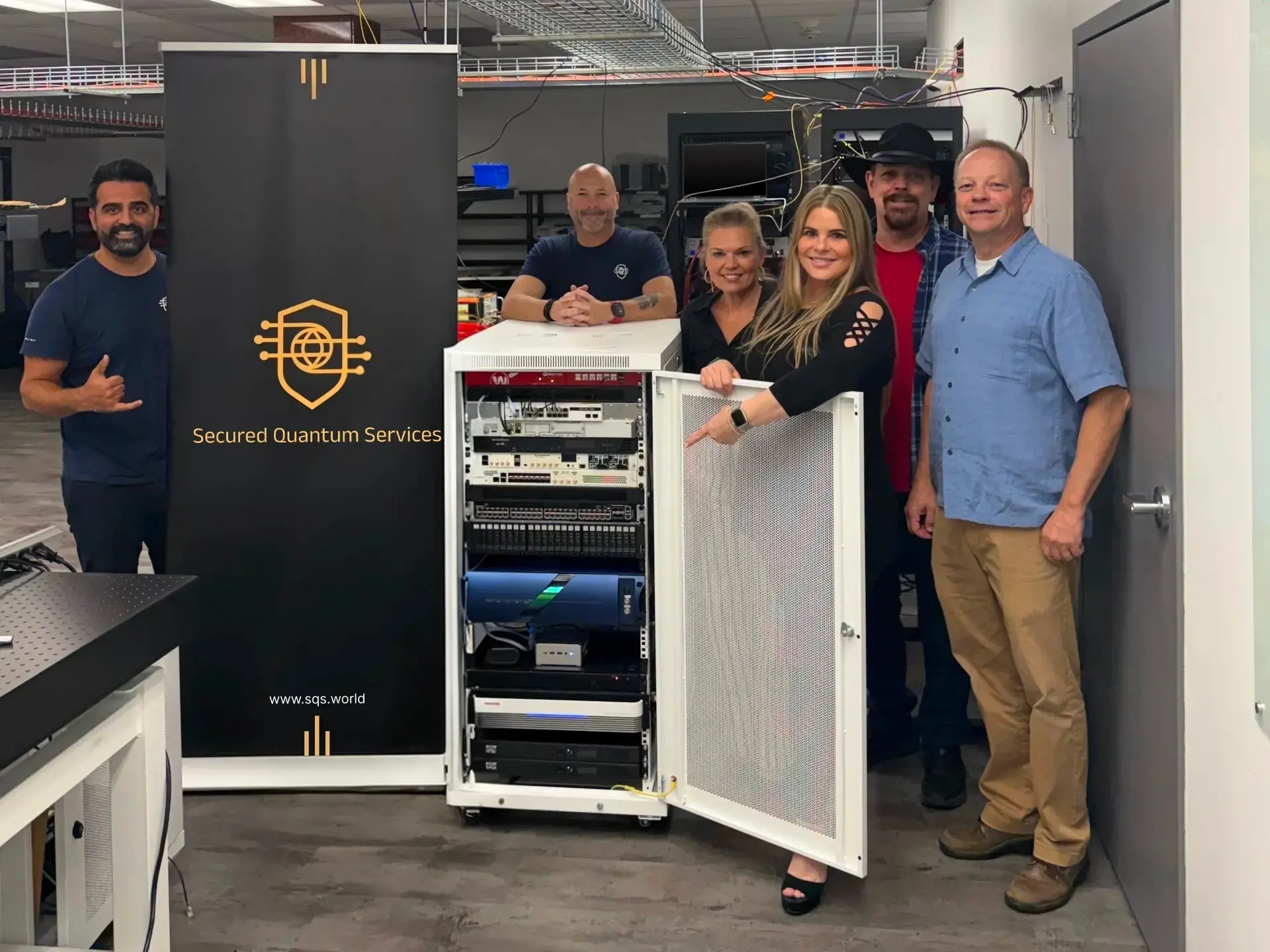
Secured Quantum Services has activated quantum key distribution systems from Toshiba and a GPS-independent quantum optical clock within its new nodes in Albuquerque, New Mexico. This deployment delivers quantum-assured timing and encryption keys as a utility service, designed to integrate with existing infrastructure rather than replace it. These quantum-delivered keys are paired with NIST post-quantum algorithms, forming a layered security approach for messaging between nodes. “Most of the industry hands you a product and leaves the quantum transition to you; we’re building the utility instead,” said Zain Premji, co-founder and Chief Strategy Officer of SQS.
SQS Nodes Enable Quantum Key Distribution and Timing
A quantum optical clock now operational in Albuquerque, New Mexico provides a timing signal independent of GPS. This capability is live alongside quantum key distribution, forming the core of a service designed to deliver quantum-assured security without requiring wholesale infrastructure replacement. The SQS platform uses Toshiba quantum key distribution systems to exchange encryption keys between nodes, relying on the principles of quantum physics to secure communications.
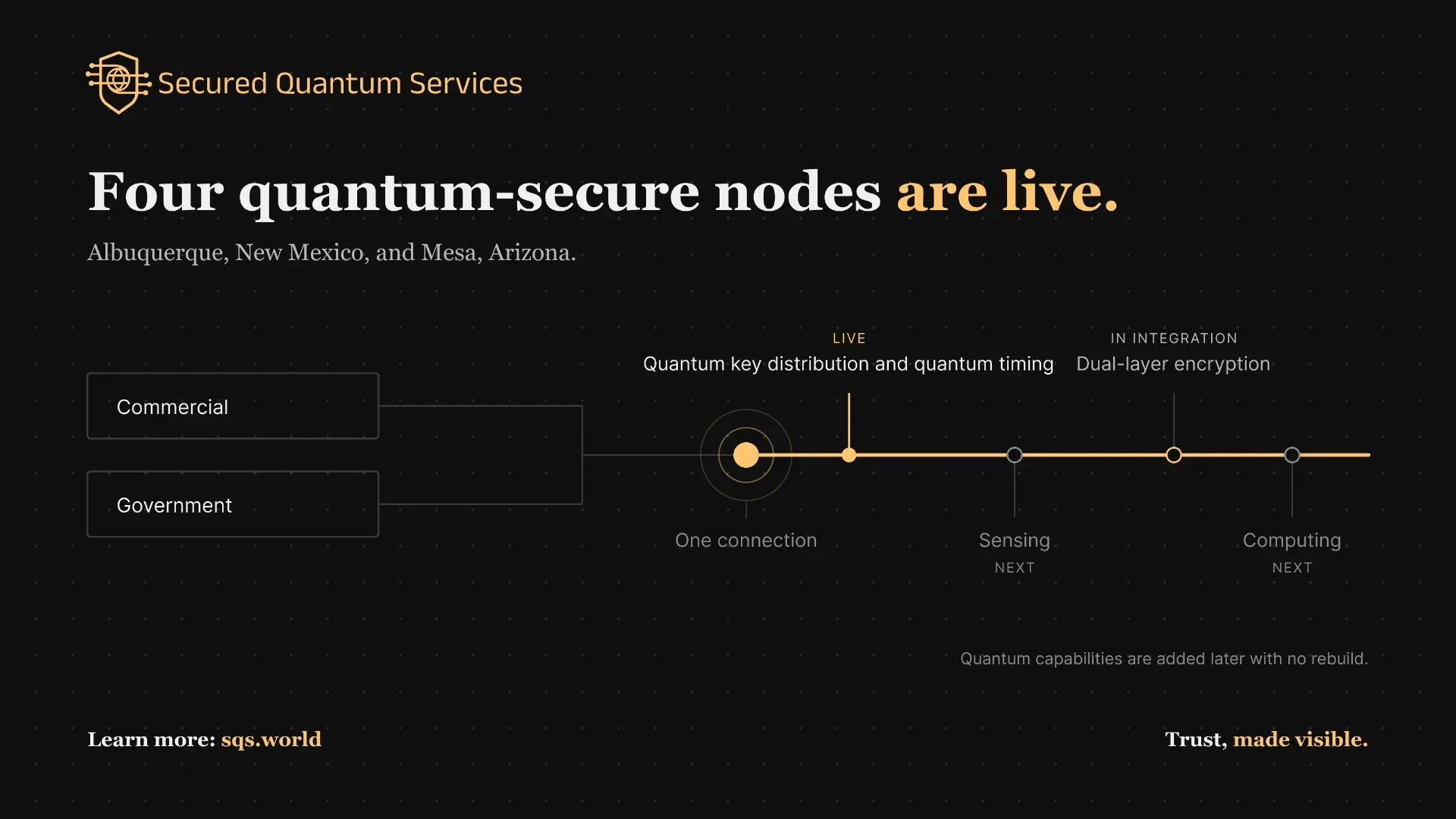
This physics-based security is then combined with layered algorithms, creating a “defense-in-depth” approach to encryption. “The SQS Platform demonstrates how quantum key distribution can be delivered as part of a broader quantum-safe architecture, combining physics-based security with modern cryptographic protections,” stated a company representative. The pairing of these technologies aims to provide a robust, future-proof solution against evolving cyber threats. “Timing is live because GPS-independent synchronization is needed now. Security is first in the build because the threat is already here,” explained Premji.
The company’s approach differs from many in the quantum field, which often focus on delivering standalone products. This utility model is intended to lower the barrier to entry for organizations seeking to adopt quantum-safe technologies. The Albuquerque deployment represents a step toward realizing that vision, offering a tangible pathway for organizations to access quantum capabilities without extensive internal development. “Everyone in quantum can show you a lab. The hard part is the work nobody sees: integration, timing, uptime, keeping systems from different vendors running together in the field day after day,” a company spokesperson noted.
SQS has partnered with Toshiba and Celestica to ensure interoperability and reliability within the network. They want their data protected and their operations untouched. That’s exactly what this platform is being built to deliver.” The company plans to expand its infrastructure to additional sites in the coming months, building a network capable of supporting a growing demand for quantum-safe services.
Timing is live because GPS-independent synchronization is needed now. Security is first in the build because the threat is already here.
Zain Premji, co-founder and Chief Strategy Officer of SQS
Albuquerque Deployment Addresses “Harvest Now, Decrypt Later” Threats
The immediate threat of “harvest now, decrypt later” attacks is being directly addressed by the operational nodes in Albuquerque, New Mexico, which are now exchanging quantum-secured encryption keys. This deployment isn’t a laboratory demonstration, but a functioning system designed to integrate with existing infrastructure, a critical distinction from many current quantum security efforts. SQS is delivering physics-based security, using Toshiba quantum key distribution systems to protect key exchange between nodes, and establishing a lineage of security that extends to algorithms.
The platform’s design prioritizes compatibility, operating alongside conventional classical systems rather than requiring wholesale replacement, a strategy informed by the understanding that organizations need a practical transition path. This approach is a response to growing concerns from boards, examiners and security leaders across government and regulated industries who are actively seeking quantum-readiness plans.
The system’s architecture anticipates future advancements, with the intention that quantum sensing and computing will integrate smoothly into the existing infrastructure. “The keys moving between our nodes are protected by physics, not mathematics alone, and they’re moving in Albuquerque today. There’s extraordinary quantum science happening right now, and what we’ve built is the first tangible step an organization can take with it,” Premji stated. This dual-layer approach, combining quantum key distribution and cryptography, forms the foundation of the platform’s quantum-safe security service.
The deployment is about protecting data against future decryption attempts, acknowledging the long-term sensitivity of information like classified records, financial transactions and intellectual property. SQS is actively inviting evaluators and partners to observe the network’s development, signaling a commitment to transparency and collaboration. The company views this infrastructure as a scalable utility, with plans for expansion to multiple sites in the coming months, and anticipates that customers will connect once to the network, allowing the platform to grow and adapt to evolving quantum technologies.
The SQS Platform demonstrates how quantum key distribution can be delivered as part of a broader quantum-safe architecture, combining physics-based security with modern cryptographic protections.



See today’s quantum computing news on Quantum Zeitgeist for the latest breakthroughs in qubits, hardware, algorithms, and industry deals.