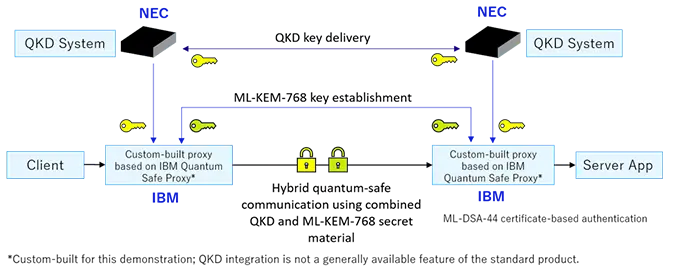
NEC and IBM Japan have demonstrated Japan’s first integrated quantum-safe communication method, linking quantum key distribution (QKD) with post-quantum cryptography (PQC), the company says. The validation connected NEC’s QKD equipment to a system using ML-KEM-768, ML-DSA-44 and HKDF-SHA256 through a REST-based API adhering to the ETSI GS QKD 014 standard. According to the companies, this approach confirms that migration to a quantum-resistant communications environment combining QKD and PQC can be achieved without significant modifications to existing applications and communication systems, easing the path toward future-proofed networks.
NEC and IBM Japan’s Hybrid QKD and PQC Demonstration
This integration, completed between July and September 2026, moved beyond theoretical compatibility to a practical validation of interoperability, establishing a foundation for future hybrid quantum-safe systems. The validation architecture deliberately avoided extensive system modifications, instead deploying a custom-built version of Safe Proxy as an intermediary layer. This proxy layer combined secret material derived from both QKD and ML-KEM-768 using HKDF-SHA256 to generate the traffic-protection secret, demonstrating that QKD can augment, rather than replace, PQC in a TLS communication environment.
Peer authentication remained certificate-based, using ML-DSA-44 signatures, further demonstrating the potential for a phased transition to full quantum resistance. This demonstration differs from previous work by focusing on practical interoperability and minimizing disruption to existing systems. The combined approach expands the range of key establishment methods, providing redundancy and resilience against both classical and quantum attacks.
The validation did not evaluate QKD as a replacement for certificate-based authentication or as an independent fallback channel, but rather as a complementary technology enhancing overall security. NEC has invested over two decades in developing quantum cryptographic communication technologies, including long-distance QKD demonstrations, while IBM has contributed significantly to PQC standardization efforts and the advancement of quantum-safe technologies, according to the company. By using these respective strengths, the companies aimed to realize a quantum-resistant communications infrastructure that combines the strengths of both approaches.
The successful demonstration confirms that products and technologies from different vendors can interoperate based on standardized specifications, a critical step toward global deployment of quantum-safe solutions. The implications of this work extend beyond technical validation, addressing a growing concern about the vulnerability of current cryptographic systems to advances in quantum computing. The U.S. established PQC standards in 2024. A subsequent U.S. Executive Order in June 2026 mandated federal agencies to migrate to PQC by 2030, accelerating the need for practical implementation.
NEC and IBM Japan plan to explore practical deployment opportunities in sectors requiring long-term confidentiality, such as core banking, transaction systems and communications between financial institutions and data centers. The companies intend to contribute to securing critical infrastructure in the quantum computing era and to advancing the practical deployment of QKD technologies in Japan.
By demonstrating a deployment architecture that minimizes impact on existing environments, they offer a pathway for organizations to begin preparing for the quantum threat without undertaking a complete overhaul of their systems. The successful integration of QKD and PQC, validated through an international standard API, represents a step toward a more secure and resilient communications infrastructure for the future.



See today’s quantum computing news on Quantum Zeitgeist for the latest breakthroughs in qubits, hardware, algorithms, and industry deals.