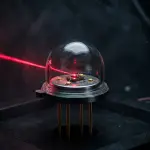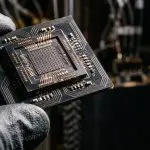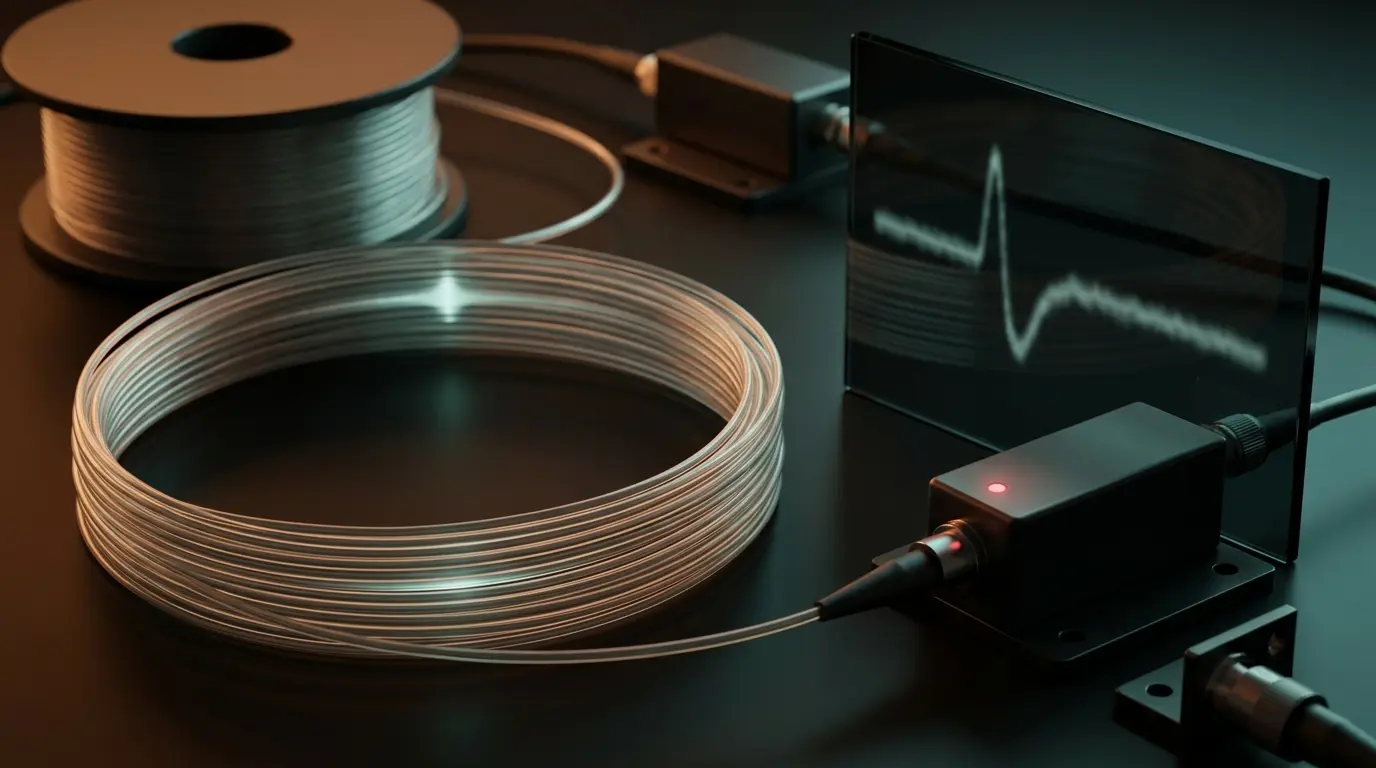
European Space Agency and Thales Alenia Space are expanding a project begun in 2023 to develop space-based quantum communications, with two new contract amendments bolstering research into secure information networks. Central to this effort will be a quantum laboratory created at CNES to test critical equipment, including entangled photon sources and time-synchronisation systems, by attempting to establish quantum links under real-world conditions.
“The TeQuantS project has created a unique opportunity for French and European industry to lead the definition and development of a Quantum Information Network,” said Dr. Kasia Balakier, TeQuantS’ Technical Officer at ESA, as the limitations of optical fibers necessitate satellite alternatives for intercontinental quantum communication.
TeQuantS Project Advances Space-Based Quantum Communication Systems
The French Space Agency (CNES) will host a new quantum laboratory dedicated to testing equipment for satellite-based quantum communications under realistic conditions, a direct result of expanded contract amendments between ESA and Thales Alenia Space. This facility will focus on validating key components, including an entangled photon source and precise time-synchronisation systems important for establishing quantum links between orbiting satellites and ground stations. Testing will also extend to ground station and detection systems, preparing for the challenges of long-distance quantum key distribution.
These developments stem from the TeQuantS project, initially signed in 2023, and represent a significant expansion of work focused on enabling secure, long-distance quantum information networks (QIN). Intercontinental quantum communications, the project team asserts, are fundamentally limited by the signal degradation inherent in optical fibres, necessitating a shift towards space-based solutions.
Satellites offer a viable alternative for distributing photonic qubits between quantum computers, facilitating distributed computing and enhancing the sensitivity of quantum sensors. The space-enabled QIN will also provide sovereign end-to-end secure information exchange, using the physics properties of quantum communications. The project’s first phase saw a consortium led by Thales Alenia Space develop a ground station prototype and an initial engineering model for the quantum communications system.
This groundwork now supports the creation of the CNES laboratory, which will subject the technology to rigorous testing. The consortium itself includes Airbus Defence and Space, AUREA Technology, BERTIN ALPAO, BERTIN TECHNOLOGIES, OGS Technologies and SIGMAWORKS, LIP6, Sorbonne Université and INPHYNI, Université Côte d’Azur/CNRS, demonstrating a broad base of expertise. The expansion of TeQuantS is funded through ESA’s Advanced Research in Telecommunications Systems (ARTES) 4. 0’s programme and its Industrial Competitiveness programme line, with additional support from CNES.
Alcino De Sousa, Senior Vice President Telecommunications at Thales Alenia Space, emphasized the project’s broader implications, stating, “We are delighted to strengthen our collaboration with our partners to develop quantum technologies that will demonstrate the ability to establish long-distance satellite-based quantum communication links with a clear operational objective, while contributing to European sovereignty in this domain. We would like to thank ESA and CNES for their essential support to this unique project, which addresses both future cybersecurity challenges and the development of quantum internet networks.” Dr. Balakier added that the equipment and test facility at CNES represent major milestones toward deploying satellite-based quantum connectivity.
The TeQuantS project has created a unique opportunity for French and European industry to lead the definition and development of a Quantum Information Network for long-distance quantum connectivity.
Dr. Kasia Balakier, TeQuantS’ Technical Officer and Optical & Quantum Communication Technology Manager at ESA’s ScyLight Programme


See today’s quantum computing news on Quantum Zeitgeist for the latest breakthroughs in qubits, hardware, algorithms, and industry deals.