
Deep Technology with Quantum Computing
Quantum Computing is perhaps the hottest deep technology around that could be truly transformative to many sectors and that brings great opportunities for investors. quantum holds the allure that some special calculations could run faster on a quantum computer than classical machines that we use. However the quantum field is rather looking for a “Killer Application“. Rather like perhaps the early days of the world wide web or the internet where innovation after innovation led to the products and tools we take for granted such as searching, streaming and browsing – but it wasn’t always this way. In the technological past people navigated to sites using domain names and human curated search engines such as Yahoo. Search might have been one of the early Killer Applications that made the internet and the web sitting on top of the internet truly transformative. Readers will know we focus on developments from the Quantum landscape and we see plenty of funding behind the quantum sector. All as it seems without a real “use-case”, that said the putative benefits of Quantum Computing are starting emerge and we are at the cusp of seeing something called “Quantum Advantage” where there are tangible benefits to using Quantum technologies in specific cases. The tantalizing promise to speed-up every classical computation is a misnomer. Only specific calculations or computations are amenable or can run faster on Quantum devices compared to classical. Some of the algorithms you may have heard of such as Shor’s or Grover’s algorithm offer the promise of being able to factorize numbers and perform searches faster than existing known classical algorithms. But even these algorithms (there are more) would be reason enough to explore Quantum Computing. However these are applications many would argue are somewhat further away from “prime-time”. What is more interesting to many businesses is the nearer term applications that do not necessarily offer run-time advantages – that is running faster, but perhaps better. Some researchers are exploring how Neural Networks might be better is they used Quantum elements – faster to train and allow for more complex patterns. This new field emerging of Quantum Machine Learning is promising to bridge the gap between the headline statements of quantum making current encryption systems obsolete (Shor’s Algorithm). With the huge benefits that Deep Learning has offered a range of fields from Self driving auto’s to facial recognition,might we see the same with Quantum technologies?
Deep Tech or Deep Pockets
Unlike nearer term investments, Quantum investments are typically at the very early stage. Add to that the fact that we are at the very early beginnings of hardware development – there are still many competing technologies for the “Qubit”. The Qubit is the quantum equivalent of the bit allowing for the curious quantum behaviour that promises to revolutionize the way we think about computation. IBM Quantum are sporting qubits that are superconducting, Intel are working on semiconducting qubits, Xanadu are working with light (photonics) and Honeywell are working on Ion Trap technologies. Fundamentally working in very different ways, but all serve the purpose of creating Quantum Bits – the Qubit which can then be manipulated by software and programmed.

Quantum Clouds
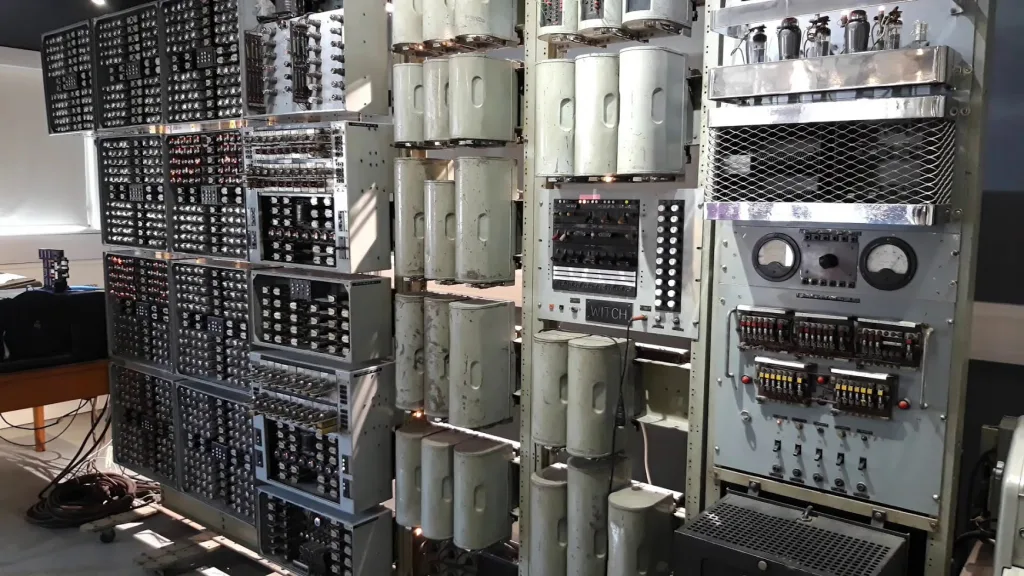
Unlike the PC revolution and the microcomputer revolution, Quantum machines will for the foreseeable future remain devices that live in laboratories and take up vast spaces and require specialist equipment. Reminiscence and drawing on parallels of the early days of computing, might be leading some to extrapolate that one day quantum computers will be ubiquitous and embedded into every area of our lives. This may or not be reality or even required as we are all headed towards the cloud for our computational needs. Analogies aside from the early days of classical, the cloud is enabling many to have exposure to Quantum Devices with no upfront cost or need to build anything in a lab, deal with cryogenics, lasers or special materials. The Quantum cloud will put quantum computing at the fingertips of the masses, who many think will eventually find the use-cases and solve some of the current problems. The thinking is that more eye-balls will lead to more problem solving, akin to open source developments where thousands of volunteers look at, refine and develop software to improve it.
Quantum Start-ups
So what is happening in the start-up scene? We track many companies and behind the scene we have our own analyses and metrics (we’ll be publishing these soon). But some aspects of the landscape are fully obvious – that is we are seeing a friendly environment for Quantum Start-ups for not only finding the talent, but also finding all important funds.
Corporate Quantum
Is Quantum Computing in a Bubble?
According to investopedia their definition of a bubble is:A bubble is an economic cycle that is characterized by the rapid escalation of market value, particularly in the price of assets. This fast inflation is followed by a quick decrease in value, or a contraction, that is sometimes referred to as a “crash” or a “bubble burst.” Investopedia
No dumb money.
There are relatively few institution or funds investing specifically in quantum technologies at the moment. There are the likes of Quantum Valley Investments created by the founder of the Blackberry mobile phone. There are also other VC funds such as Quantonation which is an Early Stage Venture Fund dedicated to Deep Physics startups. That said when looking at other Quantum players such as Xanadu they have received funding from the likes of Tim Draper and Silicon Valley Bank, fairly main stream VC firms. Currently even though funding into the Quantum space is undoubtedly increasing – we are not seeing massively wild inflows of money. We also posit that the majority of VC firms are not involved in Quantum deals nor Quantum ready or educated in the quantum field. We are a long way from the days of the dot com boom where money was thrown at ideas rather then businesses. All the invested companies that we cover and have researched have defensible products that are often very commercially focused or have emerged from academic settings offering an edge on existing technological approaches to building qubits, for example. We are certainly not at the stage of fluff, where peripheral businesses with no real benefit are created to suck up VC funding, which then go on to die. The late 90’s saw ideas that were funded such as WebVan which lost a fortune on free same-day shipping of anything (including items like a pack of chewing gum) – perhaps a business model ahead of it’s time. Pets.com was another that over spent on marketing, Another was boo.com, who had a product ahead of its time, rather like WebVan.Not main stream…. quite yet
Still there is a quest for those Quantum killer applications. And there is hope it will come. Certainly Algorithms such as Shor’s offer great promise, but Quantum doesn’t mean that every classical algorithm can be sped up. What the cloud will do is expose potential Quantum workflows to a myriad of new minds and thinkers – who will take some of the foundational ideas and existing concepts and build on them. It’s akin to the same method at play when open source developers contribute to software and frameworks. Many projects are open source and not proprietary by their very nature encouraging development from a range of contributors. Frameworks such as Qiskit (supported by IBM) and a popular language for programming quantum Computers has (some might say) become the C or C++ of the Quantum world. Other entrants such as Microsoft support Q#, which along with its QDK make up a substantial portion of the Quantum Computing stack that most researchers and developers tend to use. Company acquisitions are more likely in the quantum space today then they were in the 90’s. Now we have the corporate giants interested Quantum with their own R&D programmes there is an acquisition target for the Quantum start-up. Go back to the early days of the web, and whilst there were companies buying tech companies, you could almost argue that tech as sector didn’t really exist. Revisit the 90’s and a lot of the focus was on IPO’s. Of course now there will be ready made homes for many of the current crop of Quantum start-ups to be acquired by larger technology players.No Bubbles…just yet
Quantum computing and technologies could radically change many industries. We are still at the early stages of the Quantum Computing “gold rush”. For sure the pace of change will accelerate and continue to do so as more businesses realize that they must understand what Quantum might offer their business before their competitors do. There are plenty of free resources and learning materials that can help interested individuals, organizations and, well just about anyone who wants to understand better how Quantum Computing works on a fundamental level or how it can be applied to existing industries.
Quantum Zeitgeist does not provide personal investment or financial advice to individuals, or act as personal financial, legal, or institutional investment advisors, or individually advocate the purchase or sale of any security or investment or the use of any particular financial strategy. All investment strategies include the risk of loss for some or even all of your capital. Before pursuing any financial strategies discussed or relying on information within this website, you should always consult with a licensed financial advisor. Any analysis we provide is for informational purposes only and does not take into consideration your circumstances or other factors that may be important in making decisions. It should not be considered an individualized recommendation or personalized investment advice. Any investment vehicles, stocks, securities mentioned may not be suitable for all investors.


See today’s quantum computing news on Quantum Zeitgeist for the latest breakthroughs in qubits, hardware, algorithms, and industry deals.