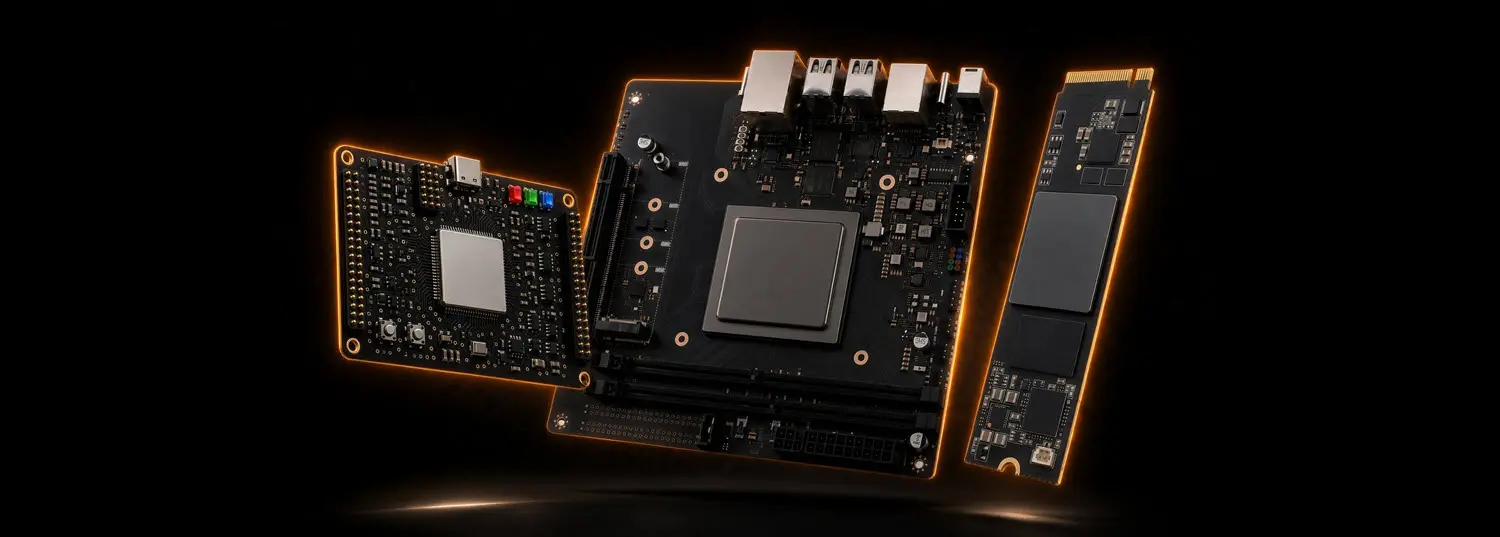
GlobalFoundries’ MIPS launched three new platforms, Acies, Actus, and Aegis, on September 2, 2026, each designed for distinct Physical AI applications ranging from inference to mission-critical systems. The company intends these workload-native platforms to accelerate the development of energy-efficient AI for industrial machines and embedded systems.
“As intelligence moves into machines, vehicles, and other physical systems, compute platforms need to adapt to the workload,” said Sameer Wasson, CEO of MIPS, emphasizing that efficiency and tokens-per-watt are the foundation of our technology. MIPS is prioritizing a software-first approach, utilizing open standards to guide developers and platform designers.
“The momentum behind RISC-V continues to be driven by strong industry collaboration and a growing software ecosystem,” said Manuel Uhm, Director of Silicon Marketing, Embedded, AMD. “The continued growth of RISC-V depends on close collaboration across processor technology, software, and the broader development ecosystem,” said David Ku, Co-COO and CFO of MediaTek.
Acies Platform Enables Edge AI Inference
The MIPS Acies platform is designed as a developer environment specifically for artificial intelligence inference at the edge, featuring an open Network Processing Unit and software stack. This platform prioritizes efficiency, with MIPS driving tokens-per-watt as the foundation of its technology; the company believes this measure better reflects performance in real-world AI applications than simple energy efficiency figures, MediaTek says. Acies utilizes an open, standards-based approach intended to simplify adoption and customization for developers building embedded solutions.
MIPS combines its processor IP with software design tools and open standards to enable customers to create computing platforms optimized for AI beyond traditional data centers. According to MIPS, this focus on workload optimization is key to accelerating custom, software-first products for applications in automotive, industrial automation, and edge computing.
Industry collaboration is vital to the success of RISC-V architecture, upon which these platforms are built. David Ku, Co-COO and CFO of MediaTek, added, “We welcome efforts that expand developer access, strengthen software readiness, and help customers take advantage of open-standard architectures across a broad range of applications.” These platforms represent a move toward more accessible and customizable AI solutions for physical systems.
As intelligence moves into machines, vehicles, and other physical systems, compute platforms need to adapt to the workload.
Sameer Wasson, CEO of MIPS
Actus & Aegis Platforms Target Real-Time and Safety-Critical Applications
MIPS’ Actus platform delivers a real-time developer environment specifically for event-driven embedded systems, addressing applications like motion control and predictive maintenance. Unlike general-purpose processors, Actus is designed to respond instantly to external stimuli, which is important for systems where delays can have significant consequences. Complementing this, the Aegis platform focuses on mission-critical physical AI systems, prioritizing low-latency and agentic processing for applications demanding unwavering reliability.
These platforms represent a departure from traditional approaches by tailoring compute resources to the specific demands of physical systems, rather than adapting existing architectures. This emphasis on tokens-per-watt, a measure of computational efficiency, signals a prioritization of performance relative to energy consumption, a key consideration for embedded and mobile applications.
The launch of Actus and Aegis alongside the Acies platform underscores MIPS’ strategy of providing specialized solutions for distinct areas within the Physical AI space. These platforms, built upon the RISC-V architecture, aim to foster collaboration by offering a flexible and customizable foundation for developers working on increasingly intelligent machines and systems.
The momentum behind RISC-V continues to be driven by strong industry collaboration and a growing software ecosystem.
Manuel Uhm, Director of Silicon Marketing, Embedded, AMD




See today’s quantum computing news on Quantum Zeitgeist for the latest breakthroughs in qubits, hardware, algorithms, and industry deals.