The Chinese Academy of Sciences has built an artificial intelligence capable of distinguishing between a dangerous loss of superconductivity and disruptive magnetic interference in milliseconds. Researchers at the Institute of Modern Physics (IMP) developed the AI Quench Detection System, or AI-QDS, by training a convolutional neural network on years of historical data.
During testing at the Fourth-generation Electron Cyclotron Resonance (FECR) ion source, the system successfully detected all three quench events despite more than 1,000 cumulative flux jumps during magnet excitation, demonstrating its ability to filter out false alarms and protect critical components in large-scale scientific facilities.
AI-QDS Validation Achieves Reliable Quench Detection in FECR Magnet Prototype
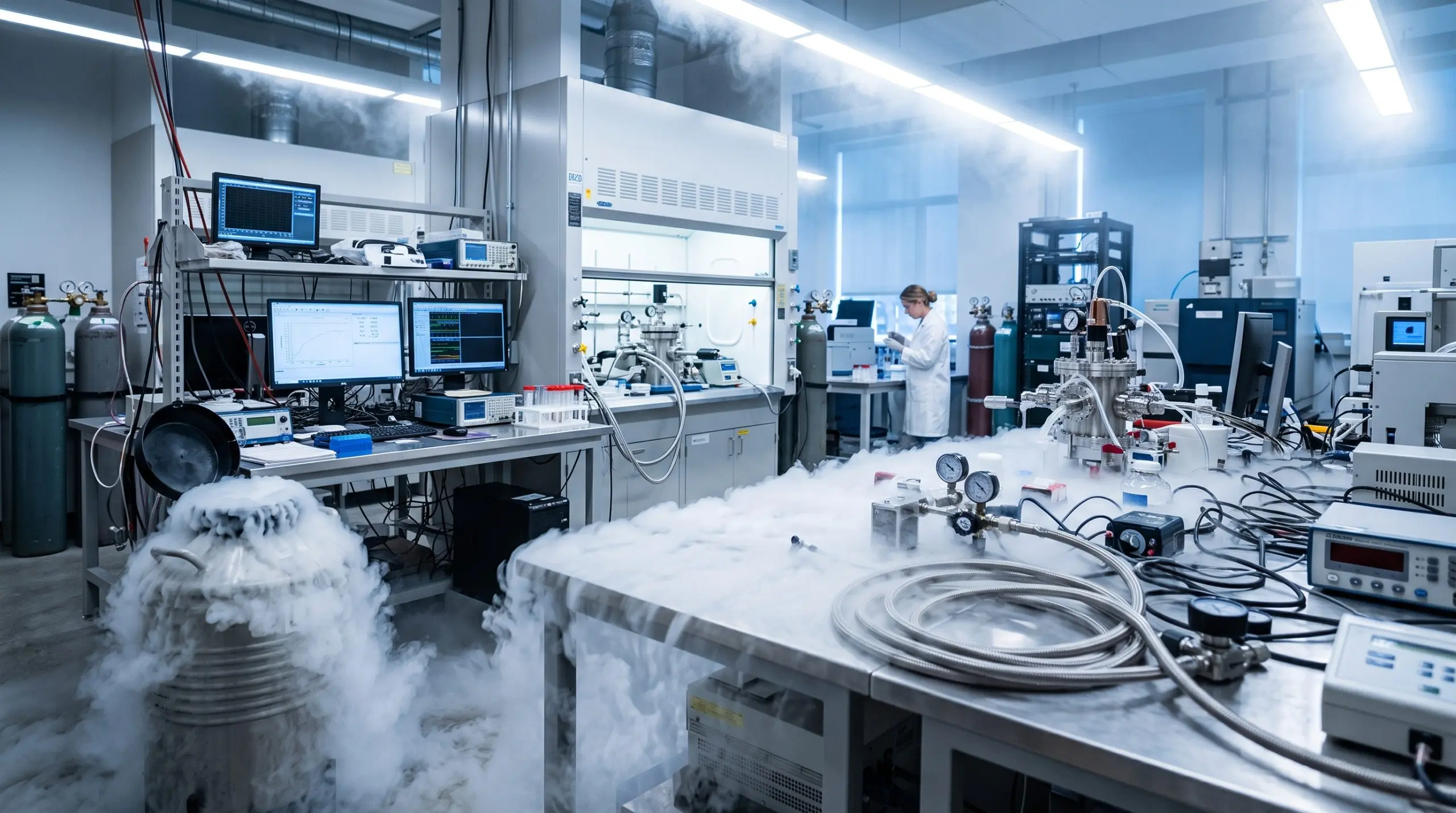
This rapid differentiation addresses a longstanding challenge where magnetic disturbances, known as flux jumps, often triggered false alarms in conventional systems. The FECR, located at the High Intensity heavy-ion Accelerator Facility (HIAF), provided a demanding environment for prototype validation, simulating the electromagnetic noise inherent in large-scale scientific facilities.
The model’s success in identifying all three quench events during the tests suggests a viable path toward enhanced safety protocols for advanced accelerator technology. Researchers report in their recent publication in Superconductor Science and Technology that “these results demonstrate the feasibility and effectiveness of deep learning-based online quench detection in harsh electromagnetic environments.” The team believes AI-QDS offers a practical solution for protecting superconducting magnets and could be widely adopted in facilities reliant on this technology, ensuring continued operation and preventing costly damage.


See today’s quantum computing news on Quantum Zeitgeist for the latest breakthroughs in qubits, hardware, algorithms, and industry deals.