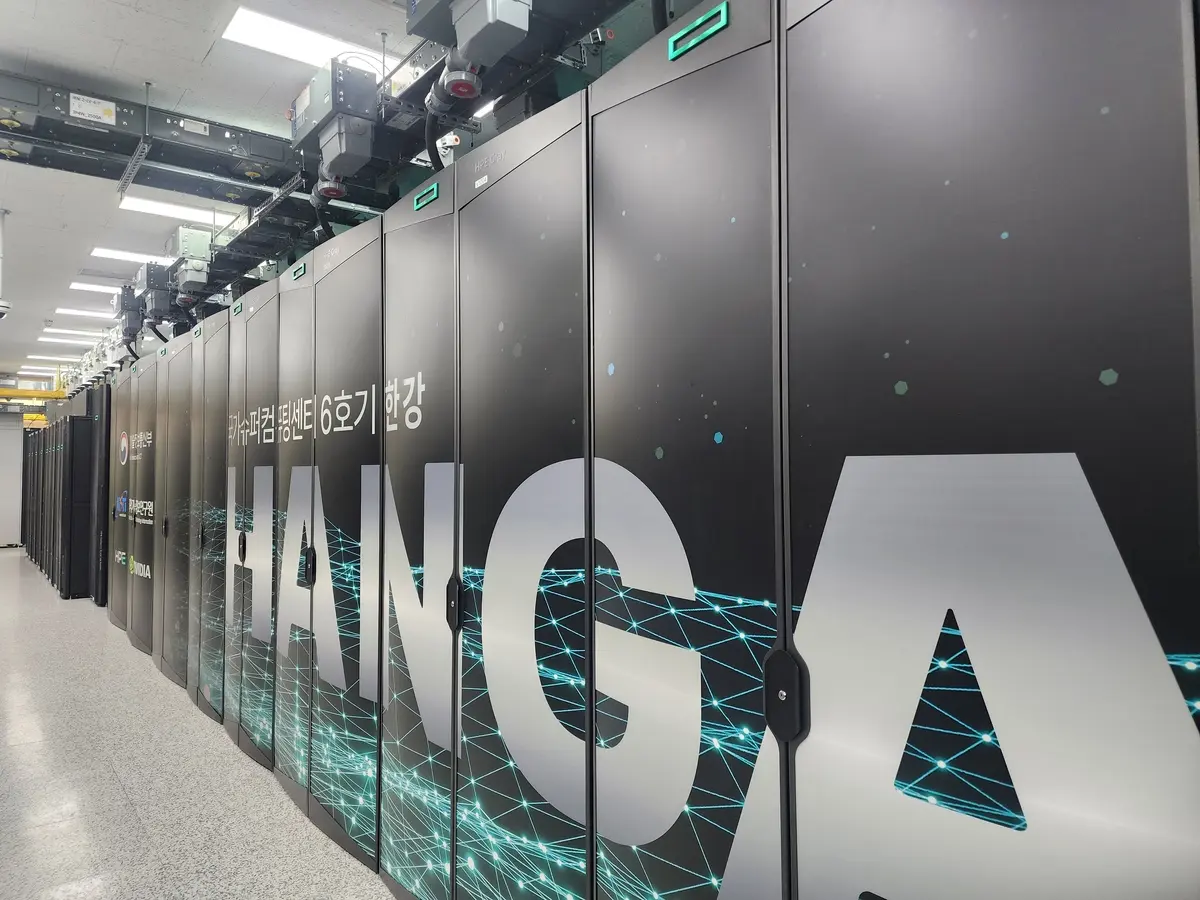
South Korea’s new Hangang supercomputer is now operational, delivering a 24-fold increase in processing power over its predecessor, Nurion, introduced in 2018. The Korea Institute of Science and Technology Information (KISTI) anticipates the sixth-generation machine will rank among the world’s top 10 systems and support a broad range of research, from climate modeling to battery development.
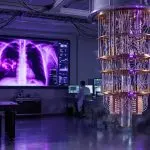
In the first half of next year, KISTI plans to link Hangang with a quantum computer, creating a hybrid system designed to enhance both calculation and optimization speeds, the company says. “The sixth machine is a case in which nearly all equipment was built with direct liquid cooling,” said Hong Tae-young, head of KISTI’s Supercomputing Infrastructure Center.
Hangang Supercomputer: Enhanced Performance with GH200 GPUs and Liquid Cooling
Hangang’s enhanced thermal management system represents a significant departure from previous generations of Korean supercomputers, directly cooling the processor chips themselves with circulating water. This direct liquid cooling implementation across nearly all equipment has demonstrably improved power usage effectiveness, dropping from 1.35 in the previous machine to 1.15. The substantial increase in processing capability stems from the integration of 8,496 Nvidia GH200 GPUs alongside 9,936 CPUs within the Hangang system.
This combination delivers a theoretical computing performance 24 times greater than Nurion, introduced in 2018. KISTI anticipates this leap in power will allow researchers to tackle increasingly complex problems in fields ranging from materials science to climate modeling. The system’s storage capacity and network performance also saw considerable improvements, increasing ten-fold and four-fold respectively, further accelerating data-intensive workflows.
Hong Tae-young, head of KISTI’s Supercomputing Infrastructure Center, explains the nation’s sixth supercomputer, “Hangang,” at the institute’s headquarters in Daejeon on Oct. 30. The success of Hangang is expected to build on the achievements of the fifth machine, which facilitated 1,520 research papers published in SCI(E)-indexed international journals, including 70 in high-impact publications like Nature, Science, and Cell. The government hopes to surpass these results with the new system and establish Hangang as a leading force in global scientific research.
Hybrid Computing Strategy: Linking Hangang to a Quantum Computer for Optimization
This strategy acknowledges inherent limitations; while supercomputers excel at rapid calculation, they struggle with optimization, a task where quantum computers demonstrate potential. The resulting system aims to achieve proficiency in both areas, addressing a key bottleneck in complex problem-solving. KISTI’s plan aligns with a growing international trend, as advanced nations including Japan, the United States and those in Europe also explore integrating supercomputing resources with quantum processors, according to the company.
This convergence is not merely academic. The institute anticipates that combining these technologies will position South Korea as a leader in the field, enabling advancements beyond the reach of either technology alone. The institute’s vision extends beyond simply connecting the machines, focusing on creating a system where each architecture compensates for the other’s weaknesses.
Beyond computational speed, KISTI has also focused on improving the efficiency of Hangang’s cooling system. A KISTI official explained that with the fifth system, cold water circulated only as far as the back of the cabinet to absorb heat, but in the sixth system water circulates over the chips themselves, raising cooling efficiency. However, the institute acknowledges that enhancing security alongside these advancements presents ongoing challenges. The official added that tightening internal security tends to reduce performance, so they will continue to work on security measures, highlighting the delicate balance between protection and operational speed.
See today’s quantum computing news on Quantum Zeitgeist for the latest breakthroughs in qubits, hardware, algorithms, and industry deals.