A $4 million award from the National Science Foundation will support a UCLA-led team in designing a 60-qubit quantum computer, aiming to overcome the limitations of current unstable devices. The project, described as “FTL: Accelerating Fault-Tolerant Quantum Logic,” unites researchers across UCLA’s Physical Sciences and Samueli School of Engineering to build a blueprint for error-protected quantum bits capable of simulations beyond classical supercomputers. “Quantum computers will only become useful when they can operate reliably despite the fragility of quantum information,” said UCLA physics professor and principal investigator Eric Hudson.
“I learn so much every time I speak with my colleagues on the computer-science side. They have a completely different way of understanding so many of the concepts. This allows us to cover ground more quickly by filling in each other’s gaps.” The team will utilize an integrated-photonics surface ion trap, jointly developed by graduate students Michael Bareian of UCLA and Yiyang Zhi of UCB, as a key component of the experimental system.
FTL Project: Designing a 60-Qubit Trapped-Ion Quantum Computer
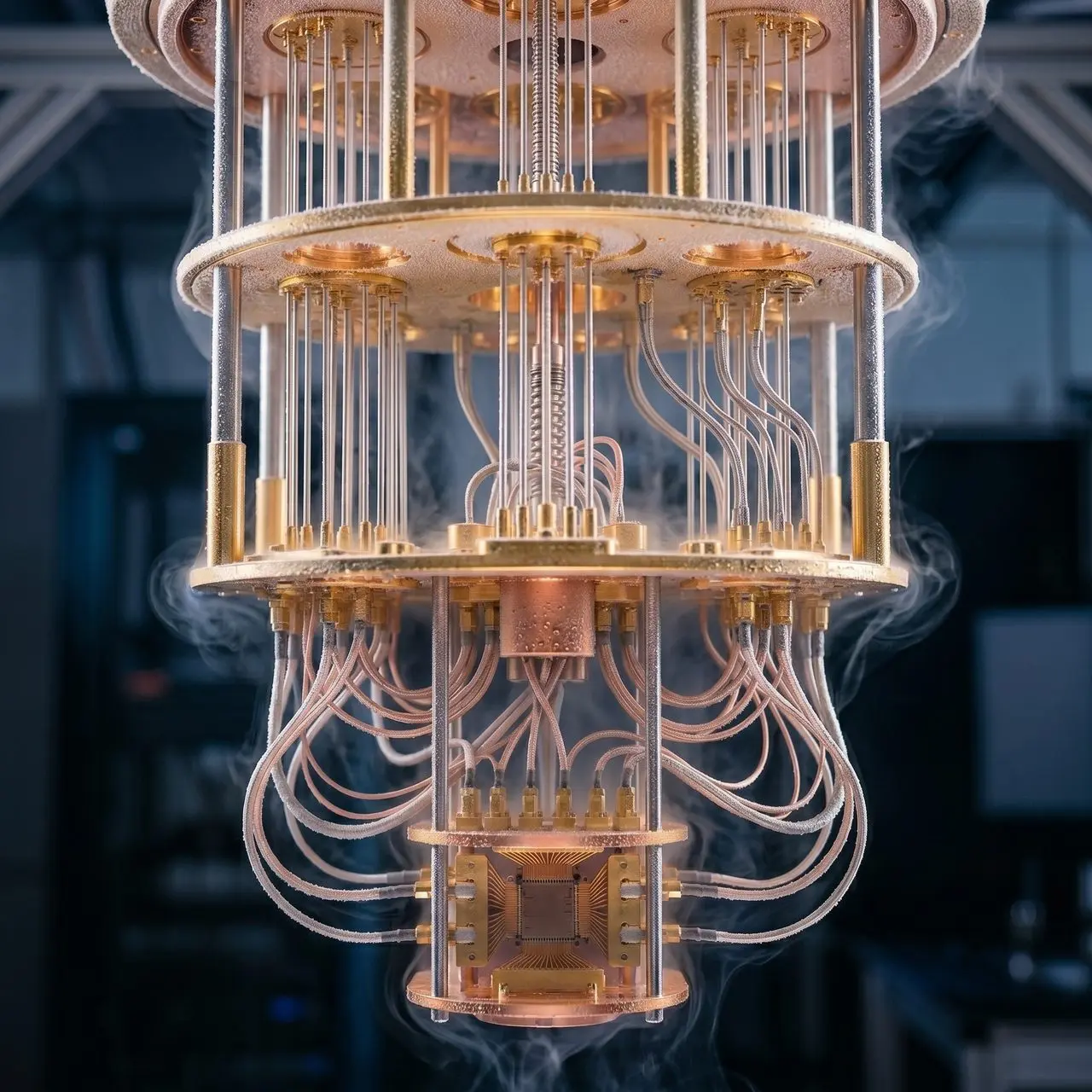
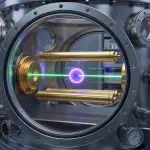
Building a practical quantum computer requires overcoming a fundamental hurdle: current devices are plagued by errors stemming from environmental interference. The team’s approach centers on trapped atomic ions, utilizing a quantum charge-coupled device architecture. Individual charged atoms are manipulated within a chip-based system, allowing for controlled interactions between selected ion pairs.
This architecture offers both high-quality quantum operations and flexible connectivity, positioning it as a promising pathway toward scalable, error-corrected processors. The project’s scope extends beyond simply building hardware to include codesigning the entire quantum computing stack, from the underlying atomic physics and chip architecture to the quantum error correction protocols, compilation methods, control systems, and targeted applications.
By integrating hardware and software development, the team intends to minimize the overhead traditionally associated with fault-tolerant quantum computing. “Working together across the physical sciences and engineering enables us to address the key challenges in designing a quantum computer,” said project co-leader Jens Palsberg, a professor of computer science at UCLA Samueli. The proposed processor will initially focus on digital quantum simulation, a leading application for fault-tolerant machines, potentially revolutionizing fields like materials science, chemistry, and drug discovery.
The challenge lies in creating 60 logical qubits, error-protected quantum bits formed by encoding several qubits in a cluster, enabling easier error detection and containment. “This award allows us to bring together the hardware, error correction, software and user communities needed to design a system that can reach the fault-tolerant regime,” Hudson said. Wesley Campbell, a UCLA physicist and project co-leader, also highlighted the value of interdisciplinary collaboration.
Quantum computers will only become useful when they can operate reliably despite the fragility of quantum information.
Eric Hudson, professor of physics and astronomy at UCLA and principal investigator of the project
NSF NQVL: Accelerating Access to National Quantum Testbeds
This national initiative aims to democratize access to advanced quantum tools, extending capabilities beyond a limited number of specialized labs to researchers nationwide. Unlike traditional bits representing 0 or 1, qubits leverage quantum superposition to exist in multiple states simultaneously, offering immense processing potential. However, maintaining qubit stability is a major hurdle, as external disturbances can introduce errors that compromise calculations.
I learn so much every time I speak with my colleagues on the computer-science side. They have a completely different way of understanding so many of the concepts. This allows us to cover ground more quickly by filling in each other’s gaps.
Wesley Campbell, UCLA physicist and project co-leader


See today’s quantum computing news on Quantum Zeitgeist for the latest breakthroughs in qubits, hardware, algorithms, and industry deals.